
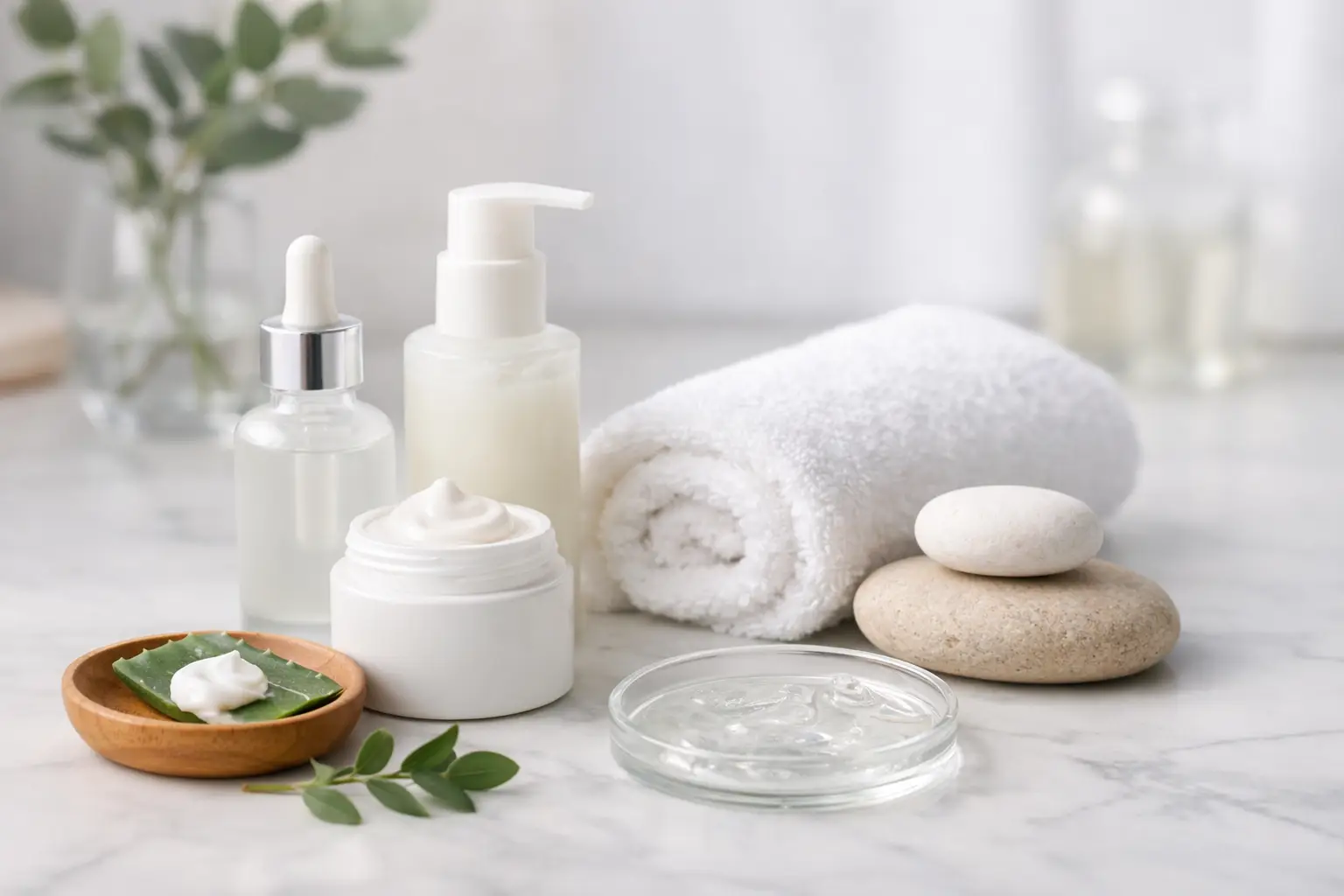
When your skin starts reacting to products it once tolerated, feels tight by midday, stings after cleansing, or turns shiny and dehydrated at the same time, the issue is often not a lack of actives. It is a compromised barrier. A good skin barrier recovery routine example is not elaborate. It is usually quieter than the routine that caused the problem.
The outermost layer of skin is designed to keep water in and irritants out. When that function is disrupted by over-exfoliation, frequent retinoid use, acne treatments, harsh cleansers, dry air, UV exposure, stress, or simply too many products, the skin becomes less efficient at self-protection. That can show up as redness, flaking, rough texture, breakouts, burning, dullness, or a persistent sense that nothing feels comfortable anymore.
Recovery is rarely about finding one miracle cream. It is about reducing strain, restoring hydration, and giving the skin the materials and conditions it needs to repair itself. For most people, that means a temporary shift away from intensity and toward consistency.
What a skin barrier recovery routine example should do
A barrier-focused routine has a narrower goal than a brightening or anti-aging routine. It should cleanse without stripping, hydrate without overwhelming the skin, reduce unnecessary irritation, and support the lipid structure that helps maintain resilience.
This is where restraint matters. Skin under stress often does worse with ambitious layering, frequent exfoliation, or alternating multiple treatment products. A recovery routine should feel stable enough that your skin is not constantly adapting to a new variable.
It also helps to separate barrier symptoms from other concerns. Tightness, stinging, and increased sensitivity often point to barrier impairment. Congestion or acne can exist at the same time, but if the skin is inflamed and depleted, treating breakouts aggressively can prolong the cycle. In that situation, recovery comes first.
Morning skin barrier recovery routine example
In the morning, start with either a very gentle cleanse or just a rinse with lukewarm water, depending on how your skin feels when you wake up. If your skin is dry, reactive, or not especially oily overnight, skipping a full cleanser can reduce unnecessary disruption. If you do cleanse, choose a low-foam or cream formula that leaves skin comfortable rather than squeaky.
Follow with a hydrating layer if your skin responds well to it. This could be a simple essence or serum centered on humectants such as glycerin, hyaluronic acid, panthenol, or beta-glucan. The point is not to flood the skin with many steps. It is to add water-binding support so the next layer can hold onto that moisture more effectively.
The next step is moisturizer. For barrier recovery, this should contain a balance of humectants, emollients, and ideally barrier-supportive ingredients such as ceramides, fatty acids, cholesterol, squalane, or soothing agents like allantoin and colloidal oatmeal. Texture matters less than function. Oily skin may prefer a lighter emulsion, while dry or mature skin may need a richer cream. What matters is whether your skin stays comfortable for several hours, not whether the product feels luxurious for five minutes.
Finish with sunscreen every morning. This is non-negotiable if you are trying to repair skin. UV exposure weakens recovery, increases inflammation, and makes post-inflammatory marks linger longer. Choose a broad-spectrum sunscreen with a texture you can wear consistently. If your barrier is very compromised, mineral or hybrid formulas are sometimes easier to tolerate, though this varies.
Night skin barrier recovery routine example
Evening care should be slightly more thorough, but still controlled. If you wear sunscreen or makeup, remove it gently. A cleansing balm, milk cleanser, or mild first cleanse can help dissolve residue without the friction that comes from over-washing. Follow with a gentle second cleanse only if needed.
After cleansing, apply a hydrating serum or lotion if your skin benefits from one. At night, ingredients such as panthenol, ectoin, centella asiatica, madecassoside, or low-irritation hyaluronic acid blends can help reduce the sensation of reactivity while supporting moisture balance. This is also where some people do well with repair-centered technologies, provided the formula is simple and the skin can tolerate it.
Seal that in with a barrier-supporting moisturizer. If your skin is very dry, flaky, or prone to overnight water loss, you may add a thin occlusive layer on top, especially around the mouth, corners of the nose, or other areas that crack easily. Petrolatum can be helpful here in a small amount, though not everyone enjoys the texture in humid climates. In Malaysia and Singapore, where heat and humidity change how products feel on the skin, lighter occlusive support may be more practical than a heavy slugging approach.
If your skin is acutely irritated, this simple night routine may be all you need for two to four weeks.
What to stop while your barrier recovers
A barrier routine is defined as much by what you remove as by what you keep. During recovery, pause strong exfoliating acids, granular scrubs, high-strength retinoids, frequent benzoyl peroxide use, and any product that causes burning or persistent flushing. Fragrance-heavy formulas can also be difficult for sensitized skin, even if they were tolerated before.
This does not mean active ingredients are inherently harmful. It means timing matters. A well-formulated retinoid can be useful later, but when the skin is already struggling to hold water and defend itself, adding more stimulation often delays repair.
There is also a practical trade-off here. If you stop every active too early when acne is active, breakouts may worsen. But if you keep pushing through severe dryness and irritation, inflammation can become harder to manage. In many cases, reducing frequency rather than abandoning treatment entirely is the better middle ground. For example, a retinoid might move from five nights a week to one or two, buffered with moisturizer, once the skin is calmer.
How long does barrier recovery take?
It depends on what caused the damage and how severe it is. Mild dehydration and irritation from over-cleansing may improve within days. A barrier disrupted by months of aggressive exfoliation, chronic inflammation, or overlapping actives can take several weeks to settle.
Progress is usually gradual. First, the stinging eases. Then tightness after washing becomes less noticeable. Redness may become less persistent, and makeup or sunscreen may sit better on the skin. The final stage is often less visible but more meaningful – your skin becomes less reactive to ordinary products and environmental changes.
If symptoms are getting worse despite simplifying your routine, or if you have persistent rash-like irritation, swelling, or painful cracking, it is worth seeing a dermatologist. Not every case of “sensitive skin” is a barrier issue. Eczema, rosacea, perioral dermatitis, and allergic contact reactions can look similar.
How to reintroduce actives after recovery
Once your skin feels consistently comfortable for at least one to two weeks, you can consider reintroducing one active at a time. Start with the concern that matters most, whether that is acne, discoloration, or early signs of aging. Use it less often than you think you need.
A practical approach is to add one treatment product at night, once or twice weekly, while keeping the rest of the routine unchanged. This makes it easier to identify what your skin tolerates. If there is no increase in redness, stinging, or dryness after two weeks, frequency can be adjusted gradually.
Many people relapse here because they mistake initial improvement for full recovery. Skin that looks calmer is not always fully resilient. Discipline matters more than enthusiasm.
The routines that work are often the simplest
A useful skin barrier recovery routine example is rarely exciting. It is gentle cleansing, measured hydration, a moisturizer with structural support, daily sunscreen, and fewer inflammatory inputs. That simplicity is not a compromise. It is often the most intelligent response to skin that has been asked to do too much.
At SHINORA, this philosophy sits at the center of modern skin care – restoration before correction, so the skin can perform like skin again. If your routine has become a source of stress instead of support, this is often the right moment to make it smaller, calmer, and more deliberate.
Healthy skin does not usually come from doing more. It comes from giving recovery enough time to work.


Leave a Reply