
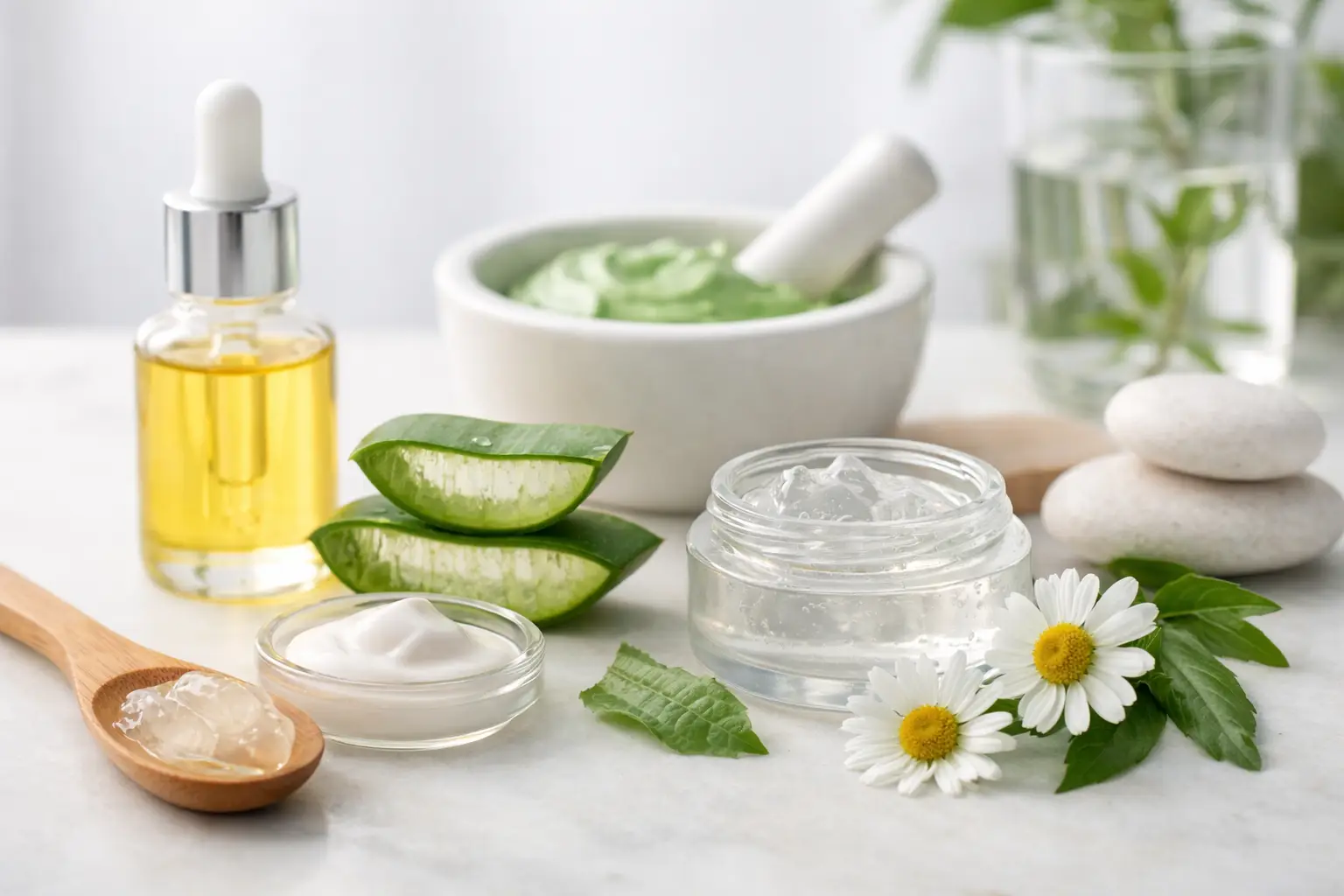
A breakout rarely ends when the blemish begins to flatten. For many people, the more persistent phase is the lingering tenderness, visible redness, dryness, or post-inflammatory mark that follows. The best soothing ingredients after breakouts do not force the skin to change overnight. They help create the conditions for a more orderly recovery: less irritation, stronger barrier function, and fewer unnecessary setbacks.
This distinction matters. Skin that has recently been inflamed is not always ready for another round of exfoliation, strong acne treatments, or an ambitious multi-step routine. It often benefits more from restraint. The goal is to support the skin’s repair processes while continuing any necessary acne care in a way the skin can tolerate.
Why skin needs a different approach after a breakout
A breakout is an inflammatory event. Even after active swelling improves, the surrounding skin can remain reactive. The barrier may be compromised by inflammation itself, frequent cleansing, spot treatments, picking, or overuse of acids and retinoids. This can leave skin feeling tight and unpredictable, with redness that appears more pronounced after cleansing or exposure to heat.
At this stage, soothing care is not merely about comfort. A well-supported barrier is better able to hold water, tolerate treatment, and defend itself against everyday stressors such as UV exposure, air conditioning, pollution, and friction from masks or shaving. It may also reduce the urge to keep treating skin aggressively simply because it does not look immediately clear.
Soothing does not mean doing nothing. It means choosing ingredients with a useful role in recovery and applying them within a routine that respects the skin’s current capacity.
The best soothing ingredients after breakouts
Niacinamide for barrier support and visible redness
Niacinamide, a form of vitamin B3, is one of the most versatile post-breakout ingredients because it supports several concerns at once. It can help reinforce barrier function by encouraging ceramide production, while also improving the appearance of uneven tone and excess oil over time. Its anti-inflammatory properties make it a considered option when the skin looks flushed or feels unsettled after blemishes.
More is not always better. Some people find high-strength niacinamide formulas irritating, particularly when their barrier is already stressed. A moderate concentration in a simple, well-formulated serum or moisturizer is often the more sensible choice. If stinging or warmth occurs, pause rather than pushing through it.
Panthenol for hydration that feels restorative
Panthenol, also known as provitamin B5, is a valuable humectant and skin-conditioning ingredient. It attracts and helps retain water while supporting the barrier’s recovery. It is especially useful when post-breakout skin feels dry on the surface but still prone to congestion underneath, a common effect of over-cleansing or repeated spot treatment.
Look for panthenol in lightweight serums, gel creams, or moisturizers designed for sensitive skin. It works well alongside other barrier-supportive ingredients and is generally easy to incorporate into a routine without adding unnecessary complexity.
Centella asiatica for reactive, uncomfortable skin
Centella asiatica, often listed as cica or tiger grass, has a long history of use in soothing topical care. Its key compounds, including asiaticoside and madecassoside, are studied for their role in calming inflammation and supporting skin repair. For skin that feels sensitized after a breakout, it can provide a more settled, comfortable feel without the heaviness some richer creams create.
Centella is particularly helpful when redness and sensitivity are the dominant concerns. However, the total formula still matters. A product containing centella may not suit compromised skin if it also includes high levels of fragrance, drying alcohol, or multiple strong actives.
Colloidal oatmeal for dryness and itch-prone irritation
Colloidal oatmeal is not only for very dry skin conditions. Its lipids and beta-glucans can help support the skin barrier and relieve the uncomfortable, tight feeling that sometimes follows inflammation. It is a useful option for people whose breakouts coexist with sensitivity, seasonal dryness, or irritation from acne medications.
Its richer texture may be preferable at night or on dry areas of the face. If you are highly congestion-prone, choose a lighter lotion or cream and introduce it gradually. A nourishing texture is not automatically pore-clogging, but personal tolerance is still the deciding factor.
Beta-glucan for quiet hydration
Beta-glucan is a humectant with calming and barrier-supportive qualities. It is often less discussed than hyaluronic acid, yet it can be an excellent addition when the skin is dehydrated and reactive. Its appeal lies in its ability to provide hydration without turning the routine into an active-heavy treatment plan.
It can be particularly useful in humid climates, where skin may feel oily yet still be dehydrated from cleansing, UV exposure, or indoor cooling. In these circumstances, a light, hydrating formula with beta-glucan may feel more appropriate than layering multiple dense products.
Hyaluronic acid for water balance, with one condition
Hyaluronic acid helps bind water in the skin, which can temporarily improve the look of dehydration lines and surface roughness around healing blemishes. It is not, by itself, a repair ingredient, but it can make a supportive routine more comfortable when paired with a moisturizer that reduces water loss.
The condition is simple: apply it to slightly damp skin, then follow with a moisturizer. In very dry environments, a hyaluronic acid serum used alone may leave skin feeling tighter, not softer. This is why formulation and layering matter more than a single ingredient claim.
Ceramides for rebuilding resilience
Ceramides are naturally present lipids that help form the skin barrier’s protective structure. When this structure is disrupted, water escapes more easily and irritants can penetrate more readily. A ceramide-containing moisturizer can help restore a healthier balance after breakouts, particularly if acne treatments have caused flaking or sensitivity.
For post-breakout care, ceramides are often most useful in a daily moisturizer rather than as a separate treatment step. Combined with cholesterol and fatty acids in a balanced formula, they support the skin in a way that is quiet, consistent, and aligned with long-term resilience.
Madecassoside and ectoin for stressed skin
Madecassoside is a purified active component of centella asiatica that is valued for its soothing and repair-focused properties. Ectoin is another protective ingredient, known for helping skin manage environmental stress and maintain hydration. Both can be useful for professionals whose skin is exposed to heat, UV radiation, dry office air, travel, and long days that leave the complexion looking depleted.
These ingredients are not replacements for acne treatment when active acne is persistent. Their value is in helping the skin tolerate a sensible treatment plan and recover with less visible disruption.
What to pause while skin is healing
A calm routine can be undermined by one unnecessarily aggressive step. If a breakout has left skin raw, flaky, or stinging, consider temporarily reducing the frequency of exfoliating acids, retinoids, benzoyl peroxide, and scrub-based cleansers. This does not mean these ingredients are inherently unsuitable. It means timing and dose matter.
For example, someone with frequent clogged pores may still benefit from salicylic acid, but perhaps two or three nights a week rather than daily while the barrier recovers. Someone using a prescription retinoid should follow their clinician’s guidance, yet may find that buffering with a simple moisturizer improves comfort. Persistent, painful, or scarring acne deserves professional assessment rather than escalating at-home treatments.
Avoid picking, even when a blemish seems ready to resolve. Mechanical trauma can extend inflammation and increase the likelihood of a lingering mark. Daily broad-spectrum sunscreen is equally essential, especially for skin prone to post-inflammatory hyperpigmentation. Sun exposure can deepen the contrast of a healing mark and make recovery appear slower than it is.
How to build a measured recovery routine
After cleansing with a mild, non-stripping formula, apply one hydrating or soothing product rather than several overlapping serums. Follow with a moisturizer containing ceramides, panthenol, or other barrier-supportive ingredients. In the morning, finish with sunscreen. At night, introduce any acne active only when the skin no longer feels persistently irritated, and alternate it with recovery-focused evenings if needed.
This approach may seem less dramatic than rotating through multiple corrective products. It is often more productive. Skin recovery is influenced by consistency, sleep, stress, hormones, climate, and exposure, not just the intensity of a single serum. A disciplined routine gives you a clearer view of what is helping and what is quietly causing irritation.
SHINORA’s approach to skin health begins from this principle: restoration creates a more reliable foundation for enhancement. When a breakout has passed, give the skin room to repair before asking it to perform again. The most effective care is often the care that makes resilience feel possible, day after day.

Leave a Reply