
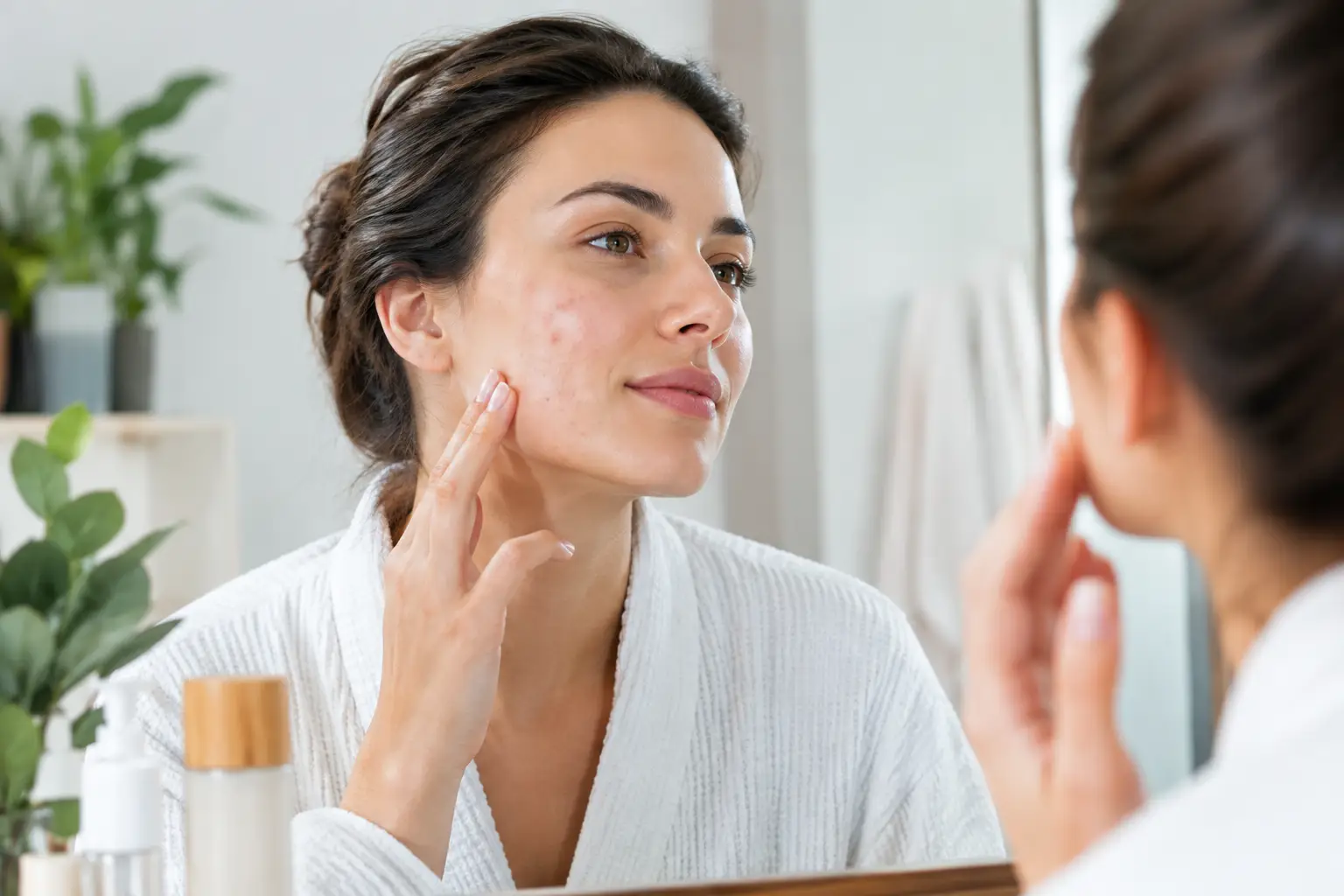
A breakout along the chin or jawline can feel frustratingly predictable: skin may look settled for most of the month, then become tender, congested, or inflamed in the days before a period. To manage hormonal breakouts well, the answer is rarely to apply more products or pursue a harsher routine. It is to reduce the conditions that keep inflammation active while supporting skin that is already responding to internal change.
Hormonal acne is not a failure of hygiene or discipline. It is a skin response shaped by shifting hormones, oil production, follicular congestion, inflammation, genetics, stress, and sometimes medication or underlying health conditions. A measured routine cannot control every one of these variables, but it can make the skin less reactive and help limit the cycle of breakouts, irritation, and lingering marks.
Why Hormonal Breakouts Tend to Persist
Androgens, a group of hormones present in all sexes, can stimulate sebaceous glands to produce more oil. Around menstruation, during periods of high stress, after changes in contraception, or through perimenopause, these shifts may become more visible on the skin. Oil itself is not the problem. It becomes part of the problem when it combines with dead skin cells inside the pore, creating an environment where inflammation can develop.
The lower face is a common pattern, particularly along the jawline, chin, and around the mouth, although hormonal breakouts can appear elsewhere. They are often deeper and slower to resolve than a surface-level whitehead. This is why repeated spot treatment can be disappointing: a painful bump beneath the skin is not simply a local event. It may be the visible end of a longer inflammatory process.
There is also a barrier consideration. When skin is stripped by frequent exfoliation, strong cleansers, or multiple acne treatments used at once, it may become dry, stinging, and more prone to post-inflammatory discoloration. In an effort to clear a breakout quickly, many people create a second concern: compromised skin that tolerates acne care poorly.
How to Manage Hormonal Breakouts With a Stable Routine
The most useful routine is not necessarily elaborate. It is consistent enough to reveal what is helping, gentle enough to preserve the barrier, and targeted enough to address congestion and inflammation over time. Introduce one active product at a time and allow several weeks before judging its role. Skin does not change on the timetable of a social event.
Begin with barrier support
Cleanse with a mild formula that removes sunscreen, makeup, and daily buildup without leaving the face tight. A tight, squeaky-clean feeling is not evidence of a better cleanse. Follow with a hydrating moisturizer suited to your skin type. Ingredients such as glycerin, hyaluronic acid, ceramides, and soothing lipid-supportive components can help maintain water balance and improve comfort around active treatments.
This step matters even for oily skin. Dehydrated skin may feel more sensitive, look less even, and become harder to treat consistently. A lighter lotion or gel-cream may be preferable in humid climates, while a richer cream can be useful when air conditioning, retinoids, or seasonal dryness increase water loss.
Choose one evidence-based treatment pathway
For clogged pores and recurring congestion, a retinoid can help normalize how skin cells shed within the follicle. Adapalene is available without a prescription in the United States, while other retinoids require clinical guidance. Start slowly, perhaps two to three nights a week, using a pea-sized amount across the acne-prone area rather than applying large amounts directly to individual lesions.
Salicylic acid can be useful for oily, congested skin because it is oil-soluble and works within the pore lining. Benzoyl peroxide is particularly helpful for inflammatory acne, though it can be drying and may bleach fabrics. Azelaic acid is a thoughtful alternative or complement for those managing breakouts alongside redness or post-acne marks, and it is often better tolerated than stronger exfoliating routines.
It depends on your skin which option is most appropriate. Combining every active at once may increase irritation without improving results. A practical approach is to establish one main nighttime treatment, then use a second treatment only when your skin is calm and your clinician or dermatologist believes it is appropriate.
Protect against the marks that follow
Daily broad-spectrum sunscreen is part of acne care, not an optional finishing step. Inflammation can leave discoloration long after a blemish has flattened, especially in deeper skin tones. Sun exposure can prolong the visibility of these marks. Choose a sunscreen you will genuinely wear every day, ideally one that sits comfortably beneath makeup and does not encourage you to skip reapplication when outdoors.
Avoid picking, squeezing, or repeatedly checking lesions in a magnifying mirror. These habits increase inflammation and raise the risk of scarring. A hydrocolloid patch may protect a superficial blemish from touching, but it will not resolve a deep cyst. For those lesions, patience and professional care are usually more effective than pressure.
Look Beyond the Bathroom Shelf
Skin responds to the wider conditions of daily life. Stress does not cause every breakout, but prolonged stress can influence inflammatory signaling, sleep quality, and behaviors that affect the skin, such as inconsistent meals or overuse of stimulants. A demanding work period may also lead to skipped cleansing, makeup left on after late nights, or a tendency to experiment with several new products at once.
Rather than treating wellness as another performance target, focus on a few stabilizing practices. Regular sleep, adequate hydration, balanced meals, and movement can support overall metabolic and inflammatory health. The relationship between diet and acne varies widely. Some people notice a pattern with high-glycemic foods or certain dairy products, while others do not. Restrictive elimination diets are not automatically the answer, particularly if they create stress or nutritional gaps.
A simple skin journal can be more useful than assumptions. For two or three cycles, note when breakouts appear, where they occur, changes in menstrual timing, new supplements or medications, sleep disruption, and product use. The purpose is not to scrutinize every imperfection. It is to identify repeatable patterns that can inform a calmer plan.
When Breakouts Need Medical Support
Persistent acne is a medical concern as well as a cosmetic one, particularly when lesions are painful, scarring, or affecting confidence and daily life. A dermatologist can assess whether prescription retinoids, topical or oral medications, hormonal therapies, or procedures are appropriate. The right option depends on acne severity, medical history, pregnancy plans, and individual risk factors.
It is also sensible to speak with a healthcare professional if acne begins suddenly in adulthood or is accompanied by irregular periods, excess facial or body hair, scalp hair thinning, unexplained weight changes, or other symptoms of hormonal imbalance. Conditions such as polycystic ovary syndrome can require broader assessment. Skincare can support the surface of the skin, but it should not be expected to diagnose or treat an underlying endocrine condition.
If you are pregnant, trying to conceive, or breastfeeding, seek professional advice before using retinoids and other acne treatments. “Natural” is not a reliable measure of safety, and a clinician can help you choose a suitable approach.
Progress Looks Quieter Than a Quick Fix
Hormonal breakouts often improve through fewer severe lesions, shorter recovery time, reduced tenderness, and less discoloration over successive cycles. That progress can be easy to miss when the goal is perfectly clear skin. A more realistic goal is resilient skin that recovers well and a routine that does not create new irritation in the process.
Treat the skin with the same discipline you would apply to any long-term health practice: observe, support, adjust thoughtfully, and allow time for repair. The most effective routine is usually the one that your skin can tolerate consistently enough to become stronger, calmer, and more predictable.

Leave a Reply