
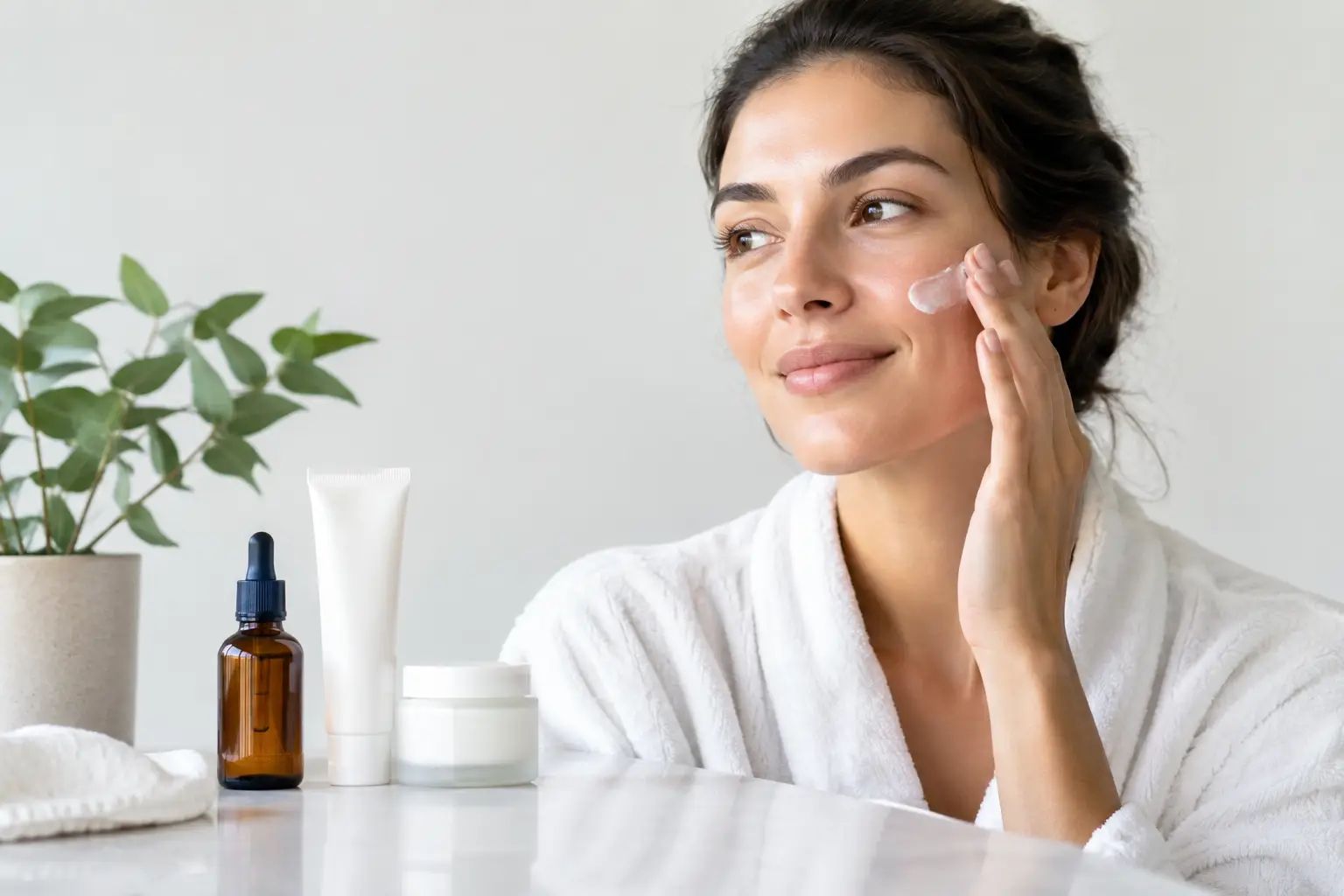
By late afternoon, skin often reveals the cost of a full day: dry office air, heat, UV exposure, commuting, stress, and interrupted sleep. The answer is rarely another crowded shelf. A minimalist skincare routine for adults gives skin the consistent conditions it needs to recover, retain moisture, and respond more calmly to daily pressure.
Minimalism is not about doing the least possible. It is about removing what does not serve your skin, then using a small number of well-chosen formulas with enough consistency to matter. For adults managing dehydration, dullness, uneven tone, early lines, or post-acne marks, that restraint can be more useful than cycling through new actives every week.
Why a minimalist skincare routine for adults works
Skin responds to repetition. Its barrier, the outermost protective layer, depends on lipids, water-binding compounds, and healthy cell turnover to keep irritants out and moisture in. When that barrier is strained by over-cleansing, frequent exfoliation, poorly matched actives, or an inconsistent routine, skin may look dull, feel tight, and become more reactive.
A focused routine lowers that burden. It also makes it easier to identify what is helping and what is causing irritation. This matters particularly when signs of fatigue and aging overlap. Dehydration can exaggerate fine lines. Inflammation can deepen the appearance of discoloration. Aggressive treatment may temporarily create the very sensitivity that makes complexion concerns more visible.
The trade-off is patience. A simple routine does not offer the drama of a strong peel or a rapid product rotation. Its value is steadier: improved comfort, more reliable hydration, and a foundation on which targeted care can work without unnecessary disruption.
Start with the skin barrier, not a correction plan
Before addressing brightness, texture, or visible aging, consider whether your skin is functioning comfortably. Skin that stings after cleansing, becomes oily and tight at the same time, flakes around the nose, or reacts to products it once tolerated may be signaling barrier stress.
Barrier support is not a vague skincare concept. It means reducing avoidable irritation while supplying ingredients that help the skin hold water and maintain a more resilient surface. Humectants such as glycerin and hyaluronic acid draw water into the upper layers of skin. Emollients soften roughness, while lipids and ceramide-focused formulas can help reinforce the skin’s protective matrix.
In humid climates, it can be tempting to skip moisturizing products altogether. Yet air conditioning, sun exposure, cleansing, and active ingredients can still contribute to water loss. The right moisturizer need not feel heavy. A lightweight, well-balanced formula may be enough to leave skin comfortable without a coated finish.
The four functions that matter most
A thoughtful routine can usually be built around four functions: cleansing, hydration and barrier support, targeted treatment, and daily sun protection. Each function has a purpose. None needs to become excessive.
Cleanse without stripping
Cleansing removes sunscreen, excess oil, sweat, particulate pollution, and makeup. It should not leave skin feeling squeaky, tight, or uncomfortable. Those sensations are often mistaken for cleanliness when they can indicate that too much of the skin’s protective surface oil has been removed.
Most adults benefit from a gentle cleanser at night. In the morning, a rinse with water may be enough for dry or reactive skin, while those with oilier skin may prefer a mild cleanse. If you wear water-resistant sunscreen or makeup, cleanse thoroughly in the evening, but do not assume that a harsher formula is more effective.
Hydrate in layers, then seal it in
Hydration works best when it is approached as a system rather than a single ingredient. Apply a humectant serum or hydrating essence to slightly damp skin, then follow with a moisturizer suited to your skin’s needs. This pairing helps attract water and reduce its evaporation from the surface.
Hyaluronic acid can be useful, but it is not a complete routine on its own. Its performance depends on the surrounding formula, your environment, and whether it is followed by a moisturizer. For skin that feels persistently depleted, look beyond one celebrated ingredient and consider the full architecture of hydration.
Choose one treatment priority
A minimalist approach does not reject advanced actives. It asks each one to earn its place. If your main concern is uneven tone or post-acne marks, a brightening ingredient such as niacinamide, vitamin C, azelaic acid, or a carefully selected retinoid may be appropriate. If your primary concern is sensitivity and dehydration, a treatment centered on soothing and barrier support may be the more intelligent first choice.
Avoid introducing several high-performance treatments at once. Retinoids, exfoliating acids, and potent vitamin C formulas can be effective, but combining them too quickly increases the likelihood of irritation. Start with one active, use it two or three times per week when appropriate, and give your skin several weeks to respond.
Emerging technologies, including topical formulas featuring exosome-related ingredients, deserve the same measured standard. Their science is developing, formulation quality varies, and they should not replace the essentials of barrier care and sunscreen. Innovation is most valuable when it supports recovery, not when it adds complexity for its own sake.
Treat sunscreen as preventive care
No brightening or repair-focused routine can fully compensate for inconsistent UV protection. Daily broad-spectrum sunscreen helps reduce the environmental pressure that contributes to visible discoloration, collagen breakdown, and uneven texture over time.
Use a sunscreen you can apply generously and are willing to wear every day. For most people, this is more important than finding the most elaborate formula. Reapply when spending extended time outdoors, near windows with significant sun exposure, or during activities that involve sweating. If sunscreen feels uncomfortable, the solution is often to try a different texture or finish, not to abandon the step.
A practical morning and evening rhythm
Morning care can be brief: cleanse if needed, apply a hydrating or antioxidant treatment if it suits your skin, moisturize, and finish with broad-spectrum sunscreen. The goal is to support comfort and protect skin before the day begins.
Evening is the restoration phase. Cleanse away the day, use your chosen treatment on the nights it is scheduled, then apply moisturizer. On nights when skin feels dry, reactive, or overworked, skip the active and focus only on hydration and barrier support. This is not losing progress. It is often how progress is protected.
For many adults, a routine of three or four products in the morning and two or three at night is sufficient. The exact number depends on your skin, climate, medications, and tolerance. Someone with acne-prone skin may need a dermatologist-guided treatment. Someone navigating pregnancy, eczema, rosacea, or persistent pigmentation may need a more individualized approach.
How to know when to simplify further
Your skin does not need to feel uncomfortable for a routine to be effective. Persistent burning, increased redness, rough patches, sudden breakouts, or peeling are reasons to pause recently added products and return to a gentler baseline. If symptoms continue, seek professional guidance rather than attempting to solve escalating irritation with more treatments.
Give a new routine time. Hydration and comfort may improve within days, but changes in tone, texture, and visible signs of aging are slower. Take note of how your skin feels in the morning, how it behaves under sunscreen, and whether it remains calm through a demanding day. These are meaningful measures of skin resilience.
The most refined routine is not the one with the longest ingredient list. It is the one you can return to, morning and night, with confidence that every step has a clear role in helping your skin recover, adapt, and remain well supported.



Leave a Reply