
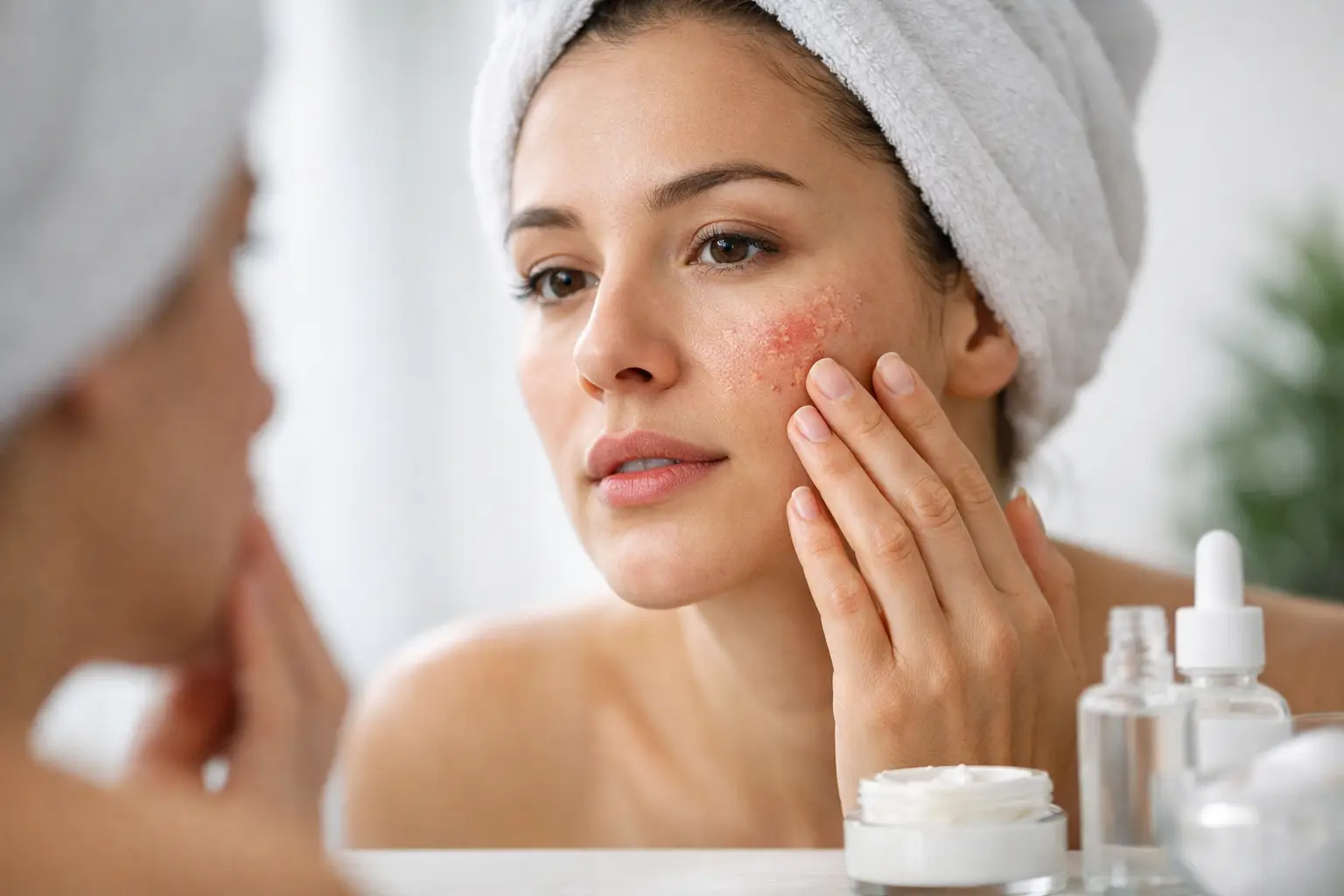
When your face suddenly starts stinging from products that never bothered it before, looks dull despite moisturizer, or feels tight and reactive by midafternoon, the issue is often not sensitivity in the abstract. It is barrier strain. Understanding how to repair stressed skin barrier starts with recognizing that skin does not usually need more intensity – it needs less disruption and more support.
The skin barrier is the outermost defense system of the epidermis. It helps retain water, regulate exposure to irritants, and maintain a stable surface environment. When it is functioning well, skin feels comfortable, looks more even, and recovers more easily. When it is stressed, even a well-intentioned routine can begin to feel like too much.
What a stressed skin barrier actually looks like
A compromised barrier does not always present as obvious peeling or redness. In many adults, especially those balancing long workdays, air conditioning, sun exposure, late nights, and frequent active ingredients, it appears more subtly. Skin may feel dehydrated and oily at the same time. Fine lines can look sharper because water is escaping too easily. You may notice flushing, rough texture, sensitivity around the nose or cheeks, or a lingering tightness after cleansing.
Breakouts can also be part of the picture. This is where people often misread the situation. If skin is congested, it is tempting to exfoliate more aggressively or rotate in stronger treatments. But irritation and barrier weakness can increase inflammation, impair recovery, and keep skin in a cycle of instability.
Why the barrier becomes stressed
In most cases, barrier stress is cumulative rather than dramatic. It builds through friction, overcleansing, overexfoliation, inconsistent hydration, UV exposure, dry indoor environments, and product layering that outpaces the skin’s ability to adapt. Retinoids, acids, acne treatments, and brightening actives can all be useful, but they require context. Effective skincare is not simply about adding good ingredients. It is about using them at a dose, frequency, and combination your skin can sustain.
Lifestyle pressure matters as well. Poor sleep, chronic stress, travel, heat, pollution, and dehydration can all affect how resilient skin feels. This is one reason the same routine can work beautifully one month and suddenly feel irritating the next. Skin is a living system. Its tolerance changes.
How to repair stressed skin barrier without overcorrecting
Repair begins with restraint. The goal is not to overwhelm the skin with more products labeled soothing or repairing. The goal is to reduce unnecessary input and restore the conditions skin needs to recover.
Start with cleansing. Use a gentle, low-stripping cleanser once or twice daily depending on your skin type, environment, and how much sunscreen or makeup you wear. If your skin feels dry and reactive, a water rinse in the morning may be enough. The immediate sign you are on the right track is that skin feels clean but not squeaky.
Next, pause strong actives temporarily. That usually means exfoliating acids, retinoids, high-strength vitamin C formulas, and potent acne treatments, at least for several days to two weeks depending on how stressed the skin is. This can feel counterintuitive, particularly if you are worried about dullness, pigmentation, or breakouts. But skin repairs more efficiently when inflammation is reduced and moisture balance is restored.
Hydration should then be layered with purpose. Humectants such as hyaluronic acid can help attract water, but they work best when paired with barrier-supportive ingredients that help reduce transepidermal water loss. Look for formulations that include ceramides, panthenol, glycerin, squalane, cholesterol, fatty acids, or other skin-replenishing lipids. The point is not to create a heavy routine. It is to give the skin the building blocks and water balance it is missing.
A well-formulated moisturizer becomes central during this phase. Choose one that is fragrance-free or low-irritant, and avoid formulas packed with too many exfoliating or stimulating extras. If skin is severely reactive, even botanical extracts that are usually considered beneficial may be too much for the moment. Minimalism is often the faster route back to stability.
The routine that usually works best
For most people, a repair-focused routine is simple. In the morning, cleanse lightly if needed, apply a hydrating serum or essence if your skin tolerates it, follow with a barrier-supportive moisturizer, and finish with sunscreen. At night, remove sunscreen gently, moisturize well, and stop there unless your skin is calm enough for one additional treatment.
Sunscreen is not optional during barrier repair. UV exposure increases inflammation and slows recovery, even when the damage is not immediately visible. Choose a sunscreen you can wear consistently without stinging. Texture matters here. The best formula is the one you will apply in the correct amount every day.
This is also the time to reduce physical stress on the skin. Avoid harsh scrubs, cleansing brushes, hot water, rough towels, and the habit of touching or picking at irritated areas. If you shave, wax, or use hair removal around the face, be especially cautious while the barrier is unsettled.
Ingredients that can help – and when they help most
Not every repair ingredient works the same way, and not every skin barrier needs the same support. Ceramides are especially useful when skin feels dry, tight, and easily irritated because they help replenish the lipid matrix. Glycerin and hyaluronic acid are useful for dehydration, especially in air-conditioned environments, but they are rarely enough on their own. Panthenol can be helpful when skin feels inflamed or uncomfortable. Niacinamide may support barrier function and improve resilience over time, although very high concentrations can irritate some people when the skin is already stressed.
This is where formula design matters more than ingredient headlines. A product with a long list of fashionable actives is not necessarily restorative. A disciplined formula with fewer, well-chosen ingredients often performs better when skin is vulnerable. That science-led, restorative approach is central to how SHINORA Health & Beauty frames long-term skin health.
When to reintroduce active skincare
One of the most common mistakes after visible improvement is returning too quickly to the exact routine that caused the problem. If you want to know how to repair stressed skin barrier sustainably, the answer includes changing the pace, not just waiting for the irritation to pass.
Once skin feels comfortable for at least several days – no stinging, less redness, better hydration, and more consistent texture – reintroduce one active at a time. Start with the ingredient most important to your goals, whether that is a retinoid for ageing concerns or a gentle exfoliant for congestion. Use it just two to three times a week at first. Keep the rest of the routine steady so you can accurately judge tolerance.
If irritation returns, that does not always mean the ingredient is wrong for you. It may mean the dose is too high, the frequency is too ambitious, or the rest of the routine is not supportive enough. Progress in skincare is often less about pushing harder and more about finding the level your skin can maintain over months.
How long barrier repair takes
There is no single timeline. Mild irritation from a few days of overuse may improve within a week with a simplified routine. More significant barrier disruption can take several weeks. If the skin has been under chronic stress for months, recovery may be gradual.
Patience matters because the signs of repair are subtle at first. Skin may simply sting less. It may look less tired in certain light. Makeup may sit better. These are meaningful improvements. Healthy skin rarely changes overnight, but it becomes more resilient with consistent support.
If symptoms are severe, persistent, or accompanied by significant rash, swelling, cracking, or suspected dermatitis, professional evaluation is worth seeking. Not every irritated face is just a damaged barrier.
The most effective skincare is rarely the most aggressive. Skin under pressure responds best to calm, measured care that respects its limits. If your routine has become louder than your skin can comfortably handle, recovery begins by lowering the volume and giving the barrier a chance to do what it is designed to do – protect, regulate, and restore.


Leave a Reply