
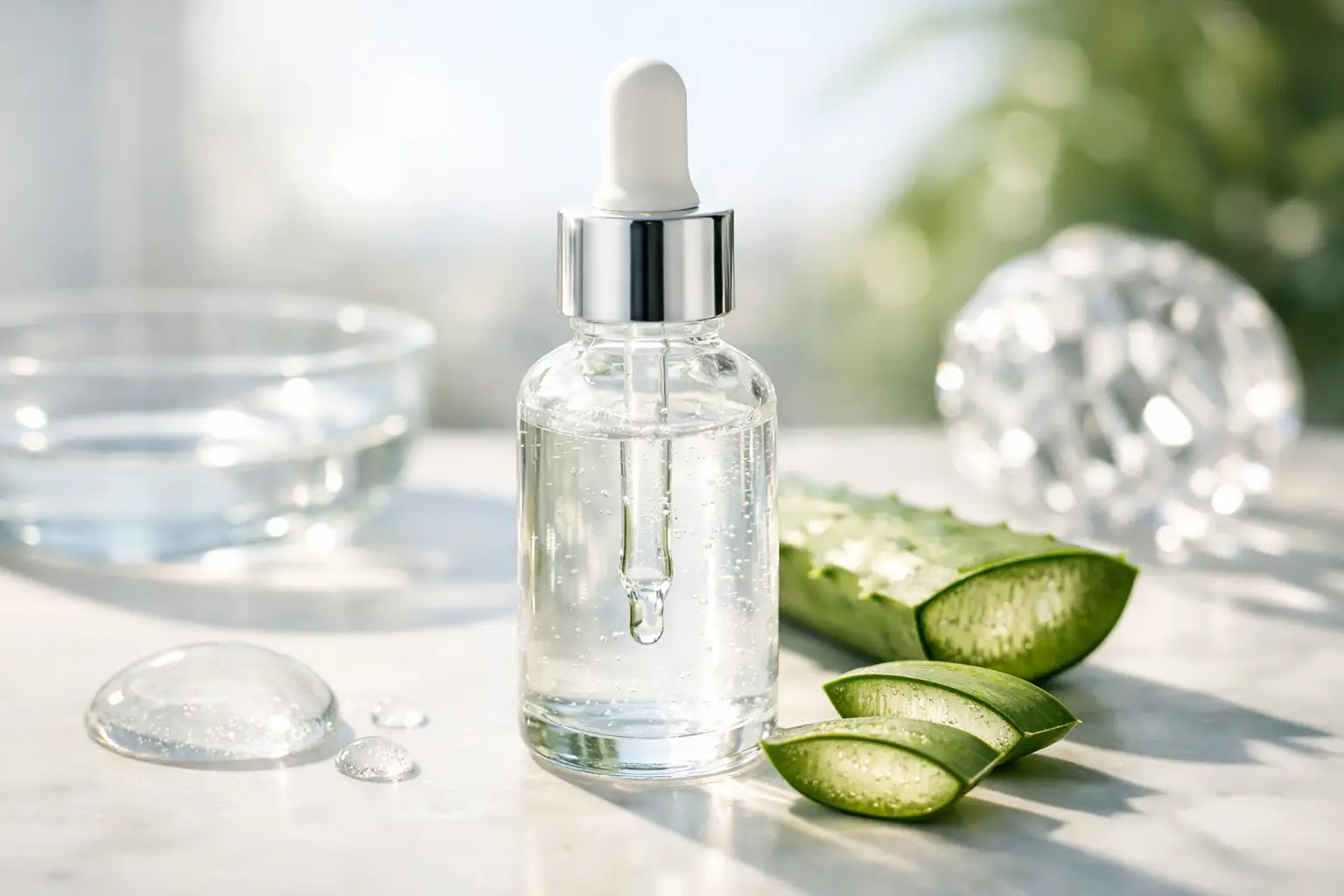
A good hyaluronic acid brightening serum should do more than give the skin a brief surface glow. It should help correct one of the most common underlying problems behind dullness – dehydration. When skin is low on water, it can look tired, uneven, and less reflective, even before pigmentation or texture become the main concern.
That is why this category is more useful than it first appears. Brightening is often treated as a separate goal from hydration, but in practice, the two are closely related. Skin that is properly hydrated tends to look calmer, smoother, and more even. A serum that combines water-binding support with well-chosen brightening ingredients can improve visible radiance while also reinforcing comfort and barrier function.
What a hyaluronic acid brightening serum is actually doing
Hyaluronic acid is a humectant, which means it attracts and holds water. In topical skincare, its role is not to bleach, strip, or force rapid change. It helps support hydration in the upper layers of the skin, which can soften the appearance of fine dehydration lines and improve the way light reflects off the surface.
On its own, hyaluronic acid is not a classic brightening active in the way vitamin C, niacinamide, tranexamic acid, or alpha arbutin may be. Its contribution to brightness is indirect but meaningful. Better hydration can reduce the look of fatigue and roughness, while a healthier moisture balance supports the skin’s ability to tolerate other active ingredients.
That distinction matters. If you are choosing a hyaluronic acid brightening serum, the brightening effect usually comes from the formula as a whole, not from hyaluronic acid alone. The best products in this category pair hydration support with ingredients that help address uneven tone, post-acne marks, oxidative stress, or inflammation-related dullness.
Why dull skin is not always a pigment problem
Many people see a lack of glow and assume they need stronger exfoliation or a more aggressive active. Sometimes that is true, but often the skin is simply overworked, under-hydrated, or mildly inflamed. Air conditioning, heat, UV exposure, long hours indoors, inconsistent sleep, and repeated cleansing can all leave the complexion looking flat.
In that state, pushing harder is not always productive. A skin-first approach asks a different question: is the skin functioning well enough to respond? If barrier integrity is compromised, even excellent brightening ingredients may trigger stinging, redness, or further imbalance.
This is where a hydrating brightening serum earns its place. It helps create conditions in which improvement can happen more steadily. Rather than forcing brightness, it supports the skin environment that makes brightness more sustainable.
Ingredients that make a hyaluronic acid brightening serum worth using
The label matters less than the formulation logic. A thoughtful serum usually combines a few complementary mechanisms instead of relying on one hero ingredient.
Hyaluronic acid may appear in different molecular weights. Higher molecular weight forms generally sit closer to the skin surface and help reduce immediate water loss, while lower molecular weight forms are often used to support hydration within the upper layers more deeply. A blend can offer a more balanced feel, though lower molecular weight is not automatically better for every skin type.
For brightening support, niacinamide is one of the most practical companions. It can help improve uneven tone, support barrier function, and regulate some visible effects of environmental stress. Vitamin C derivatives may also be included for antioxidant support and radiance, though they vary in strength and stability. Tranexamic acid is often useful for the look of discoloration, especially when the concern is lingering post-inflammatory marks. Alpha arbutin can also support a more even appearance without the intensity some people associate with stronger pigment-focused routines.
The supporting system matters too. Soothing ingredients such as panthenol, allantoin, or centella asiatica can improve tolerance. That is especially relevant if your skin is dealing with breakouts, over-exfoliation, or prolonged dehydration.
What results to expect, and what not to expect
A well-formulated hyaluronic acid brightening serum can improve skin in visible but measured ways. Most people notice comfort, softness, and a fresher surface appearance first. That initial change can happen fairly quickly because hydration affects how the skin looks and feels within days.
Tone-related changes usually take longer. If your dullness is linked to dehydration and surface roughness, radiance may improve relatively soon. If you are dealing with post-acne marks, sun-related unevenness, or a long-standing patchy tone, progress is usually slower and depends on the rest of your routine, especially daily sunscreen use.
It is also worth being realistic about what one product can do. A serum can support brightness, but it cannot compensate for chronic sleep deprivation, unprotected UV exposure, or a routine that repeatedly irritates the skin. Good skincare works best when it is part of a stable system, not a rescue attempt after constant overcorrection.
How to use a hyaluronic acid brightening serum well
Application matters more than many people realize. Hyaluronic acid performs best when it is helping retain water, so apply the serum to slightly damp skin after cleansing. Follow it with a moisturizer to help reduce water loss. Without that final step, humectant-heavy formulas may feel less satisfying, especially in dry indoor environments.
Morning use makes sense if the formula includes antioxidants or if dullness is your main concern during the day. Evening use can also work well, particularly if your routine is focused on repair and recovery overnight. Many people do best with once-daily use at first, then increase if the skin remains comfortable.
If you are already using retinoids, exfoliating acids, or strong vitamin C, this kind of serum can help balance the routine. The key is not to layer actives thoughtlessly. If your skin is easily reactive, pair one treatment-focused product with one hydrating supportive product instead of applying several performance formulas in the same session.
Choosing the right texture for your skin
Texture is not a cosmetic detail. It affects consistency, tolerance, and whether the product actually fits your life.
If your skin is oily or combination, a lightweight gel serum may feel more comfortable and reduce the temptation to skip steps in humid weather. If your skin is dry, mature, or frequently exposed to air-conditioned environments, a slightly richer serum with barrier-supportive ingredients may be more appropriate. Sensitive skin often benefits from shorter ingredient lists, minimal fragrance, and a lower level of competing actives.
Climate plays a role as well. In places with heat, humidity, and strong sun exposure, people often want brightening benefits without heaviness. But indoor cooling and dehydration are still common stressors, so water-binding support remains relevant even when the weather is warm.
When this serum type is a good choice, and when it may not be enough
A hyaluronic acid brightening serum is a strong option if your skin looks dull, feels dehydrated, or seems less resilient than usual. It is also useful if you want a more measured way to address uneven tone without moving immediately to harsher acids or more complex treatment routines.
It may be less sufficient on its own if pigmentation is pronounced, melasma is a concern, or your main issue is significant textural congestion. In those cases, you may need a broader plan that includes sunscreen discipline, targeted pigment ingredients, and in some situations, professional guidance.
There is no contradiction in wanting brighter skin while also protecting skin integrity. In fact, the two goals should support each other. At SHINORA Health & Beauty, that balance is central to how skincare should work: repair first, then build visible improvement through consistency.
A serum should not ask your skin to perform under stress. The better approach is quieter and more disciplined – hydrate well, support the barrier, use brightening actives with restraint, and allow results to accumulate in a way the skin can sustain. That is often how radiance returns and, more importantly, how it stays.


Leave a Reply