
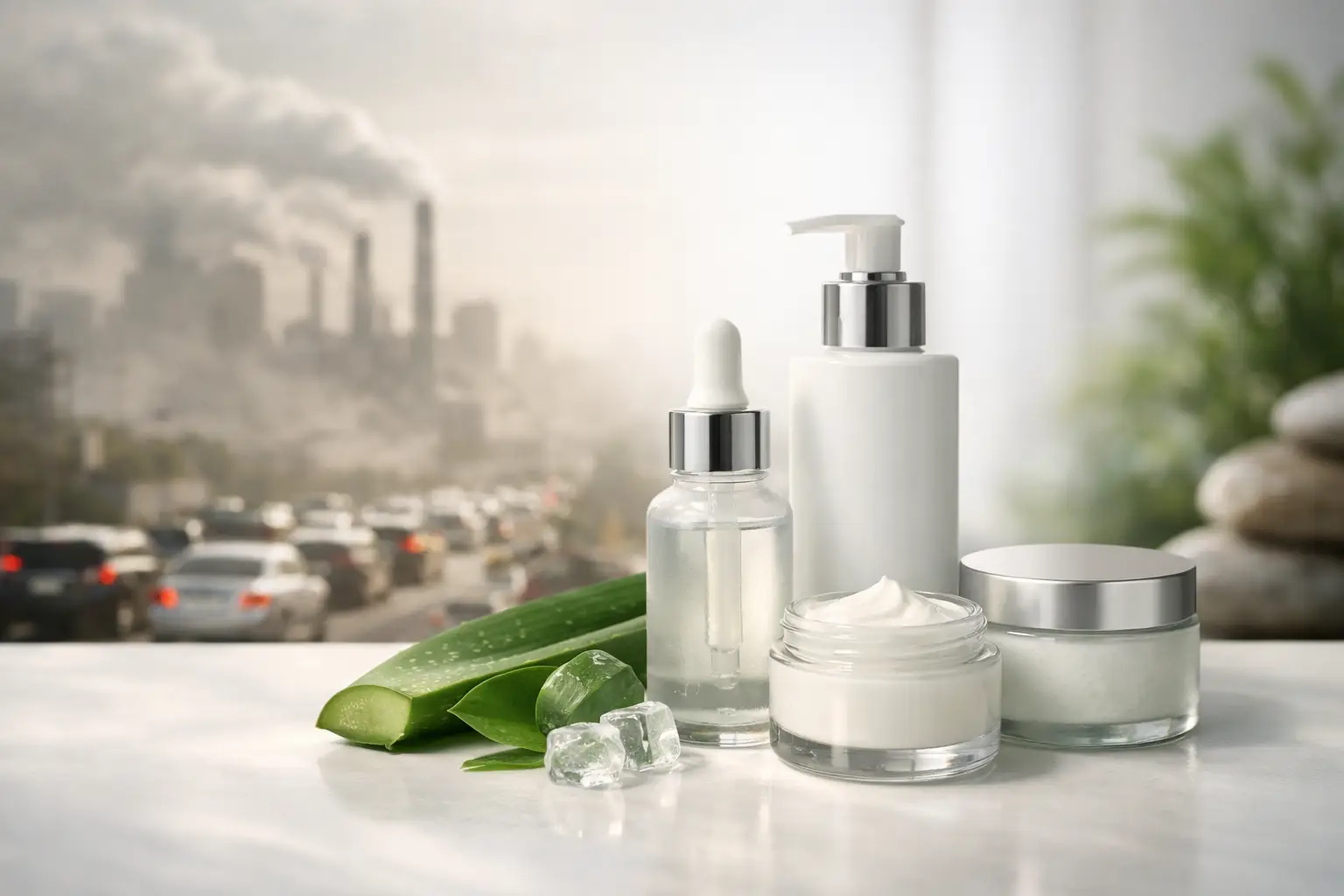
When skin starts to look tired before you feel tired, the environment is often part of the story. Heat, humidity, UV exposure, air pollution, indoor air conditioning, poor sleep, and long hours under stress can all weaken the skin’s ability to stay balanced. The best skincare for environmental stress is not the most aggressive routine or the product with the longest ingredient list. It is the one that helps skin protect itself, recover efficiently, and remain functional over time.
For many adults, especially those balancing demanding schedules and urban exposure, environmental stress shows up as dehydration, dullness, congestion, sensitivity, uneven tone, or a general loss of resilience. These changes can happen gradually, which is why they are easy to misread as simple “bad skin days.” In reality, skin under constant pressure often needs less stimulation and more support.
What environmental stress does to skin
Environmental stress is not one single trigger. It is a cumulative burden. UV radiation increases oxidative stress and accelerates visible aging. Pollution can contribute to irritation, congestion, and a compromised skin barrier. Dry indoor air and frequent temperature shifts pull water from the skin, while chronic psychological stress can intensify inflammation and slow recovery.
The result is not always dramatic. Often it looks subtle at first – skin that feels tight by afternoon, makeup that sits unevenly, post-acne marks that linger longer, or a complexion that appears flat despite regular cleansing and moisturizing. Over time, the barrier becomes less efficient, hydration becomes harder to maintain, and the skin may react more easily to active ingredients it once tolerated well.
This is why a repair-led approach matters. Skin coping with environmental pressure benefits from routines that reduce unnecessary strain and reinforce the systems already designed to keep it resilient.
How to choose the best skincare for environmental stress
The best skincare for environmental stress usually shares three priorities: barrier support, antioxidant defense, and sustained hydration. Everything else depends on your skin condition, climate, and tolerance.
Barrier support matters because the outer layer of skin is your first line of defense. When that barrier is compromised, water escapes more easily and irritants penetrate more readily. Ingredients such as ceramides, fatty acids, cholesterol, panthenol, and squalane help support this protective function. These are not flashy ingredients, but they are foundational.
Antioxidant support helps address the oxidative strain caused by UV exposure and pollution. Vitamin C is the most familiar option, but not every form suits every skin type. Some people tolerate pure L-ascorbic acid well, while others do better with more stable or gentler derivatives. Niacinamide is another useful ingredient because it supports barrier function, helps reduce the look of uneven tone, and is generally well tolerated when properly formulated.
Hydration is often misunderstood as simply adding water to the skin. In practice, effective hydration means drawing in moisture and keeping it there. Hyaluronic acid can help bind water, but it works best when paired with a formula that also reduces transepidermal water loss. Humectants without barrier-supportive ingredients can leave skin feeling briefly plump but not necessarily stronger.
A disciplined routine works better than an ambitious one
Environmental stress tends to expose the weaknesses in complicated skincare routines. Too many exfoliants, too many actives layered together, or frequent product switching can leave skin more reactive, not more refined.
A disciplined routine usually performs better. In the morning, a gentle cleanse or a simple rinse may be enough, depending on your skin type. Follow that with a hydrating or antioxidant serum, a moisturizer suited to your barrier needs, and a broad-spectrum sunscreen. If you spend long hours near windows, commute regularly, or live in a high-UV climate, sunscreen is not optional. It is one of the few skincare steps with a clear and measurable long-term return.
At night, cleanse thoroughly enough to remove sunscreen, sweat, and pollution residue without over-stripping the skin. Then focus on repair. That might mean a serum with niacinamide, peptides, hyaluronic acid, or advanced recovery ingredients, followed by a moisturizer that seals in hydration and supports overnight recovery.
For some skin types, retinoids remain a valuable part of a long-term routine because they help support renewal and improve the appearance of uneven tone and fine lines. But this is where restraint matters. If your skin is already depleted from sun, pollution, travel, poor sleep, or overuse of exfoliants, pushing stronger actives too quickly can deepen irritation. Results are better when repair capacity is respected.
Ingredients that make sense – and ingredients that depend
There is no single formula that qualifies as the best skincare for environmental stress for everyone. Skin in a hot, humid city may need lightweight hydration and antioxidant support. Skin exposed to cold weather, indoor heating, or frequent air travel may need richer barrier reinforcement.
Still, a few ingredient categories are consistently useful.
Hyaluronic acid remains valuable for hydration when used in a balanced formula. Niacinamide is helpful for barrier support, tone, and resilience. Ceramides and lipids are central for dry or compromised skin. Panthenol and allantoin can be comforting when sensitivity is present. Peptides may support a stronger, more recovery-focused routine, particularly when the goal is long-term skin quality rather than short-term surface effects.
More advanced repair-focused technologies can also be relevant, particularly for skin showing signs of fatigue, post-inflammatory marks, or reduced resilience. The key is not novelty for its own sake. It is whether the formulation supports the skin’s natural recovery processes in a way that is realistic for regular use.
Exfoliating acids deserve a more careful place in this conversation. They can help with dullness and congestion caused by environmental buildup, but overuse is a common reason skin becomes more vulnerable. If you already use acids, the question is not whether they are good or bad. It is whether the frequency matches your skin’s current capacity.
Signs your routine is working
A restorative routine often produces quieter improvements than trend-driven skincare promises. Skin may not transform overnight, but it should become more stable. That usually means less tightness after cleansing, fewer random flare-ups, a smoother texture, better hydration retention through the day, and a complexion that looks more even and rested.
Another useful sign is improved tolerance. Skin under less stress often handles active ingredients more predictably. That does not mean you should add more steps immediately. It means the barrier is doing its job more effectively.
You may also notice that makeup applies more evenly, post-acne marks fade more consistently, and the skin recovers faster after travel, late nights, or periods of high workload. These are meaningful changes because they reflect improved function, not just temporary surface smoothing.
Common mistakes when treating environmentally stressed skin
The most common mistake is trying to correct every symptom at once. Dullness, dehydration, breakouts, redness, and early fine lines can all come from environmental strain, but using separate strong products for each concern often creates more instability.
Another mistake is treating oily skin as if it does not need hydration. In humid climates especially, it is easy to assume shine means moisture is not an issue. In reality, oily skin can still be dehydrated and barrier-impaired, particularly after repeated cleansing, acne treatments, or sun exposure.
It is also easy to confuse temporary stimulation with progress. Tingling, peeling, and tightness are not signs of effectiveness by default. In many cases, they are signs that the skin is spending resources on recovery rather than benefiting from treatment.
This is where a science-led, repair-first philosophy becomes practical rather than theoretical. Brands such as SHINORA Health & Beauty build around the idea that skin performs better when recovery, hydration, and resilience come before correction. For environmentally stressed skin, that approach is not conservative. It is efficient.
Why less excess often leads to better skin
Environmental stress is persistent. You cannot fully remove UV exposure, pollution, air-conditioned offices, emotional stress, or disrupted sleep from modern life. What you can do is build a routine that helps skin remain steady under those conditions.
That usually means choosing formulations with a clear purpose, using actives with discipline, and giving the barrier enough support to function well day after day. Good skincare does not need to feel dramatic to be effective. Often the strongest routine is the one that asks less from the skin and gives more back.
If your skin has been looking fatigued, reactive, or dull despite effort, the answer may not be another intensive product. It may be a calmer standard – one built around repair first, and visible improvement as the natural result.


Leave a Reply