

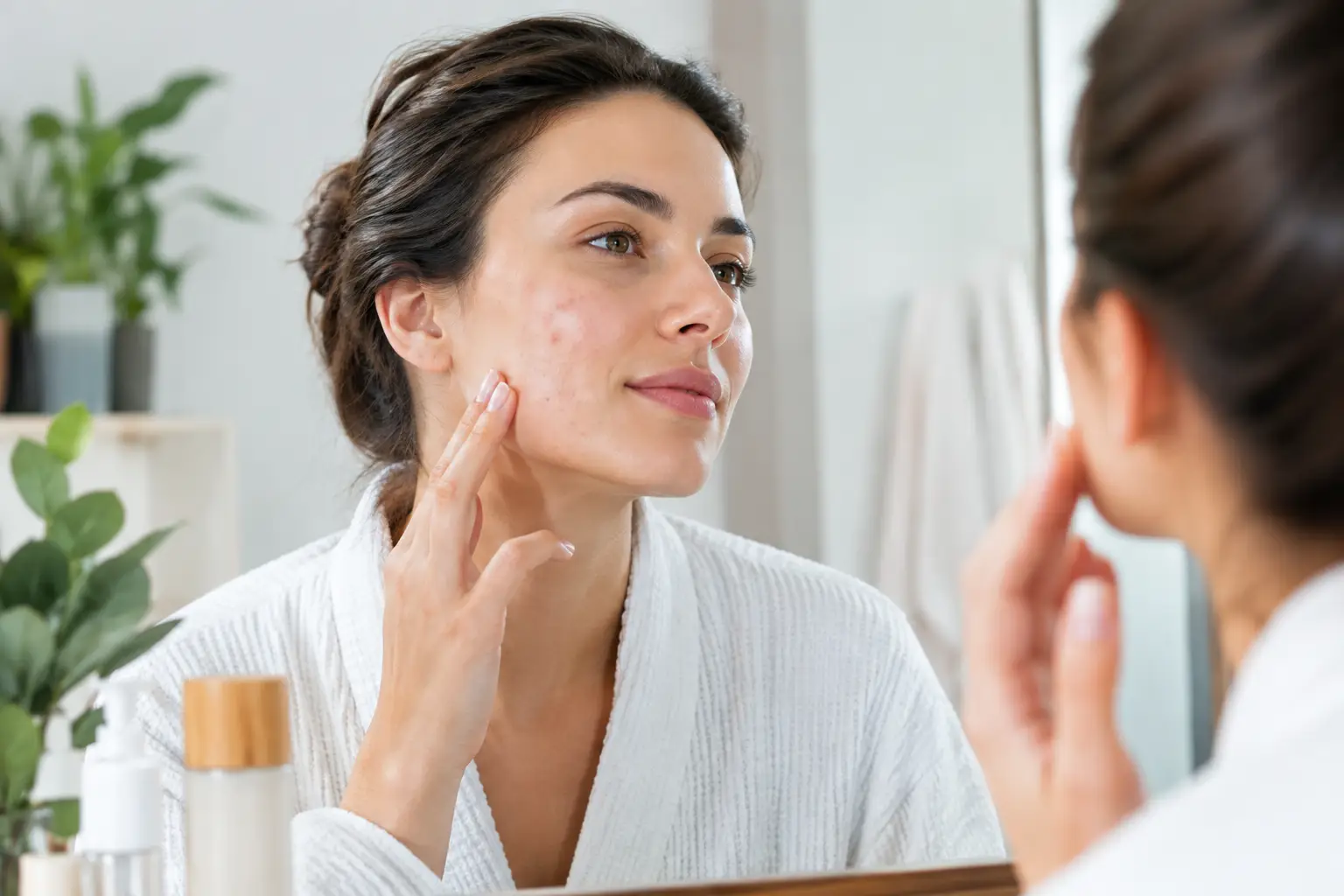
If your skin feels tight by midday but still looks shiny across the forehead, nose, or cheeks, the contradiction is real. Can dehydrated skin look oily? Yes – and it often does. This is one of the most common reasons people mistake dehydration for excess oil, then choose harsher products that leave the skin more reactive, more uncomfortable, and less balanced over time.
That confusion matters because dehydration and oiliness are not the same condition. One describes a lack of water in the skin. The other refers to sebum production. You can have dry skin that is dehydrated, oily skin that is dehydrated, or combination skin that becomes dehydrated under stress, travel, over-cleansing, air conditioning, retinoids, or frequent exfoliation. The surface can look glossy while the deeper layers are still short on water.
Why can dehydrated skin look oily?
When skin is dehydrated, its barrier function is often under strain. Water escapes more easily, and the surface may become less smooth and less resilient. In response, the skin can produce more oil or simply allow existing oil to sit more visibly on the surface because the texture is uneven and light reflects differently. The result is a face that looks shiny but does not feel comfortable.
This is why a person can describe their skin as oily while also noticing tightness after cleansing, makeup that clings to dry patches, or fine lines that seem sharper later in the day. Oil does not automatically mean hydration. In fact, a slick surface and a compromised moisture balance often appear together.
Climate and lifestyle can make this more obvious. In humid, urban environments, the skin may already be dealing with heat, pollution, sweat, and long hours indoors under air conditioning. Add stress, inconsistent sleep, or a routine built around stripping cleansers and strong acids, and the skin can become both shiny and dehydrated at once.
Dehydrated skin vs oily skin
The distinction is simple in theory but less obvious in practice. Oily skin is a skin type. It reflects a tendency to produce more sebum. Dehydrated skin is a skin condition. It can happen to any skin type, temporarily or repeatedly, depending on your environment, routine, and overall stress load.
A person with naturally oily skin may still have inadequate water content in the outer layers of the skin. That is often when breakouts and irritation become harder to manage. The instinct is to dry everything out, but that can intensify the cycle. The skin feels greasy, so stronger cleansers are used. The barrier becomes more disrupted, dehydration worsens, and the skin appears even less balanced.
Dry skin, by contrast, lacks oil. But even here, dehydration may be layered on top. That is why the same word – dry – is often used too broadly. It can describe roughness, tightness, flaking, dullness, or low oil production, even though those are not identical issues.
Signs your shiny skin may actually be dehydrated
The most useful clue is discomfort. Truly oily skin can still feel relatively supple. Dehydrated oily skin often feels tight after washing, looks greasy by afternoon, and may sting when active products are applied.
Texture is another clue. Dehydrated skin can look dull despite being shiny. It may show rough patches, congestion, or makeup that separates unevenly. Fine lines may appear more pronounced, especially around the eyes or mouth, not because aging suddenly accelerated, but because water content is low and the skin is less plump.
You may also notice that your skin becomes unpredictable. It breaks out more easily, flushes faster, or swings between slickness and sensitivity. That inconsistency often points to a barrier that needs support rather than more aggressive correction.
What causes this oily-but-dehydrated look?
Over-cleansing is a common contributor. Washing too often, using hot water, or relying on cleansers that leave the skin feeling squeaky clean can remove more than debris and sunscreen. They can disturb the lipids and humectant balance that help the skin hold water.
Exfoliation can also be part of the problem. Acids, scrubs, and resurfacing products have a place, but more is not better. When they are layered too frequently or combined without enough recovery time, the skin may look polished briefly but become more fragile underneath.
Environmental exposure plays a role as well. Air travel, low-humidity offices, sun exposure, and pollution all increase stress on the skin. So do inadequate sleep and high cortisol states, which can influence inflammation, repair, and overall skin resilience.
Then there is product mismatch. Heavy occlusives can make some dehydrated complexions look greasier without solving the water deficit, while lightweight gels alone may not be enough if the barrier is already impaired. The answer is usually not the richest product or the strongest one. It is a better-balanced routine.
How to care for dehydrated skin that looks oily
Start by reducing friction. Use a gentle cleanser that removes sunscreen, makeup, and daily buildup without leaving the skin tight. If your face feels stripped immediately after cleansing, that is useful information. Clean skin should feel fresh, not tense.
Next, focus on water support and barrier repair together. Humectants such as glycerin and hyaluronic acid can help attract water into the outer skin layers, but they work best within a routine that also includes barrier-supportive ingredients. These may include ceramides, panthenol, squalane, and other replenishing components that help reduce transepidermal water loss.
This is where restraint matters. If your skin is oily-looking and dehydrated, a disciplined routine usually works better than a crowded one. A well-formulated hydrating serum and a balanced moisturizer often do more than alternating between drying treatments and heavy rescue creams.
If you use retinoids, exfoliating acids, or acne treatments, adjust frequency rather than assuming you need to stop everything. Sometimes the skin needs spacing, not abandonment. Using these products fewer nights per week, and pairing them with recovery-focused care, can improve both clarity and comfort.
Sunscreen is equally important. UV exposure can impair barrier function and contribute to dehydration, inflammation, and uneven texture. A sunscreen that feels comfortable enough for daily use is part of restoration, not just protection.
Can dehydrated skin look oily even when you have acne?
Yes, and this is where misreading the skin can become especially costly. Acne-prone skin is often treated with a strong oil-control mindset. Sometimes that is appropriate. But when breakouts are accompanied by tightness, stinging, flaking, or a polished yet irritated sheen, dehydration may be present too.
In that case, harsher treatment can increase inflammation and prolong recovery. Congestion does not always mean the skin needs to be stripped. It may need a calmer environment so cell turnover, barrier repair, and sebum flow can normalize more effectively.
This does not mean avoiding all active ingredients. It means using them in a way the skin can tolerate consistently. Long-term progress usually comes from steadiness, not intensity.
How long does it take to improve?
That depends on what is driving the dehydration. If the issue is mostly routine-related, skin can begin to feel more comfortable within days and look more balanced within a few weeks. If the barrier has been under strain for months, or if acne treatments and environmental exposure are ongoing, progress may be slower.
The key is to watch for calmer signals rather than instant transformation. Less tightness after cleansing, reduced afternoon shine, smoother texture, and better product tolerance are meaningful improvements. Skin repair is often quiet before it becomes visible.
When oily shine is not just dehydration
Not every shiny complexion is dehydrated. Genetics, hormones, heat, and naturally higher sebum output all matter. Some people genuinely have oily skin and still need oil-regulating strategies. But even then, hydration should not be treated as optional.
The practical question is not whether your skin produces oil. It is whether your skin is functioning comfortably and consistently. If the surface is shiny but the skin feels calm, resilient, and even, you may simply be oily. If it is shiny and uncomfortable, dehydration is worth considering.
At SHINORA, this distinction reflects a broader principle: skin usually responds better to repair than to force. When you address water balance, barrier integrity, and daily stress on the skin, excess shine often becomes easier to manage – not because it was suppressed, but because the skin no longer has to compensate so loudly.
If your skin looks oily but behaves as though it is thirsty, believe the behavior. The most effective routines are often the ones that stop fighting the surface and start restoring what sits beneath it.


Leave a Reply