
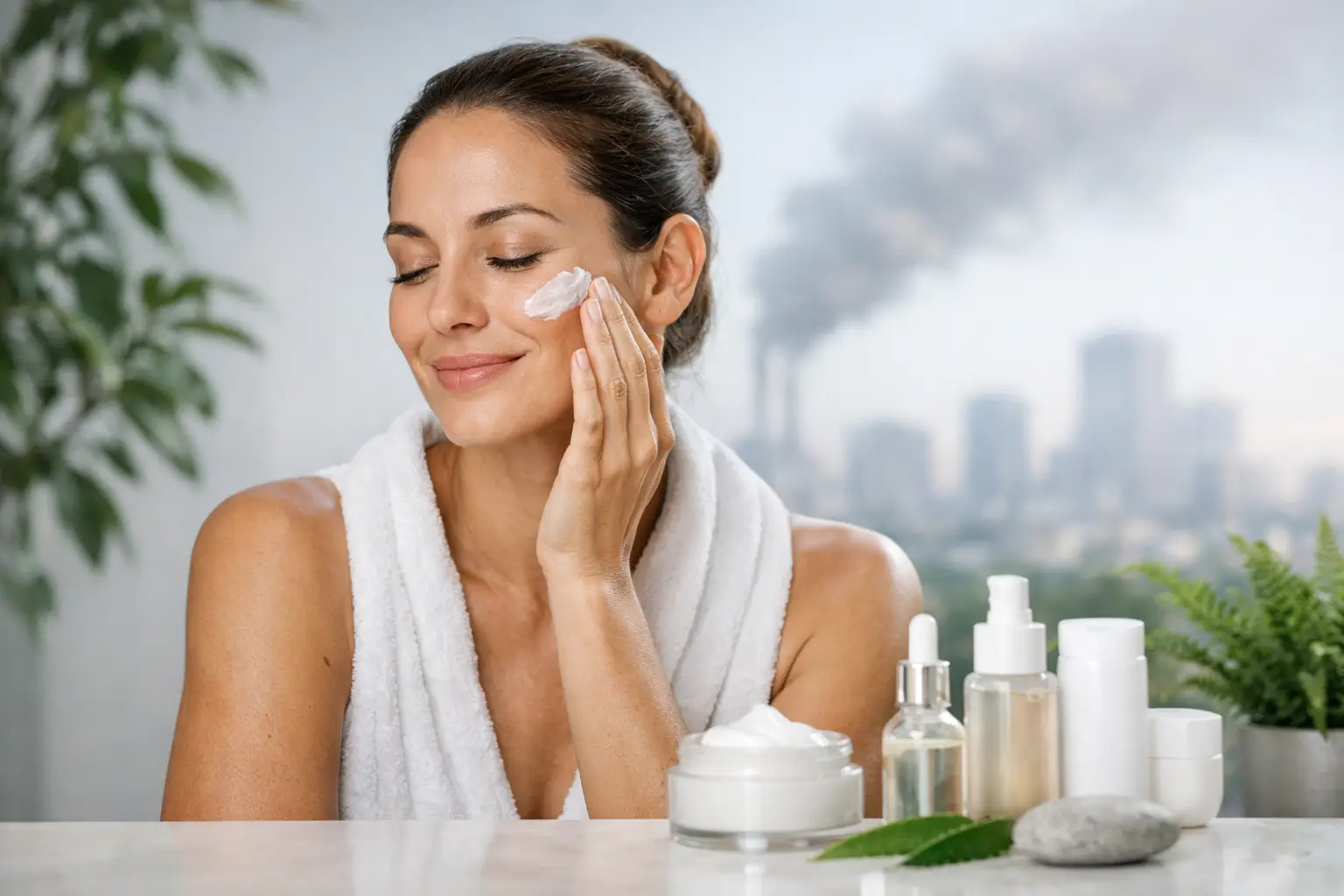
Your skin usually tells the truth before you do. When sleep is cut short, the commute is hot, the air feels heavy, and screen-filled days stretch into late evenings, the signs often appear as tightness, dullness, uneven tone, or a sudden loss of clarity. An environmental stress skincare routine is less about adding more products and more about helping skin stay functional under pressure.
That distinction matters. Skin exposed to pollution, UV radiation, heat, dry indoor air, and chronic lifestyle stress does not only look tired. It behaves differently. Barrier function becomes less efficient, water loss increases, inflammation can linger at a low level, and recovery slows. The result is often a familiar but frustrating mix of dehydration, sensitivity, rough texture, congestion, and early visible aging.
For most adults, especially those balancing work intensity, city exposure, and irregular rest, the right routine is not aggressive correction. It is structured support. Skin under environmental strain usually benefits from calm, repeatable care that protects by day and restores by night.
What environmental stress does to skin
Environmental stress is a broad term, but in skincare it usually refers to cumulative external and lifestyle pressures that challenge normal skin function. Sun exposure remains the most significant factor in visible aging, yet it rarely acts alone. Air pollution can contribute to oxidative stress. Heat and humidity may increase oiliness and congestion in some people, while air conditioning can leave skin dehydrated and uncomfortable. Poor sleep and psychological stress can further influence inflammation and repair.
These stressors do not affect everyone in the same way. Oily skin may become more reactive and congested. Dry skin may become rough, tight, and more prone to flaking. Post-acne marks can seem slower to fade. A complexion that once looked even may begin to appear dull or inconsistent. This is why a good environmental stress skincare routine should be built around skin behavior rather than trends.
The structure of an environmental stress skincare routine
A useful routine has four jobs. It should cleanse without stripping, protect against daily exposure, maintain hydration and barrier integrity, and support overnight recovery. If one of these pieces is missing, the rest often underperform.
Many people make the mistake of treating stressed skin as if it needs force. Strong acids, frequent exfoliation, harsh cleansers, and too many actives can create the illusion of progress for a short time, then leave skin less resilient. When skin is already managing environmental pressure, excess intervention tends to compound the problem.
Morning: protect first, then hydrate
Morning skincare should prepare skin for exposure rather than chase instant transformation. Start with a gentle cleanse, or even a simple rinse if your skin is dry and your evening cleanse was thorough. The goal is to remove sweat, overnight oil, and residual product without disrupting the barrier.
After cleansing, apply hydration in a way that suits your skin type. A humectant-rich serum can help bind water into the upper layers of skin, especially if dehydration is a recurring concern. Hyaluronic acid is often useful here, though it performs best when paired with a moisturizer that helps reduce water loss rather than being used alone.
Next, consider antioxidant support. This step can be helpful in an environmental stress skincare routine because antioxidants assist in managing oxidative stress caused by UV exposure and pollution. That does not mean every skin type tolerates every antioxidant equally. Vitamin C is well studied and effective, but some formulas can be irritating, especially on sensitized skin. In those cases, a gentler antioxidant approach may be more sustainable.
Moisturizer comes next. Choose one that reinforces barrier function with ingredients such as ceramides, glycerin, squalane, or soothing support agents. The texture depends on climate and skin type. In humid conditions, a lighter emulsion may be enough. In dry indoor environments or on flights, a richer cream may be more appropriate.
The final morning step is sunscreen. This is the non-negotiable part of long-term skin preservation. UV exposure amplifies many of the changes people describe as stress-related, including uneven pigmentation, dullness, fine lines, and slower recovery. Broad-spectrum protection, worn consistently and in an adequate amount, does more for skin resilience than most complicated routines.
Evening: remove the day and support repair
Night care should be less crowded than many people think. If you wear sunscreen, makeup, or spend time in polluted environments, cleanse thoroughly in the evening. For some, a double cleanse is useful, especially when water-resistant sunscreen is involved. The point is complete removal without friction.
Once skin is clean, this is the time to use targeted treatment carefully. If your main concerns are dullness, post-acne marks, or texture, gentle cell-turnover support can help. Retinoids remain one of the most evidence-backed options for long-term skin renewal, but they are not automatically the right starting point for everyone. Sensitive or barrier-impaired skin may do better with slower introduction, lower frequency, or a period of barrier-focused care before retinoid use.
If retinoids are not suitable, a mild exfoliating acid used sparingly can support brightness and clarity. The trade-off is simple: the more compromised your skin feels, the less often exfoliation should appear. Repair has to come before refinement.
Finish with a restorative moisturizer. Night is when skin naturally shifts into repair mode, and this is where richer textures, barrier lipids, and replenishing formulas can be especially valuable. For skin that feels chronically strained, recovery-focused ingredients are often more useful than dramatic resurfacing claims.
The ingredients that make the most sense
In an environmental stress skincare routine, ingredient selection should be practical rather than aspirational. Humectants such as hyaluronic acid and glycerin help maintain hydration. Ceramides and fatty acids support barrier integrity. Niacinamide can be useful for improving resilience, balancing oil, and supporting a more even-looking tone, though concentration matters because stronger is not always better.
Antioxidants have a clear role, but formulation quality matters more than label noise. A well-made antioxidant serum can help support skin exposed to urban living and sun, but poorly tolerated formulas can leave skin red or reactive. Repair-focused ingredients, including peptides and newer regenerative technologies, may also have a place when the goal is recovery and long-term skin quality rather than quick cosmetic impact.
This is where a restrained, science-led brand such as SHINORA Health & Beauty fits naturally within the conversation. The most useful formulations are often the ones designed to help skin recover, hold water more effectively, and maintain function under repeated stress, not the ones that promise overnight correction.
What to avoid when skin is under pressure
When skin looks tired, the temptation is to overcompensate. That usually means layering too many actives, switching products too often, or using high-strength treatments before the barrier is stable. Short-term intensity can create long-term inconsistency.
Fragrance-heavy formulas may also be less ideal for reactive skin, though this depends on individual tolerance. Strong foaming cleansers, frequent scrubs, and daily exfoliation are common reasons stressed skin becomes even less comfortable. More treatment is not the same as better treatment.
It also helps to be realistic about what skincare can and cannot do. A thoughtful routine can reduce visible effects of environmental stress and support healthier skin function, but it cannot cancel out chronic sleep deprivation, excessive sun exposure, or high stress on its own. Topical care works best when it is part of a broader pattern of recovery.
Adjusting your routine by season and lifestyle
A routine should move with your environment. In hot, humid months, lighter hydration and more attention to sunscreen reapplication may be enough. In cooler weather or heavily air-conditioned spaces, skin often needs more emollient support and less exfoliation. Frequent travel, long office hours, and exercise habits can also change what your skin needs week to week.
This is why consistency matters more than complexity. If a routine is too long, too reactive, or too difficult to maintain, it tends to fail at the exact moment skin most needs support. A disciplined three- to five-step routine usually performs better than an ambitious ten-step one used irregularly.
How long it takes to see a difference
Skin repair is gradual. Hydration and comfort may improve within days, but changes in tone, texture, and resilience usually take longer. Four to eight weeks is a reasonable period to judge whether a routine is helping, assuming products are used consistently and irritation is not present.
If skin becomes more reactive, more congested, or persistently uncomfortable, that is useful information. It often means the routine is too active, too drying, or simply not aligned with your skin’s current condition. A calmer approach is often the smarter one.
The most effective environmental stress skincare routine is rarely the most elaborate. It is the one that respects how skin actually functions under pressure, protects what is working, and gives recovery enough time to happen. When care is measured and consistent, skin tends to respond with something more valuable than a quick glow – steadiness.


Leave a Reply