
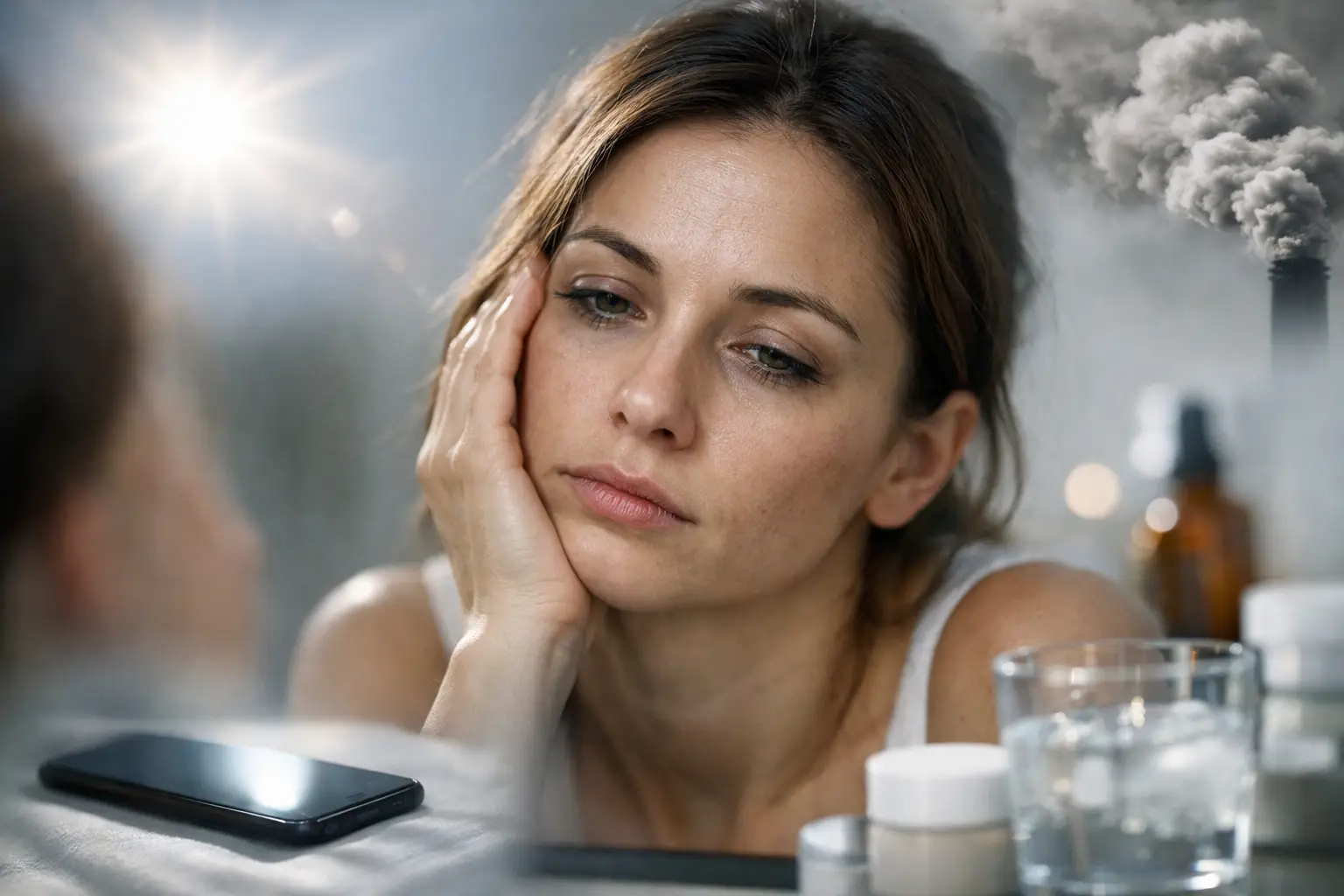
Some mornings, skin looks tired before the day has even started. It may appear dull, less supple, slightly uneven, or simply harder to revive with the products that usually keep it balanced. If you have been wondering what causes skin fatigue, the answer is rarely a single issue. It is usually the visible result of accumulated stress – biological, environmental, and behavioral – showing up on the skin’s surface.
Skin fatigue is not a formal medical diagnosis, but it is a useful way to describe a common pattern. The skin can seem depleted, slower to recover, and less responsive than usual. That change often reflects a combination of barrier strain, reduced hydration, oxidative stress, inflammation, poor recovery, and the gradual effects of time.
What causes skin fatigue in the first place?
At its core, skin fatigue happens when the skin is exposed to more stress than it can comfortably repair. Healthy skin is dynamic. It renews itself, maintains hydration, regulates inflammation, and protects against external aggressors. But when daily pressure exceeds that repair capacity, resilience begins to slip.
This is why skin fatigue can look different from person to person. For one individual, it shows up as persistent dullness and dehydration. For another, it appears as irritation, roughness, congestion, or a loss of bounce. The common thread is that the skin no longer looks as rested, clear, or balanced as it normally would.
Barrier disruption and water loss
One of the most common drivers is a weakened skin barrier. The barrier helps hold moisture in and irritants out. When it becomes compromised, water escapes more easily through transepidermal water loss, and the skin becomes more vulnerable to sensitivity and environmental stress.
This can happen from over-cleansing, harsh exfoliation, strong actives used too often, low humidity, air conditioning, or simply using products that do not suit the skin’s current condition. When the barrier is strained, skin often looks flat and feels uncomfortable rather than visibly inflamed. That subtle depletion is a classic sign of fatigue.
Chronic dehydration
Dehydrated skin tends to lose the surface freshness associated with healthy function. It may look crepey, feel tight, or develop a texture that reflects light poorly. Even oily or acne-prone skin can be dehydrated, which is why skin fatigue is not limited to dry skin types.
Hydration depends on more than drinking water. It is influenced by humectants in skincare, barrier integrity, climate, sleep, and the surrounding environment. In warm, urban settings, repeated transitions between heat outdoors and dry indoor cooling can steadily erode moisture balance.
Oxidative stress from daily exposure
A major answer to what causes skin fatigue is oxidative stress. Ultraviolet radiation, pollution, cigarette smoke, and even persistent psychological stress can increase the production of free radicals. These unstable molecules damage lipids, proteins, and cellular structures, which gradually affects brightness, firmness, and clarity.
This process does not always create immediate irritation. Often it appears as skin that looks older, more uneven, and less energized over time. In other words, fatigue can be the visible expression of cumulative micro-damage.
Lifestyle pressure and the skin’s recovery cycle
Skin does a great deal of its repair work when the body is resting. That is why modern routines can so easily affect skin quality, even when a skincare routine seems technically sound.
Poor sleep and disrupted repair
Insufficient sleep can influence cortisol levels, inflammation, circulation, and overnight recovery. The next day, skin may look duller or slightly puffy, with more noticeable fine lines and less radiance. Repeated sleep disruption can make these changes less occasional and more constant.
This matters because skin fatigue is often less about dramatic damage and more about reduced recovery. The skin is still functioning, but not optimally. That difference can be enough to make it appear tired.
Psychological stress
Stress affects skin through hormonal and inflammatory pathways. Elevated cortisol may impair barrier function, increase oil imbalance in some individuals, and intensify sensitivity in others. It can also influence behaviors that further fatigue the skin, such as poor sleep, inconsistent routines, or overuse of corrective products during periods of frustration.
There is also a less discussed effect. When stress is ongoing, the skin can remain in a low-grade state of reactivity. It may not break out severely or become visibly inflamed, but it may lose steadiness. That instability often reads as fatigue.
Nutrition and recovery capacity
Skin is not isolated from overall physiology. Diets low in protein, essential fats, antioxidants, or key micronutrients may gradually affect repair and resilience. Alcohol can also contribute by disrupting hydration and recovery, while high-sugar dietary patterns may, over time, intensify glycation processes associated with visible aging.
This does not mean every period of dull skin can be solved nutritionally. But it does mean the skin often reflects broader recovery status. A well-formulated serum cannot fully compensate for chronic strain elsewhere.
Environmental factors that make skin look tired
In cities and fast-paced climates, environmental pressure is often underestimated because it is so routine.
UV exposure
Even modest daily sun exposure contributes to oxidative stress, inflammation, and the gradual breakdown of collagen. Skin may not burn, yet still accumulate damage that affects tone, texture, and elasticity. This is one reason fatigue can coexist with early signs of aging.
Pollution and particulate matter
Air pollution can settle on the skin and intensify oxidative stress, particularly when combined with sebum, sweat, and UV exposure. Over time, skin may appear more congested, less luminous, and harder to keep balanced. Cleansing matters here, but aggressive cleansing can create a new problem by disturbing the barrier. The solution is precision, not force.
Indoor climate and screen-heavy routines
Dry indoor air, prolonged office hours, irregular meals, and long stretches under artificial lighting do not damage skin in a dramatic way, but they can contribute to fatigue gradually. Many professionals notice that their skin seems more depleted during periods of intense work not because one factor changed, but because several small strains accumulated at once.
What causes skin fatigue to worsen with age?
As skin ages, its ability to repair and retain moisture changes. Cell turnover slows, natural lipid content can decline, and collagen support becomes less robust. This does not mean tired-looking skin is inevitable, but it does mean the threshold for visible fatigue may become lower.
A routine that was once enough in your twenties may no longer provide the same support in your thirties, forties, or beyond. Skin often needs more intentional hydration, gentler treatment, and stronger antioxidant and barrier support. The goal is not aggressive correction. It is to preserve function so the skin can recover more efficiently.
Hormonal changes can also matter. Around periods of stress, menstrual shifts, postpartum transitions, or perimenopause, the skin may become drier, thinner, more reactive, or less predictable. In these phases, fatigue is often part of a broader change in skin behavior.
When your routine is part of the problem
One of the more frustrating causes of skin fatigue is a routine that looks advanced on paper but overwhelms the skin in practice. Too many acids, too much retinol, frequent exfoliation, or layering multiple strong actives can leave the skin in a constant state of low-level irritation.
The result is often paradoxical. People try to treat dullness, roughness, or uneven tone with more correction, but the skin becomes more fatigued because its repair resources are being stretched further. Brighter, healthier-looking skin usually comes from a strong barrier and consistent hydration first, then carefully calibrated actives.
This is where a science-led approach matters. Restoration should come before intensity. Brands such as SHINORA Health & Beauty are built around that principle for good reason: skin that can recover well will usually perform better over time than skin that is pushed too hard.
How to respond when skin looks fatigued
If your skin seems tired, the most useful question is not which quick fix will make it glow by tomorrow. It is which stressors are currently outpacing recovery.
Start by simplifying. Use a gentle cleanser, support hydration with humectants and barrier-replenishing ingredients, and be disciplined with daily sun protection. If you use retinoids, acids, or brightening actives, consider whether frequency rather than the ingredient itself is the issue. Many routines improve when intensity is reduced, not increased.
Then look beyond the bathroom shelf. Sleep, stress load, alcohol intake, air-conditioned environments, and prolonged UV exposure all shape the way skin behaves. The skin does not need perfection, but it does respond well to stability.
Fatigued skin is often asking for fewer disruptions and more recovery. When care becomes calmer, more deliberate, and more supportive, the skin usually reflects that shift. Not all at once, and not dramatically, but in the way healthy skin tends to improve – with steadier tone, better comfort, and a return of quiet resilience.


Leave a Reply