
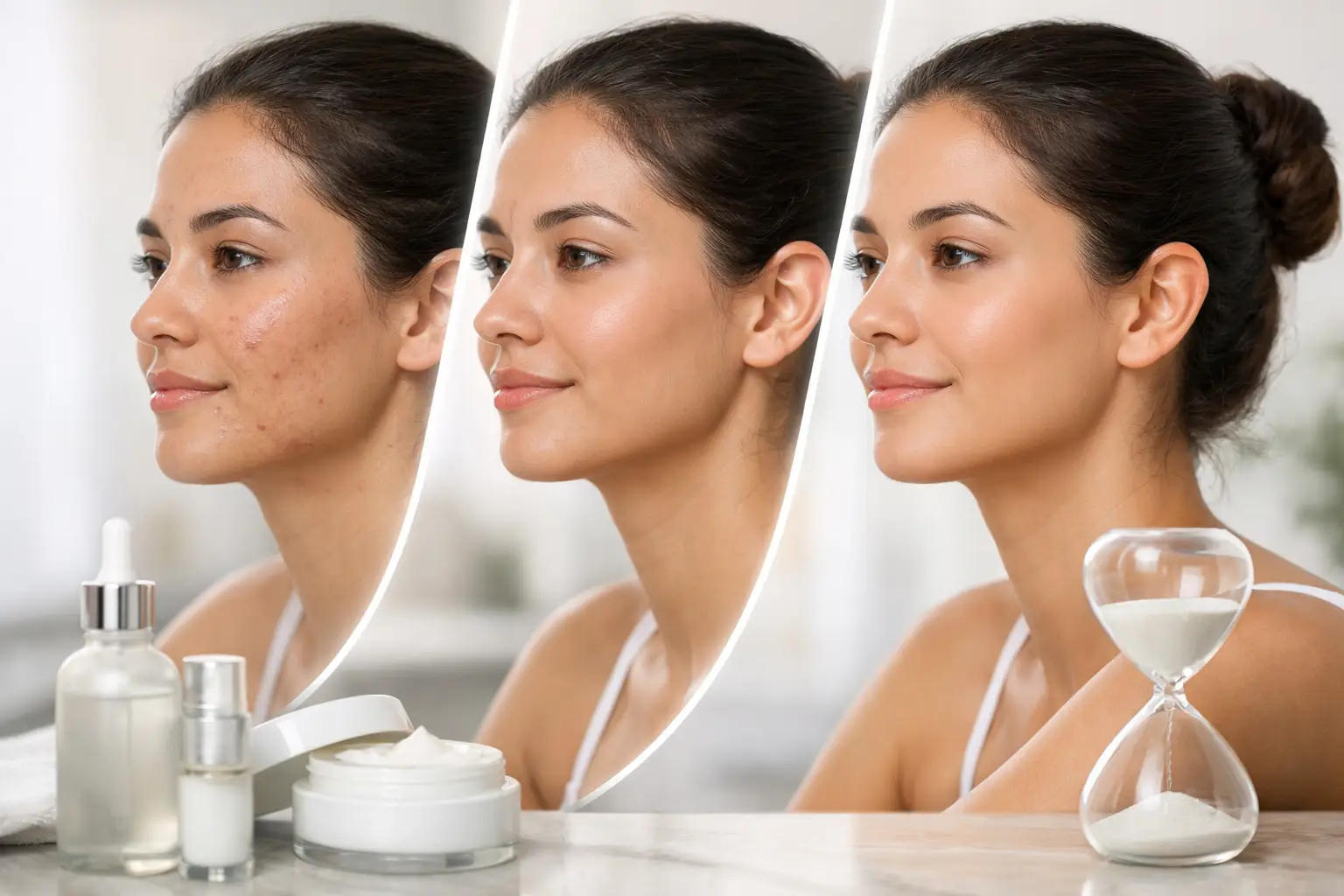
The most common reason people abandon a good routine is not that it failed. It is that they expected a month-three result in week two. A realistic skincare results timeline can reset that pressure. Skin responds to ingredients, consistency, sleep, climate, stress, and barrier health at different speeds, which means visible progress is rarely instant and almost never linear.
This matters even more if your skin is managing modern strain – air conditioning, heat, pollution, long workdays, inconsistent rest, and overactive routines. In that context, restoration often needs to happen before brightening, smoothing, or firming become obvious. When expectations are calibrated well, skincare becomes easier to assess and far easier to sustain.
Why a realistic skincare results timeline matters
Skincare is not a single event. It is a biological process taking place across the skin barrier, the epidermis, and, with some ingredients, deeper structural pathways that influence collagen support and pigmentation behavior over time. That process does not move at the speed of marketing claims.
The outermost layer of skin turns over gradually, and not all concerns depend on the same mechanism. Dehydration may improve quickly because it is tied to water balance and barrier support. Post-acne marks often fade more slowly because pigment pathways take time to normalize. Fine lines related to dryness can soften in days, while firmness linked to collagen remodeling may require several months.
The practical implication is simple. If you judge every product after one or two weeks, you may stop using the very formulas that needed more time to show their value. At the same time, waiting indefinitely is not wise either. A measured timeline helps you tell the difference between normal patience and a routine that is simply not suited to your skin.
The first 7 days: comfort, hydration, and early signals
In the first week, the most realistic changes are often sensory rather than dramatic. Skin may feel less tight after cleansing, makeup may sit more evenly, and areas of roughness may seem softer. If your routine includes humectants such as hyaluronic acid, barrier-supportive emollients, or calming ingredients, you may notice improved hydration quite early.
This stage is also when your skin tells you whether the formula is broadly compatible. Persistent stinging, escalating redness, new clusters of congestion, or a feeling of fragility are not signs of progress. Mild adjustment can happen with active ingredients, but irritation is not a shortcut to results.
For people with stressed or dehydrated skin, this first week is often about reduction rather than transformation – less tightness, less visible fatigue, less reactivity. Those are meaningful outcomes. They suggest the skin is moving into a more resilient state, which is often the foundation for everything that follows.
Weeks 2 to 4: visible refinement begins
By the second to fourth week, a realistic skincare results timeline usually begins to show subtle visible change. Hydration can look more stable, dullness may soften, and the overall surface can appear calmer and more even. If your main issue was a compromised barrier, this is often the point where skin starts to look more rested rather than simply less dry.
For brightening routines, this phase may bring a slight increase in clarity, especially if uneven tone was related to surface dullness rather than deeper pigmentation. Skin can appear fresher, but deep discoloration rarely disappears this early.
Texture may also begin to improve. That said, not all roughness is the same. Dry, flaky texture often responds faster than congestion-prone texture, and acne that is hormonally driven may not settle on the same schedule as mild surface imbalance. This is one of the reasons broad promises can be misleading. Two people can use similar ingredients and see very different timelines because the underlying cause is different.
Weeks 4 to 8: the routine becomes easier to judge
This is often the most useful evaluation window. Around one to two months, skin has had enough exposure to show whether a routine is genuinely supporting function. You may see more consistent brightness, fewer dehydration lines, smoother texture, and better day-to-day stability. In many cases, skin starts reacting less dramatically to weather, stress, or minor routine changes.
If you are addressing post-inflammatory marks, this period may bring early fading, though usually not complete resolution. If you are using ingredients aimed at renewal or pigmentation balance, the progress is more likely to appear as gradual evening rather than a sudden change.
For breakout-prone skin, this stage requires nuance. Some active routines lead to an adjustment period before improvement becomes clear. But frequent inflammation, worsening discomfort, or persistent barrier disruption should not be excused indefinitely as part of the process. A well-designed routine should eventually make skin more stable, not more chaotic.
Months 2 to 3: meaningful change for tone and texture
At the two- to three-month mark, many people begin to see results that feel substantial rather than tentative. This is where steady use often translates into visible improvement in skin tone, smoother texture, and a stronger overall appearance. Skin may look less fatigued at the end of the day. Recovery after environmental exposure may be better. That quiet resilience is one of the clearest signs that a routine is working.
A realistic skincare results timeline for discoloration, early aging concerns, or post-acne marks usually sits here or beyond. These concerns tend to improve in layers. First the skin looks more hydrated, then a bit more luminous, then gradually more even. The order matters because repair often precedes refinement.
If your goal is healthy aging rather than aggressive correction, this period is especially important. The most valuable progress may not be dramatic before-and-after contrast. It may be reduced dryness, steadier tone, less visible stress, and skin that holds up better under daily pressure.
Three to six months: structural support takes longer
This is where patience becomes a real advantage. Concerns tied to firmness, elasticity, lingering marks, and cumulative dullness tend to need a longer horizon. Ingredients that support collagen pathways or long-term renewal do not usually produce overnight shifts because the biology itself is gradual.
By this stage, you are looking for sustained improvement: smoother skin over time, better bounce, more even tone, and fewer cycles of irritation or setback. The skin may not look radically different from one day to the next, but compared with where it started, it often appears healthier, calmer, and more resilient.
This is also the point where consistency tends to outperform intensity. An overly aggressive routine may create short bursts of visible change, but it often does so at the cost of barrier strain. A disciplined, restorative approach generally builds results that are easier to maintain.
What can slow results down
Even the most thoughtful routine can underperform if the skin is under constant pressure. Sleep quality, UV exposure, over-cleansing, indoor cooling, pollution, and emotional stress all influence repair. So does routine overload. People often combine too many actives in the hope of accelerating progress, then wonder why their skin remains reactive and dull.
Application habits matter too. Inconsistent use, frequent product switching, and expecting one product to solve hydration, pigmentation, texture, and aging at once all distort the timeline. Skin responds best to coherence. That usually means a gentle cleanser, hydration support, barrier-minded care, daily sun protection, and then a small number of targeted actives used consistently.
Climate can also shape expectations. In humid environments, dehydration can still exist beneath surface oiliness. In highly air-conditioned spaces, skin may lose comfort and water balance even if it does not look visibly dry. Reading your skin accurately is part of achieving better results.
How to track progress without overanalyzing
The most useful way to assess a routine is to look for trends, not daily fluctuations. Take a photo in the same lighting every few weeks. Notice whether your skin feels comfortable through the day, whether redness settles faster, whether tone looks more even, and whether roughness or dullness is becoming less persistent.
Try not to judge progress after one bad morning. Skin is responsive to sleep, sodium, stress, hormones, and weather. A realistic skincare results timeline allows for those variations. What matters is the direction of change over several weeks.
If you are choosing products with a repair-first philosophy, as SHINORA advocates, that direction is often gradual but reliable. The skin becomes less reactive before it becomes visibly brighter. It holds hydration more consistently before it looks firmer. That sequence is not slow because the routine is weak. It is often a sign that the routine is working with the skin rather than forcing it.
The most worthwhile skincare results are rarely the fastest ones. They are the changes that stay – calmer skin, steadier tone, better hydration, and a face that looks less burdened by daily life. Give your routine enough time to prove what it can do, and let progress be measured by resilience as much as appearance.


Leave a Reply