
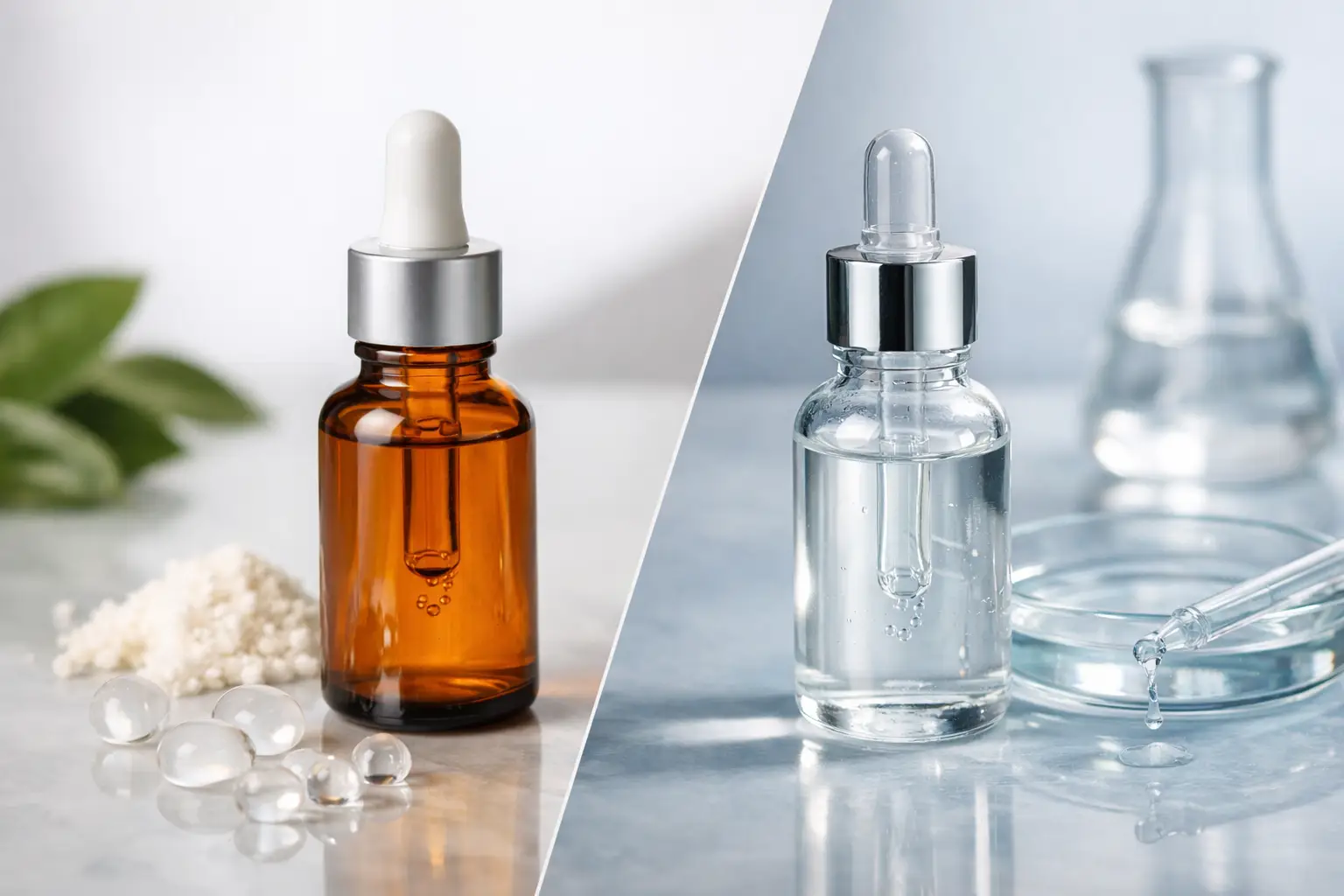
A routine can look sensible on paper and still leave skin feeling tight by noon, shiny by evening, and slightly irritated by the end of the week. That is often where the question of niacinamide vs hyaluronic acid becomes useful – not as a trend debate, but as a way to understand what your skin is actually asking for.
These two ingredients are often grouped together because both are gentle, widely compatible, and common in modern serums. But they do different work. Hyaluronic acid is primarily about hydration support. Niacinamide is more about barrier function, oil balance, visible tone, and overall skin resilience. If your skin has been looking fatigued, dehydrated, or unsettled from stress, travel, air conditioning, pollution, or overuse of stronger actives, knowing the distinction matters.
Niacinamide vs hyaluronic acid: what is the real difference?
The simplest distinction is this: hyaluronic acid helps the skin hold water, while niacinamide helps the skin behave more effectively.
Hyaluronic acid is a humectant. It attracts water and supports a plumper, more comfortable feel at the skin’s surface. When skin feels tight, looks creased from dehydration, or loses its smoothness in dry environments, hyaluronic acid can improve that quickly. Its strength is immediate comfort and visible replenishment.
Niacinamide, a form of vitamin B3, works differently. It supports the skin barrier, helps reduce excess oil in some skin types, and can improve the look of uneven tone, enlarged-looking pores, and post-breakout marks over time. It does not produce the same instant “drink of water” effect that hyaluronic acid often does. Its value is steadier and more regulatory.
That difference is why choosing between them is not always the right question. In many routines, they are better understood as complementary rather than competitive.
What hyaluronic acid does well
Hyaluronic acid has earned its place because dehydration is common, even in people who think they have oily skin. Long hours in climate-controlled spaces, disrupted sleep, cleansing too aggressively, and frequent exfoliation can all leave skin low on water. When that happens, skin often looks duller, feels less elastic, and may even become more reactive.
A well-formulated hyaluronic acid product helps bind moisture near the skin’s surface and can soften the look of dehydration lines. The skin usually feels smoother and more supple soon after application. This makes it especially useful when your barrier is under pressure or when your routine already includes potentially drying ingredients such as retinoids, acids, or benzoyl peroxide.
Still, hyaluronic acid is not a complete hydration strategy by itself. It performs best when applied to slightly damp skin and followed with a cream or lotion that helps reduce water loss. Without that second step, some people find the benefits too temporary, especially in dry indoor environments.
What niacinamide does well
Niacinamide tends to appeal to people who want skin to look calmer, clearer, and more even without resorting to harsh correction. It supports ceramide production, which matters because ceramides are part of the skin’s barrier structure. A healthier barrier is better at retaining moisture and tolerating daily stress.
Over time, niacinamide may help reduce the appearance of blotchiness, support a more balanced oil profile, and improve the look of post-inflammatory marks after breakouts. For adults dealing with both dehydration and congestion, this is where niacinamide is especially useful. It addresses function, not just feel.
It is also one of the more versatile ingredients in skincare. Most skin types tolerate it well, and it generally works alongside hydrating serums, moisturizers, antioxidants, and even stronger actives. That said, concentration matters. Higher percentages are not automatically better. Some people do well with 2 to 5 percent, while formulas pushing much higher can cause flushing or irritation in sensitive skin.
Niacinamide vs hyaluronic acid for different skin concerns
If your main issue is tightness, roughness, or that papery feeling that shows up after cleansing, hyaluronic acid is usually the more immediately helpful choice. It is designed to improve hydration status and comfort, and you will often notice the difference quickly.
If your concerns are more about uneven tone, visible pores, oil imbalance, or skin that seems generally stressed and less resilient, niacinamide is often the better priority. It may not feel dramatic in the first few days, but it tends to support steadier improvements in skin quality with consistent use.
For acne-prone skin, the answer depends on what kind of acne experience you are having. If breakouts come with redness, lingering marks, and barrier disruption from treatments, niacinamide may offer broader support. If your skin is also dehydrated from acne medication, hyaluronic acid can reduce discomfort and help maintain balance.
For healthy aging, both are useful, but in different ways. Hyaluronic acid improves the look of hydration-related fine lines. Niacinamide supports barrier integrity and a more even, refined appearance over time. One gives skin a more replenished look now. The other helps skin function better over time.
Can you use niacinamide and hyaluronic acid together?
Yes, and for many people that is the most practical approach.
They are not opposing ingredients, and there is no meaningful reason to separate them for most routines. In fact, they often work well in the same regimen because hydrated skin is better positioned to tolerate active ingredients, and a stronger barrier is better able to retain hydration.
If you are layering them, apply the product with the lighter texture first. In many cases, that means a hyaluronic acid serum followed by niacinamide, then moisturizer. But texture matters more than the ingredient name. Some niacinamide serums are thinner than hyaluronic acid formulas, and some products contain both.
The more important point is not the exact order but the overall logic of the routine. Use humectants to support water content, then use barrier-supporting and conditioning ingredients, and finish with a moisturizer suited to your skin type. Skin tends to respond best to consistency rather than ritual complexity.
Which ingredient should you start with?
If you are building a routine from a place of sensitivity, dehydration, or recent overuse of exfoliants, start with hyaluronic acid and a good moisturizer. Restore comfort first. Skin that feels less strained is easier to read and less likely to overreact.
If your skin is relatively stable but persistently dull, oily, or uneven, start with niacinamide. It is often the more strategic first addition when your goal is long-term refinement rather than immediate relief.
If your skin is both dehydrated and reactive, there is a strong case for using both from the beginning, as long as the formulas are simple and fragrance-free. This is often the reality for professionals in urban environments, where sun exposure, pollution, sleep disruption, and indoor cooling all pull skin in different directions at once.
What to watch for when choosing a product
Ingredient names alone do not tell you how a product will behave. A hyaluronic acid serum that feels sticky, pills under sunscreen, or is not sealed in with a moisturizer may disappoint. A niacinamide serum at an unnecessarily high percentage may create irritation that gets mistaken for purging or incompatibility.
Look at the full formula. Supporting ingredients matter. Humectants such as glycerin, barrier-supportive lipids, and a well-balanced base can make a product far more effective than a single hero ingredient claim.
It is also worth resisting the urge to solve every problem at once. If your routine already includes exfoliating acids, retinoids, vitamin C, and spot treatments, adding both niacinamide and hyaluronic acid may still be beneficial, but only if the rest of the routine is restrained enough to let the skin recover. At SHINORA, that principle of restoration before enhancement is not just positioning. It is often the difference between progress and prolonged irritation.
The better question than niacinamide vs hyaluronic acid
Instead of asking which ingredient is better, ask what your skin is missing.
If it needs water, flexibility, and immediate comfort, hyaluronic acid is the clearer answer. If it needs reinforcement, balance, and a more resilient appearance over time, niacinamide is often the smarter choice. And if your skin is living through modern pressures – inconsistent sleep, air travel, dry offices, environmental exposure, and low-grade inflammation – it may need both.
Good skincare is rarely about choosing the most impressive ingredient. It is about choosing the one that meets the skin where it is, then staying with that decision long enough to let repair happen.

Leave a Reply