
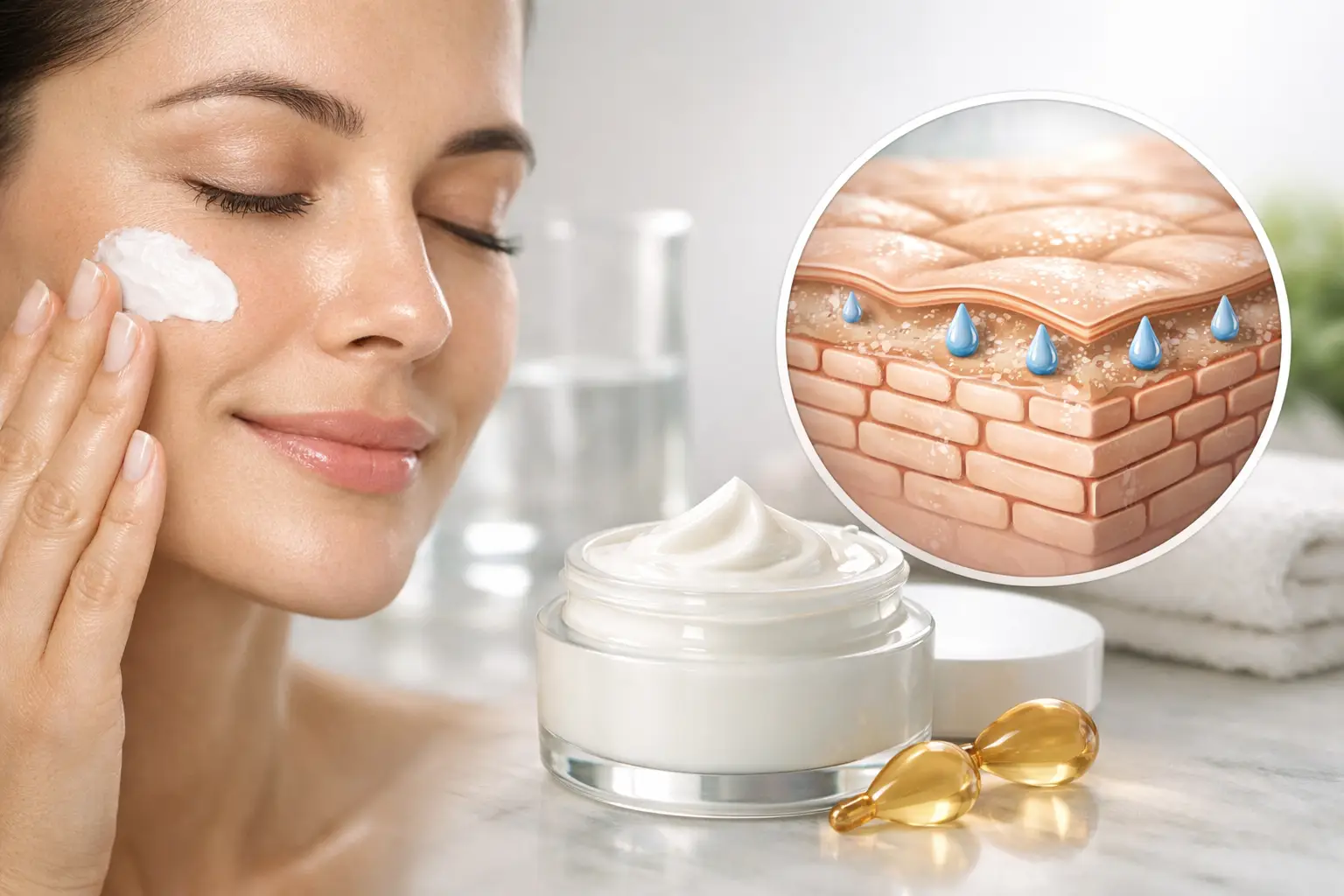
A tight, uncomfortable feeling after cleansing is not always a sign that skin needs a richer product. Often, it is a sign that the barrier has lost some of the lipids that help keep water in and external stressors out. A ceramide moisturizer is designed for this more foundational task: supporting the skin’s protective structure so it can retain hydration, feel calmer, and recover its natural balance over time.
That distinction matters. Skin that looks dull, reacts easily, or seems persistently dehydrated may not need increasingly aggressive exfoliation or a complicated rotation of active ingredients. It may need the conditions to function well again.
What ceramides do for the skin barrier
Ceramides are naturally occurring lipids found in the outermost layer of skin, the stratum corneum. This layer is often described as a brick-and-mortar structure: skin cells form the bricks, while a carefully organized mixture of lipids forms the mortar around them. Ceramides are a major part of that lipid mixture, working alongside cholesterol and free fatty acids.
When this lipid structure is well organized, it limits transepidermal water loss, the gradual escape of water from the skin into the surrounding air. It also helps moderate the effect of common daily pressures, including dry air conditioning, heat, pollution, cleansing, friction, and frequent use of potent actives.
A compromised barrier can show up in subtle ways before it becomes visibly irritated. Foundation may settle unevenly. Skin can feel both oily and dehydrated. A familiar serum may suddenly sting. These are not diagnostic signs on their own, but they can indicate that the skin needs a quieter, more supportive approach.
Ceramide-containing skincare does not replace the skin’s biology or produce an overnight transformation. Its value lies in reinforcement. With regular use, an appropriate formula can help replenish surface lipids and improve the feel and appearance of dry or stressed skin while the barrier regains stability.
Why ceramide levels can decline
Ceramide levels and lipid organization can be affected by age, genetics, climate, and skin conditions. They can also be disrupted by habits that are easy to overlook: washing with very hot water, using a cleanser that leaves skin squeaky, overusing acids or retinoids, and layering too many fragranced products.
For professionals managing long days, indoor cooling, commuting, exercise, and irregular sleep, the cumulative effect is often more relevant than a single trigger. Skin does not experience these pressures in isolation. A late night followed by a strong exfoliant and a dry office can create a very different response than any one factor alone.
This is why barrier care is not only for visibly dry skin. Combination and acne-prone skin can also become lipid-depleted, particularly when a routine is built entirely around oil control or blemish correction. Restoring comfort does not require making the skin heavy, congested, or excessively shiny. It requires choosing texture and formulation with care.
Choosing a ceramide moisturizer with purpose
Not every product that contains ceramides will feel or perform the same way. The ingredient list may include specific ceramide types, such as ceramide NP, AP, or EOP. These labels can be useful, but they are not a complete measure of quality. The surrounding formula, the concentration, packaging, texture, and the way it sits with the rest of a routine all matter.
A thoughtful barrier-focused formula often pairs ceramides with cholesterol and fatty acids, reflecting the lipid families present in healthy skin. Humectants such as glycerin and hyaluronic acid can draw and hold water in the outer layers, while emollients soften rough texture and occlusive ingredients reduce water evaporation. Each has a different role.
For dry or mature skin, a cream with a more nourishing finish may be welcome, especially at night or in a cold, low-humidity environment. For combination skin in a hot, humid climate, a lighter lotion or gel-cream may be easier to use consistently. A texture that feels elegant enough for morning application is often more beneficial than a richer product that remains untouched on the shelf.
Fragrance is another personal consideration. Fragrance is not inherently harmful for every person, but skin that is reactive, recently over-exfoliated, or managing an active flare may benefit from fewer potential irritants. The same measured standard applies to essential oils, high levels of drying alcohol, and an unnecessarily crowded routine.
Ceramides and active ingredients
Ceramides are especially valuable when a routine includes active ingredients. Retinoids, exfoliating acids, benzoyl peroxide, and vitamin C can all be useful in the right context, but they may also challenge the barrier depending on strength, frequency, formula, and individual tolerance.
Applying a ceramide moisturizer after treatment products can help reduce dryness and improve comfort. Some people with sensitive skin also prefer to apply moisturizer before and after a retinoid, a method sometimes called buffering. This may reduce irritation, although it can also alter the way an active feels on the skin. The right approach depends on treatment goals and skin tolerance, not on a universal rule.
If burning, persistent redness, peeling, or itching develops, adding more active products is rarely the answer. Simplifying the routine and seeking clinical guidance when symptoms persist is the more considered response.
How to use a ceramide moisturizer well
Use a ceramide moisturizer on slightly damp skin after cleansing, and after any water-based serums you tolerate well. Damp skin is not essential, but it can support the work of humectants by giving them water to hold near the surface. In the morning, follow with broad-spectrum sunscreen. At night, use enough moisturizer to leave skin comfortable rather than coated.
Consistency matters more than excess. A small amount used twice daily for several weeks is usually more informative than applying a heavy layer once after irritation has already become severe. Observe changes in comfort, flaking, sensitivity, and how skin behaves through the day. Healthy progress is often quiet: less tightness after washing, fewer dry patches around the mouth, or better tolerance of a carefully chosen treatment.
If you are introducing a new formula, change one meaningful variable at a time. This makes it easier to identify what supports the skin and what does not. Patch testing can be sensible for anyone with a history of reactions, although it cannot guarantee that facial skin will respond identically.
The realistic role of barrier care
A ceramide moisturizer cannot erase deep wrinkles, treat every cause of acne, or replace medical care for eczema, rosacea, or a suspected allergy. It can, however, create a more stable baseline from which other skincare decisions become clearer. When skin is less inflamed and better hydrated, its texture and luminosity often appear improved without the need to force dramatic change.
This is the discipline behind restorative skincare: treat resilience as a result worth pursuing in itself. Choose formulas that respect the skin’s existing systems, allow time for steady adjustment, and let comfort be one of the measures of progress.

Leave a Reply