
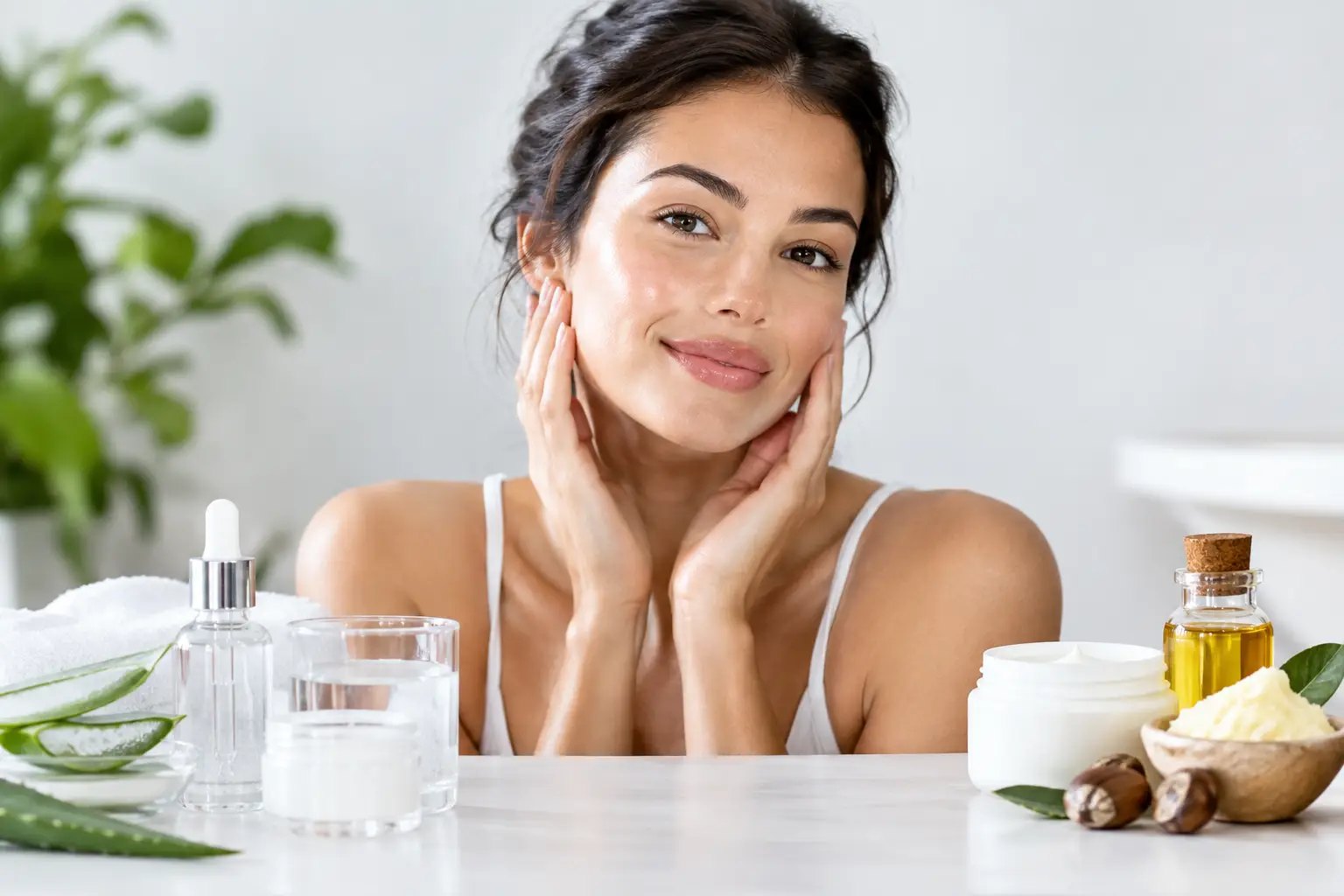
Skin that feels tight by midday yet looks shiny by evening is not necessarily lacking oil. It may be lacking water, barrier lipids, or both. Understanding humectants versus emollients helps bring this distinction into focus, replacing the vague goal of “more hydration” with care that supports the skin’s actual needs.
These ingredient groups often appear together in well-designed moisturizers, but they do different jobs. One attracts and holds water. The other smooths, softens, and reinforces the surface feel of the skin. Neither is universally better. The appropriate balance depends on your skin condition, climate, routine, and the stresses your skin is managing.
Humectants versus emollients: the essential difference
Humectants are water-binding ingredients. They attract water to the outermost layer of the skin, the stratum corneum, helping it remain more flexible and comfortable. When this layer has adequate water content, fine dehydration lines can appear less visible, makeup may sit more evenly, and skin often feels less reactive or tight.
Common humectants include glycerin, hyaluronic acid, sodium PCA, panthenol, beta-glucan, aloe, and urea. Their names differ, but their central role is similar: improving water availability in the skin’s surface layers.
Emollients work differently. They are ingredients that soften and smooth the skin by filling small spaces between shedding skin cells and supporting the lipid structure at the surface. This can reduce roughness, improve suppleness, and give the skin a more even, comfortable texture.
Squalane, ceramides, fatty acids, cholesterol, plant oils, shea butter, and certain esters are commonly used as emollients. Some ingredients have overlapping functions. Ceramides, for example, are valued not only for their softening qualities but also for their role in the skin barrier’s natural lipid organization.
The distinction matters because skin can be dehydrated and oily, dry and well-hydrated, or both dry and dehydrated. A lightweight humectant serum may relieve temporary tightness, but it may not be enough for skin with persistent flaking and barrier disruption. Conversely, a rich emollient cream can make skin feel softer while failing to address a significant lack of water in the upper layers.
How humectants support hydrated, resilient skin
Humectants are particularly useful when skin feels dull, tight after cleansing, or less elastic than usual. Air-conditioned spaces, long flights, insufficient sleep, sun exposure, and strong cleansing routines can all contribute to surface dehydration. This is a familiar pattern for people balancing demanding workdays with frequent environmental shifts.
Glycerin remains one of the most reliable humectants in skincare. It is effective, well-studied, and generally suitable for many skin types. Hyaluronic acid is also widely used, though it is often misunderstood. It does not need to be high molecular weight or present at an extreme concentration to be useful. Its performance depends on the formula, how it is layered, and whether the routine includes ingredients that reduce water loss afterward.
Panthenol, sometimes called provitamin B5, deserves attention for skin that feels stressed or sensitized. In addition to its humectant activity, it can support a calmer, more comfortable skin feel. Urea is another valuable option, particularly for rough or very dry areas. At lower concentrations, it acts primarily as a humectant. At higher concentrations, it can also help loosen thickened, flaky skin, which may not suit every compromised or sensitive complexion.
A common concern is that humectants can “pull water out of the skin” in dry air. The reality is more measured. A humectant can draw water from its surroundings, including deeper skin layers, if the external environment is very dry. But in a complete formulation, this effect is managed by pairing humectants with emollients and, often, occlusive ingredients that slow evaporation. The concern is less about avoiding humectants and more about using them within a balanced formula.
What emollients do beyond making skin feel soft
Emollients are sometimes dismissed as cosmetic texture enhancers. In fact, their contribution can be more meaningful than immediate softness. A healthy barrier depends on an organized mixture of lipids between skin cells. When that structure is disturbed, water escapes more easily and irritants may penetrate more readily.
Emollient-rich products help support comfort where that surface structure is depleted or uneven. They can be especially useful during periods of retinoid use, after over-exfoliation, in cooler weather, or when skin is recovering from inflammation. For mature skin, they may also help offset the roughness and reduced suppleness that can accompany age-related changes in lipid production.
Texture and tolerance matter. Lightweight options such as squalane and certain esters may suit combination or acne-prone skin. Richer oils, butters, and lipid creams can be beneficial for dry or compromised skin, especially at night. More richness is not automatically more restorative, however. A formula that feels heavy, causes congestion, or discourages consistent use is not the right fit for your routine.
It is also useful to separate emollients from occlusives. Occlusives form a more physical layer that helps reduce transepidermal water loss. Petrolatum, dimethicone, and waxes are common examples. Some ingredients can offer both emollient and occlusive qualities. Think of humectants as helping bind water, emollients as smoothing and replenishing the skin’s surface, and occlusives as helping keep that water from evaporating too quickly.
Choosing the balance your skin needs
For most people, the most effective approach is not choosing between humectants and emollients. It is choosing the proportion that fits the skin’s current state.
If your skin is oily but feels tight, look for a light gel-cream or lotion with glycerin, hyaluronic acid, panthenol, and a modest amount of barrier-supportive lipids. Avoid assuming that oiliness means you should skip moisturizer. Dehydrated skin can produce more visible surface oil while still needing water and barrier support.
If your skin is dry, flaky, or uncomfortable after cleansing, a humectant-only serum is unlikely to be sufficient. Apply it to slightly damp skin, then follow with a cream containing emollients such as ceramides, squalane, fatty acids, or cholesterol. If dryness is pronounced, an occlusive layer at night may further reduce moisture loss.
If your skin is sensitive or recovering from irritation, restraint is often more useful than adding multiple new products. Choose a fragrance-free moisturizer with a concise, barrier-focused ingredient profile. Introduce active treatments gradually, and prioritize comfort over the short-term pursuit of exfoliation, brightness, or texture refinement.
Climate changes the equation. In humid conditions, many people are comfortable with lighter humectant-forward formulas during the day. In dry indoor environments or cold weather, skin may benefit from a more substantial emollient and occlusive finish. The same person may need different textures across seasons, travel, hormonal shifts, or periods of elevated stress.
A practical way to layer hydration
The order of application should preserve simplicity. After cleansing, apply a humectant serum or essence while skin is still lightly damp. Follow with a moisturizer that contains emollients and, where needed, occlusive ingredients. In the morning, sunscreen remains the final essential step.
This sequence is not a rule that requires several products. A single well-formulated moisturizer can contain humectants, emollients, and occlusives in a balanced system. Multi-step routines are useful only when they offer a clear benefit, such as giving very dehydrated skin an additional layer of water-binding support or allowing you to use a lighter texture in the daytime and a richer cream at night.
Pay attention to how skin behaves over several weeks rather than after one application. Improvement may look quiet: less post-cleansing tightness, fewer dry patches, makeup that applies more evenly, and a calmer response to normal environmental exposure. These are meaningful signs that the skin barrier is becoming more stable.
Ingredient knowledge should lead to better care
Ingredient categories are useful guides, not rigid labels. A moisturizer is more than its individual ingredient list. Concentration, delivery system, texture, packaging, preservative system, and compatibility with the rest of your routine all shape how it performs.
For this reason, the most informed choice is rarely the product with the longest list of celebrated ingredients. It is the one your skin can tolerate and benefit from consistently. SHINORA’s approach to hydration begins there: supporting recovery with thoughtful formulations rather than treating temporary discomfort as a reason to overwhelm the skin.
Let your skin’s condition, not a trend or a single ingredient, determine what you reach for. A routine that supplies water, replenishes comfort, and protects the barrier can become a quiet daily practice of restoration.

Leave a Reply