
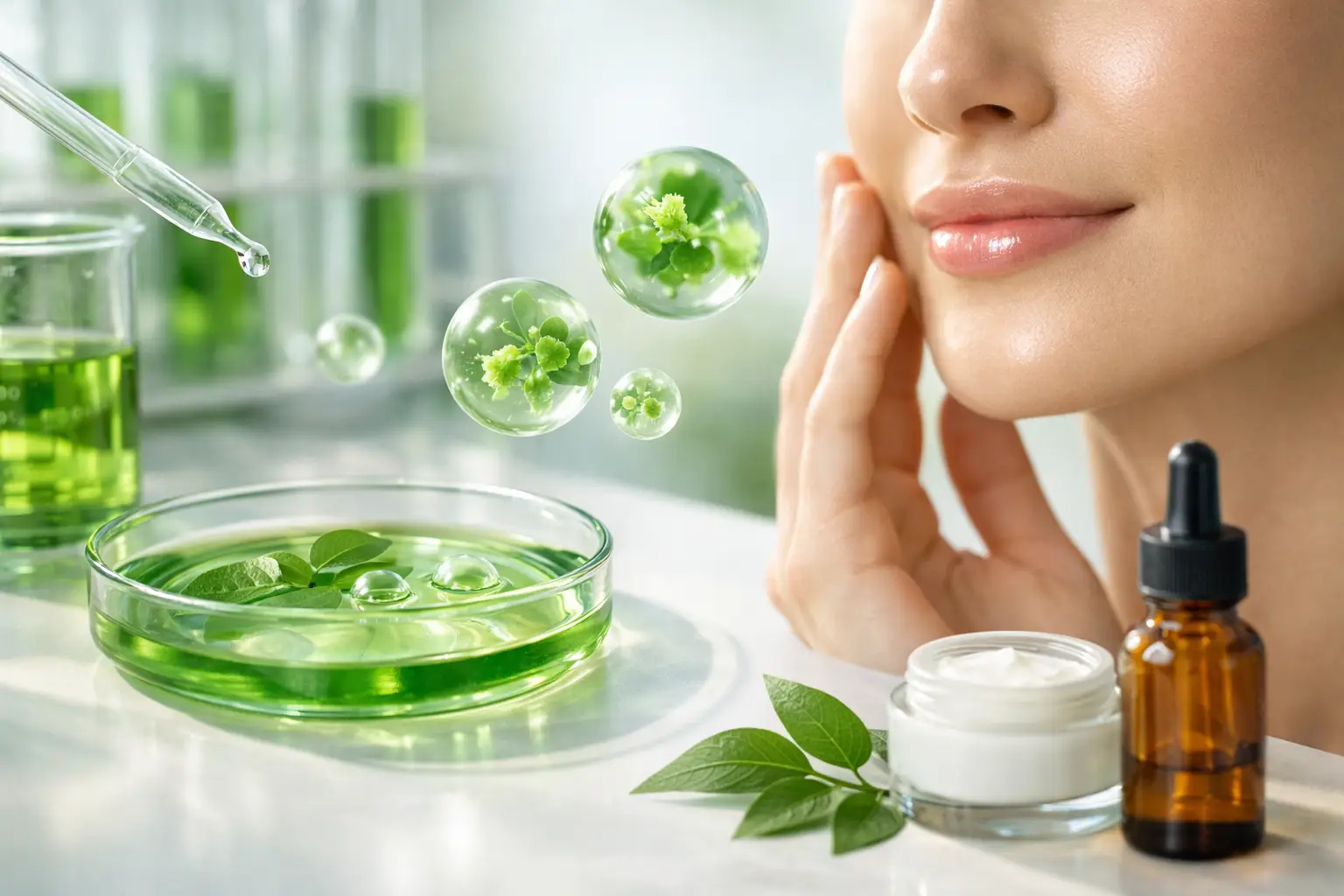
A new ingredient category can sound impressive long before it becomes understandable. That is especially true with exosomes, which are now appearing in skincare conversations with a mix of scientific promise, marketing noise, and understandable consumer caution. If you are asking are plant exosomes safe, the most honest answer is this: they may be safe in well-formulated topical products, but safety depends on source, processing, purity, stability, and the quality of the finished formula.
That answer is less dramatic than the claims often attached to emerging actives, but it is far more useful. With any advanced ingredient, safety is not a property of the headline alone. It is a property of how that ingredient is prepared, tested, and used on real skin.
What plant exosomes actually are
In simple terms, exosomes are tiny extracellular vesicles released by cells. They act as carriers, helping move signaling molecules such as proteins, lipids, and genetic material from one cell to another. In human biology, they have been studied for their role in cell communication, tissue repair, and inflammation.
Plant-derived exosome-like vesicles are similar in concept, though the terminology is still evolving. In cosmetic use, they are typically isolated from plant sources and incorporated into topical formulations because they may help support skin communication pathways, reduce visible stress responses, and improve the delivery of beneficial compounds.
The distinction matters. Not every ingredient marketed as an exosome product reflects the same biological source, extraction method, or functional profile. That means safety cannot be judged by the word exosome alone.
Are plant exosomes safe in skincare?
For topical skincare, plant exosomes appear to be safer than many consumers initially assume, especially when compared with the concerns that can surround human- or animal-derived biological materials. Plant sources generally avoid some of the ethical, immunological, and contamination questions that make other exosome categories more complex.
Even so, safer does not mean automatically safe. A plant-derived ingredient can still cause irritation, instability, contamination, or incompatibility if manufacturing standards are poor. Skin responds to the entire formula, not just the active at the center of the label.
Current cosmetic interest in plant exosomes is driven by early research and formulation innovation, but this is still a developing area. We do not yet have the kind of long-term, large-scale body of evidence that exists for more established ingredients like niacinamide, glycerin, or ceramides. That does not make plant exosomes unsafe. It simply means a measured approach is more appropriate than unqualified enthusiasm.
Why source and processing matter more than hype
When people ask whether a new ingredient is safe, they often focus on what it is. In practice, how it is made can matter even more.
A plant exosome ingredient starts with the source material itself. The species of plant, growing conditions, harvesting practices, and extraction process all influence the final composition. Then comes purification. If the ingredient is not adequately refined, there may be unwanted residues, microbial contamination, or inconsistent concentrations.
Stability is another concern. Biological vesicles are delicate. If they degrade easily in a formula, the result may be reduced performance, altered composition, or a need for preservation systems that affect tolerability. A well-designed formulation should account for these issues rather than simply adding a trendy active to a standard base.
This is where disciplined brands tend to separate themselves from opportunistic ones. A restrained, evidence-guided approach usually looks less exciting in marketing but more reassuring in practice.
Potential benefits do not cancel out the need for caution
Plant exosomes are being explored for their ability to support skin recovery, calm visible irritation, and improve the way certain actives interact with the skin. Those are compelling goals, especially for people dealing with dehydration, post-inflammatory marks, environmental stress, or a compromised barrier.
But benefit claims should never be used as proof of safety. An ingredient can be promising and still require careful evaluation. That is particularly true for sensitive skin, post-procedure skin, or routines already containing retinoids, acids, exfoliating cleansers, or strong brightening agents.
The question is not just whether plant exosomes are inherently irritating. It is whether a given formula respects the condition of the skin it is meant to support. A restorative product should reduce unnecessary strain, not add to it.
Who may need to be more careful
Most healthy adult skin can usually tolerate a well-formulated topical product, but there are situations where more caution is sensible.
If you have a history of allergic contact dermatitis, eczema flares, rosacea, or strong reactivity to botanical ingredients, approach plant exosome products carefully. Plant-derived does not mean hypoallergenic. Botanical materials can contain compounds that trigger irritation or sensitization in susceptible individuals.
The same applies if your skin barrier is impaired. After over-exfoliation, aggressive acne treatment, or cosmetic procedures, even a sophisticated formula may feel too active. In those moments, the wiser choice is often simpler support: barrier lipids, humectants, and low-irritation care until the skin is calmer.
Pregnant or breastfeeding consumers are often told to avoid anything unfamiliar, but that advice can be too broad to be helpful. Topical plant exosomes are not automatically problematic, yet there is limited pregnancy-specific data. For that reason, extra caution and professional guidance are reasonable if the product also includes other advanced actives.
How to judge whether a plant exosome product is likely to be safe
A thoughtful consumer does not need to become a formulator, but a few signals can help.
First, look at the brand’s behavior. Does it explain what the ingredient is, where it comes from, and what role it plays in the formula? Or does it rely on vague language about regeneration and miracle repair? Precision usually reflects a stronger development process.
Second, consider the company’s overall formulation philosophy. Plant exosomes in a balanced, barrier-conscious product are very different from plant exosomes in a formula crowded with fragrance, harsh alcohols, aggressive acids, and multiple competing actives.
Third, pay attention to testing language. Responsible brands often reference safety assessment, stability, compatibility, or irritation screening without overstating the results. Sweeping claims with no context should make you cautious.
Finally, use common sense with application. Patch test first. Introduce one new product at a time. Give your skin enough time to respond before layering it with every other treatment in your cabinet.
Are plant exosomes better than other exosome sources?
From a cosmetic safety perspective, plant-derived exosomes may feel more approachable than human- or animal-derived alternatives. They generally carry fewer ethical concerns and may present a lower perceived biological risk for everyday topical use.
That said, better is not universal. Safety and usefulness depend on the intended application. In medical and regenerative settings, different exosome sources are studied for different reasons. A skincare product is not operating in that same context, and it should not borrow the language of clinical intervention too casually.
For most consumers, the better question is not which source sounds most advanced. It is which formula is most appropriate for their skin condition, tolerance, and long-term goals.
A measured way to think about innovation
Skincare does not need to reject innovation to remain sensible. It simply needs to place innovation inside a framework of evidence, tolerability, and consistency. Plant exosomes fit that model well when they are presented honestly: as an emerging ingredient category with real potential, meaningful formulation challenges, and a safety profile that depends on execution.
At SHINORA, that distinction matters. Skin under stress does not benefit from novelty alone. It benefits from ingredients chosen with discipline, combined with restraint, and introduced in ways that support recovery rather than chase dramatic change.
If you are considering a product with plant exosomes, let curiosity be guided by standards. Look for transparency, patch test carefully, and give more weight to formulation quality than to futuristic language. When skin is treated thoughtfully, safety is rarely about one ingredient in isolation. It is about whether the whole routine helps the skin become calmer, stronger, and better able to do its own repair.


Leave a Reply