
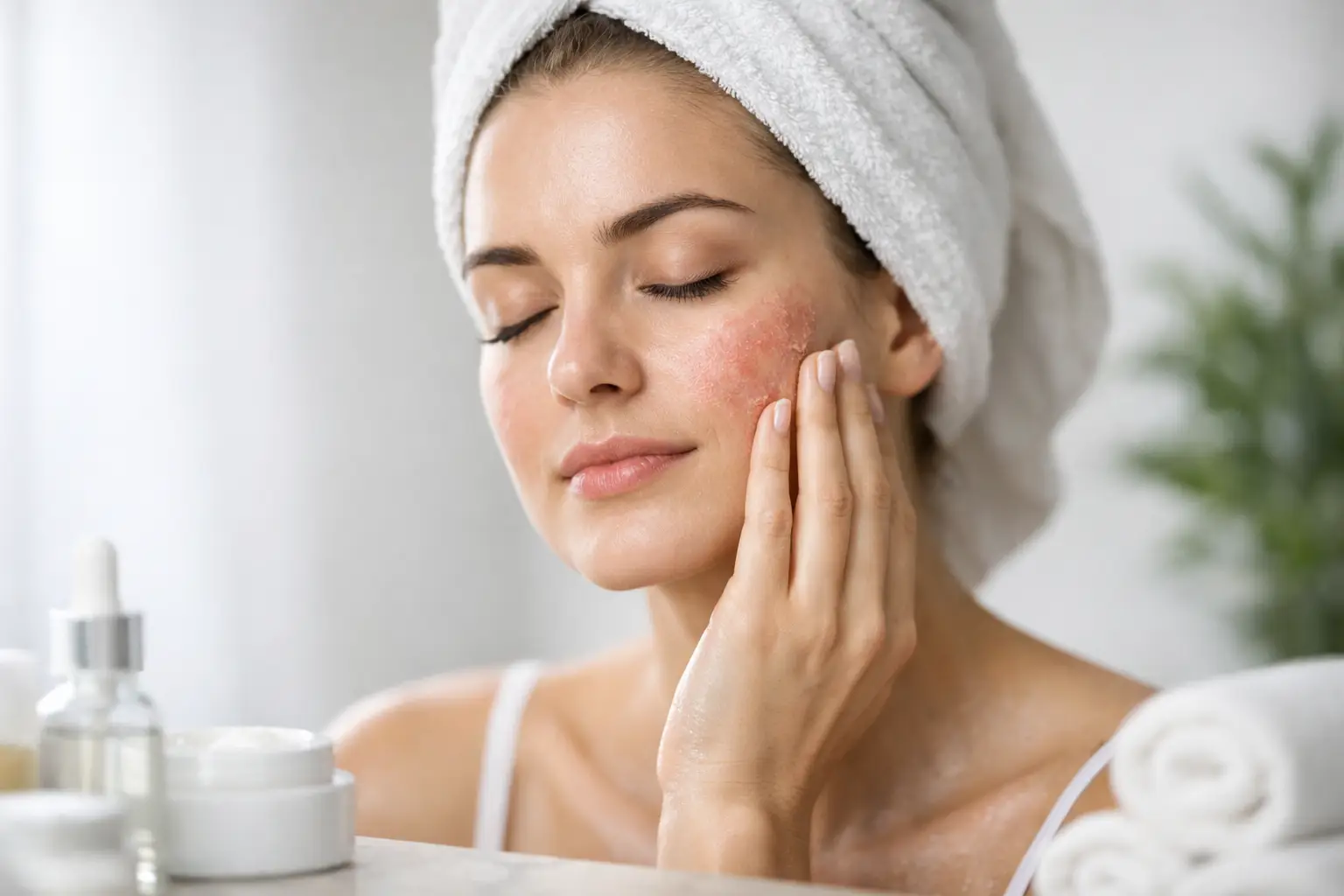
Skin often tells the truth before the rest of the body does. A week of poor sleep, constant air conditioning, long hours indoors, heavy sun exposure, or an overambitious routine can show up quickly as tightness, dullness, redness, dehydration, and a texture that suddenly feels less steady than usual. If you are looking for how to repair stressed skin, the first step is not to add more intensity. It is to reduce noise, restore balance, and support the skin barrier so recovery can happen.
Stressed skin is not a formal diagnosis. It is a practical way to describe skin that is struggling to maintain comfort, hydration, and resilience under pressure. That pressure may come from the environment, from inflammation, from lack of sleep, from aggressive actives, or from doing too much too often. The common thread is that the skin begins to lose efficiency. It holds water less well, becomes more reactive, and often looks tired before it looks visibly damaged.
What stressed skin usually looks like
Stressed skin rarely presents in just one way. For some people, it appears as dryness and roughness. For others, it is redness, breakouts, a stinging response to products that used to feel fine, or a general loss of radiance. In warm, humid climates, stressed skin does not always feel dry in the obvious sense. It may still produce oil while remaining dehydrated underneath, which creates the familiar combination of shine, congestion, and discomfort.
This is why surface appearance alone can be misleading. Skin can be oily and still compromised. It can be acne-prone and still need a more restorative approach. It can also look dull not because it needs stronger exfoliation, but because inflammation and water loss are slowing its ability to function well.
Why skin becomes stressed
At the center of most stress-related skin concerns is barrier disruption. The skin barrier is responsible for keeping moisture in and irritants out. When it is weakened, transepidermal water loss increases, sensitivity tends to rise, and the skin becomes less adaptable.
A compromised barrier can result from obvious triggers such as over-exfoliation, harsh cleansing, sun exposure, and dry indoor air. It can also come from less visible strain – chronic stress, inconsistent sleep, pollution, frequent temperature changes, and routines built around too many active ingredients layered without enough recovery time.
There is also a cumulative effect worth respecting. Skin may tolerate a strong acid, a retinoid, a foaming cleanser, and daily sun exposure for a while. Then one day it stops cooperating. Repair often begins when you recognize that skin stress is rarely caused by one single product or event. It is usually the result of repeated strain without sufficient support.
How to repair stressed skin without making it worse
The most effective approach is usually simpler than people expect. When skin is stressed, restraint is often more productive than correction.
Start by removing unnecessary friction
For one to two weeks, reduce your routine to the essentials. Use a gentle cleanser, a hydrating and barrier-supportive treatment, a moisturizer suited to your skin type, and broad-spectrum sunscreen during the day. If your skin is actively irritated, pause strong exfoliating acids, scrubs, high-strength retinoids, and any product that creates a burning or tingling sensation beyond mild short-term activity.
This does not mean active ingredients are inherently harmful. It means timing matters. Skin in recovery usually responds better to fewer variables and more consistency.
Focus on hydration and barrier repair
If you want to understand how to repair stressed skin, think in layers of support. Hydration helps the skin feel more comfortable and look less fatigued. Barrier-repair ingredients help it hold that hydration and become less reactive over time.
Look for humectants such as hyaluronic acid and glycerin to draw water into the skin. Then look for ingredients that reinforce the barrier, such as ceramides, cholesterol, fatty acids, panthenol, squalane, and niacinamide at a well-tolerated level. These ingredients do not work by forcing rapid change. They help restore the conditions skin needs to function properly again.
Texture matters too. In humid weather, a lightweight serum and balanced cream may be enough. In drier environments or air-conditioned settings, skin may need a richer moisturizer to reduce water loss. The right choice is the one your skin can tolerate daily without feeling coated, tight, or overheated.
Choose calm over intensity
There is a tendency to treat visible stress with stronger products. Dullness invites exfoliation. Breakouts invite drying treatments. Redness invites experimentation. But stressed skin often needs the opposite.
A calmer routine lowers the total inflammatory burden. That may mean cleansing only at night if morning cleansing leaves your skin tight. It may mean using lukewarm water instead of hot water. It may mean applying moisturizer to slightly damp skin to improve comfort and water retention. Small changes can be more useful than dramatic ones when skin is trying to recover.
Ingredients that can support recovery
Not every beneficial ingredient needs to be active in the traditional sense. Recovery-focused skincare often works best when it combines hydration, barrier support, and signals that help skin repair itself more efficiently.
Niacinamide is one of the more versatile options because it can support barrier function, help with uneven tone, and improve resilience, though some people do better with lower concentrations. Panthenol is valued for comfort and recovery. Ceramides help replenish what a stressed barrier may be lacking. Hyaluronic acid can improve hydration when paired with a moisturizer that seals it in.
For those thinking beyond basic hydration, newer repair-oriented technologies may also have a role. Exosome-based skincare, when carefully formulated, is being explored for its ability to support visible skin renewal and recovery signaling. This area is still evolving, and quality matters, but it reflects an important shift in skincare – away from aggressive stripping and toward helping skin restore itself with greater precision.
What to avoid while skin is recovering
The main risk during recovery is impatience. Skin that looks tired can tempt you into frequent exfoliation, daily masks, or stacking treatments in search of a faster result. That usually prolongs the cycle.
Try to avoid introducing multiple new products at once. Avoid fragranced formulas if your skin is already reactive. Be careful with essential oils, alcohol-heavy products, and physical scrubs, especially if your skin feels warm, itchy, or tight. Even well-formulated retinoids and acids may need to be reduced temporarily until the skin feels stable again.
Sun exposure also deserves more attention than many people give it. UV stress can worsen inflammation, dehydration, pigment changes, and collagen breakdown, all of which make stressed skin look older and less even. Daily sunscreen is not an optional finishing step in a repair routine. It is part of the repair process itself.
How long does skin repair take?
This depends on what caused the stress in the first place. Mild dehydration from travel or poor sleep may improve within days once you return to a steady routine. Barrier disruption from overuse of actives can take several weeks to settle. Post-inflammatory marks, texture changes, and deeper signs of fatigue may take longer.
The useful mindset is to look for signs of stabilization before signs of transformation. Less stinging. Better comfort after cleansing. Fewer dry patches. Makeup sitting more evenly. Skin that looks calmer in the morning. These are meaningful indicators that the repair process is working, even before brightness or smoothness fully returns.
A routine that respects modern skin stress
A good repair routine should fit real life. For many adults balancing work, travel, indoor climate control, screen-heavy days, and inconsistent rest, skin health improves not from chasing perfection but from reducing avoidable strain and building daily resilience.
That is where a science-led, restorative approach becomes especially useful. Brands such as SHINORA Health & Beauty are built around this principle – supporting the skin’s natural recovery with thoughtful formulations rather than pushing it toward short-term intensity. It is a more disciplined way to care for skin, and often a more effective one over time.
If your skin feels stressed, treat that as useful information rather than a flaw to correct quickly. Recovery is not passive. It is a deliberate process of giving the skin what it has been missing: hydration, protection, consistency, and enough calm to repair itself well.


Leave a Reply