
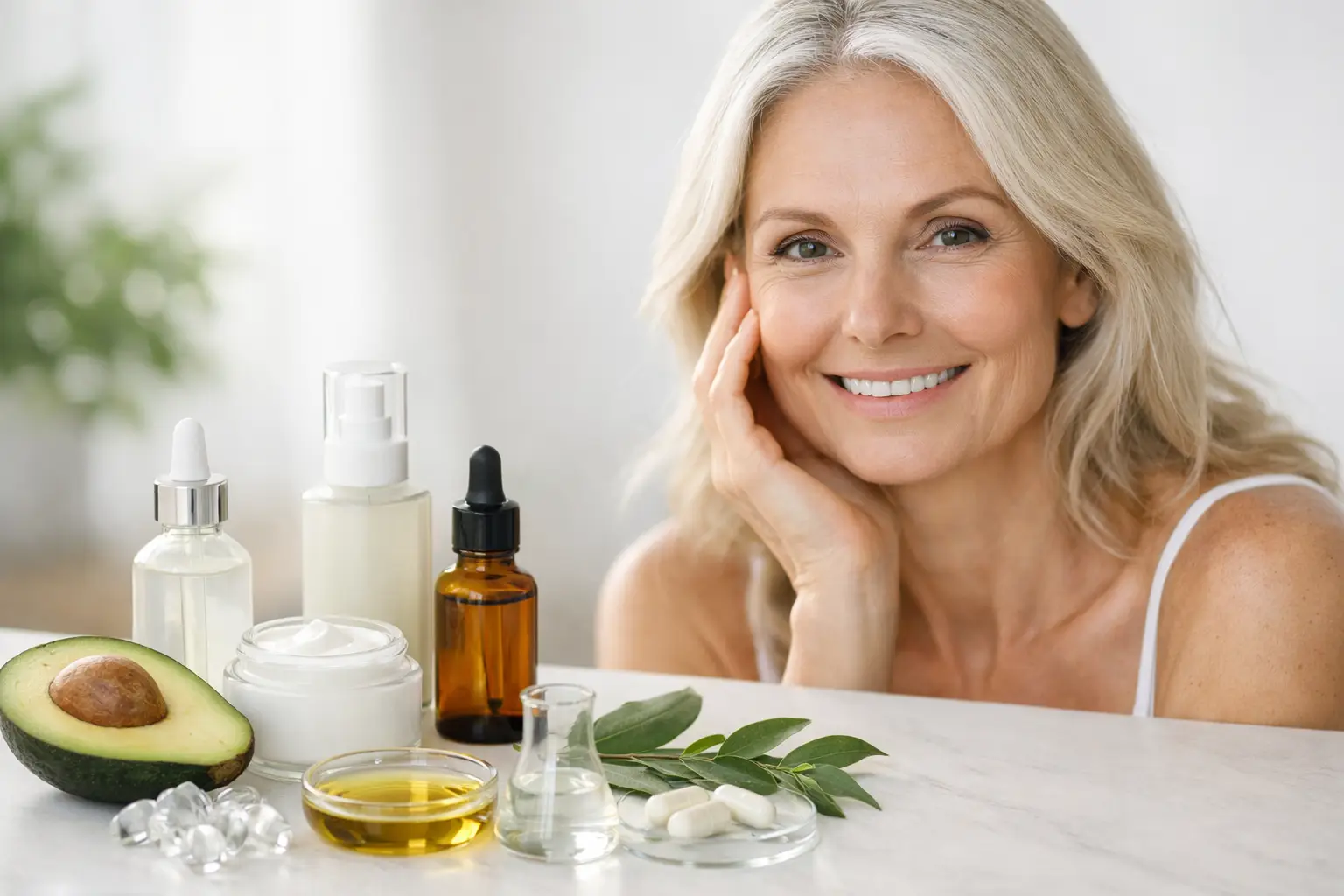
Healthy ageing is rarely about one dramatic product. More often, it is the result of a skin routine that protects barrier function, supports repair, and uses the best actives for healthy ageing with patience and precision. For skin under pressure from sun exposure, pollution, stress, inconsistent sleep, and indoor air conditioning, the question is not which ingredient is strongest. It is which ingredients help skin stay resilient over time.
That distinction matters. Many people approach age-supportive skincare as a race to smooth every line or fade every mark at once. The result is often irritation, dehydration, and a compromised barrier that leaves skin looking less balanced, not more. Healthy ageing asks for a more disciplined approach. It favors actives that improve skin function as much as skin appearance.
What healthy ageing really asks from skincare
As skin changes with age, several processes begin to slow. Cell turnover becomes less efficient, collagen production declines, pigment can become less even, and the skin barrier may become more reactive or prone to water loss. At the same time, modern life adds another layer of burden. UV exposure, late nights, urban pollution, and chronic stress all contribute to oxidative strain and visible fatigue.
That is why the best actives for healthy ageing are not simply those that exfoliate hardest or deliver the fastest visible change. The most useful ingredients tend to do one or more of four things well: stimulate renewal, protect against oxidative damage, improve hydration, or support repair. The strongest routine is usually not the most crowded. It is the one that skin can tolerate consistently.
The best actives for healthy ageing
Retinoids
If one category remains central to healthy ageing, it is retinoids. These vitamin A derivatives are well studied for their ability to support cell turnover, improve the look of uneven texture, soften fine lines, and encourage collagen production over time. They can also help with post-acne marks and congestion, which makes them useful beyond age-related concerns alone.
The trade-off is tolerance. Retinoids are effective, but they are not always gentle, especially at the beginning. Dryness, flaking, and sensitivity are common when they are introduced too quickly or layered with too many other actives. For most people, a low-strength retinol or retinal used a few nights a week is a more sustainable starting point than an aggressive schedule. Long-term consistency matters more than intensity.
Niacinamide
Niacinamide is one of the most versatile ingredients in modern skincare because it supports several functions at once. It can help strengthen the skin barrier, reduce the appearance of enlarged pores, improve dullness, support more even tone, and temper excess oil without stripping the skin. It also tends to be well tolerated, which makes it especially useful in routines designed around repair.
For healthy ageing, niacinamide earns its place because it improves resilience. Skin that holds moisture better and reacts less easily tends to look calmer, smoother, and more refined. It may not create dramatic overnight change, but it contributes to the kind of stable progress that lasts.
Vitamin C
Vitamin C is valued for good reason. As an antioxidant, it helps defend skin against free radical damage generated by UV light and environmental stress. It also supports brightness and can improve the appearance of uneven pigmentation over time. In a morning routine, it often serves as a useful layer between cleansing and sunscreen.
That said, vitamin C is not one uniform ingredient. L-ascorbic acid has the strongest research profile, but it can be unstable and irritating in some formulas, especially for sensitive skin. Derivatives may be gentler, though sometimes less direct in their effects. The best choice depends on your skin’s tolerance, the formula’s stability, and whether you are more focused on glow, antioxidant support, or pigment correction.
Peptides
Peptides are small chains of amino acids used in skincare to support visible firmness and help improve the appearance of fine lines. They do not work in the same way as retinoids, and they are usually less dramatic. Still, they can be valuable in routines where the goal is to encourage a stronger-looking, more resilient skin surface without provoking irritation.
This is where expectation matters. Peptides are not magic, and not every peptide complex is equally supported by research. But in well-formulated products, they can complement a broader repair strategy, especially for people who cannot tolerate stronger actives every day. Their quiet strength lies in compatibility.
Hyaluronic acid
Hydration is sometimes treated as secondary in age-supportive skincare, when in fact it shapes how skin looks and functions every day. Hyaluronic acid helps attract water to the skin, improving the look of dehydration lines and supporting a smoother, more comfortable feel. In climates that shift between heat, humidity, and heavily air-conditioned interiors, this can make a meaningful difference.
It is worth keeping perspective here. Hyaluronic acid does not rebuild collagen or replace treatment actives. Its role is supportive rather than transformative. But healthy ageing depends on support. Skin that is properly hydrated is more able to tolerate other active ingredients and maintain a stronger barrier.
Ceramides
Ceramides are lipids naturally present in the skin barrier, and their relevance increases as skin becomes drier, more reactive, or less efficient at retaining moisture. They help reduce transepidermal water loss and reinforce the protective outer layer of the skin. That may sound basic, but barrier integrity is one of the foundations of long-term skin health.
For people using retinoids, acids, or brightening treatments, ceramides are especially important. They do not compete with active ingredients. They make active ingredients more sustainable. In many cases, better barrier support leads to better visible results because skin is no longer stuck in a cycle of low-grade irritation.
Exosomes and growth-factor-inspired repair actives
Advanced repair-focused ingredients, including exosome-led technologies and growth-factor-inspired complexes, are gaining attention because they speak to a more sophisticated understanding of ageing skin. Rather than forcing rapid exfoliation, these actives are often positioned around communication, repair signaling, and visible recovery support.
This is an exciting area, but also one that requires restraint. Not all formulas are equal, and the science is still evolving depending on the ingredient system used. The promise is real enough to warrant attention, especially for skin showing fatigue, post-procedure stress, or signs of weakened recovery. But these ingredients work best when seen as part of a repair philosophy, not as a shortcut.
How to choose actives without overwhelming your skin
A well-built routine does not need every ingredient at once. In fact, layering too many age-supportive actives often creates the very problems people are trying to fix. Redness, tightness, and ongoing sensitivity can make skin look older, duller, and less settled.
A more intelligent approach is to choose one primary treatment active, one antioxidant or tone-supporting active, and a strong barrier support base. For one person, that may mean retinoid, vitamin C, and ceramides. For another, especially someone with sensitivity, it may mean niacinamide, peptides, and hyaluronic acid first, with retinoids added later.
This is also where routine timing matters. Vitamin C is often better suited to morning use, particularly under sunscreen. Retinoids generally fit more naturally at night. Barrier-supportive ingredients such as ceramides, niacinamide, and hydrating serums can be used around both.
The role of sunscreen in healthy ageing
No discussion of active ingredients is complete without sunscreen. It is not technically one of the best actives for healthy ageing in the usual marketing sense, but it is the measure that protects the progress made by every other ingredient. Without daily UV protection, collagen-supportive and pigment-correcting actives are working uphill.
This does not need to become complicated. A broad-spectrum sunscreen used every morning is one of the clearest examples of low drama, high return skincare. It supports prevention, preserves skin calm, and reduces the cumulative burden that drives visible ageing.
What results should actually look like
Healthy ageing results are usually quieter than trend culture suggests. Skin may appear less dull, more even, and better able to recover from stress. Fine lines may soften gradually. Hydration may last longer through the day. Breakouts, irritation, or post-inflammatory marks may become easier to manage.
That quieter progression is not a weakness. It is often the sign that skin is being treated with respect. At SHINORA, that principle matters because restoration tends to create better long-term outcomes than repeated cycles of overcorrection.
The best routine is not the one with the most actives. It is the one your skin can return to every day with steadiness, trust, and enough support to keep doing its work well.


Leave a Reply