
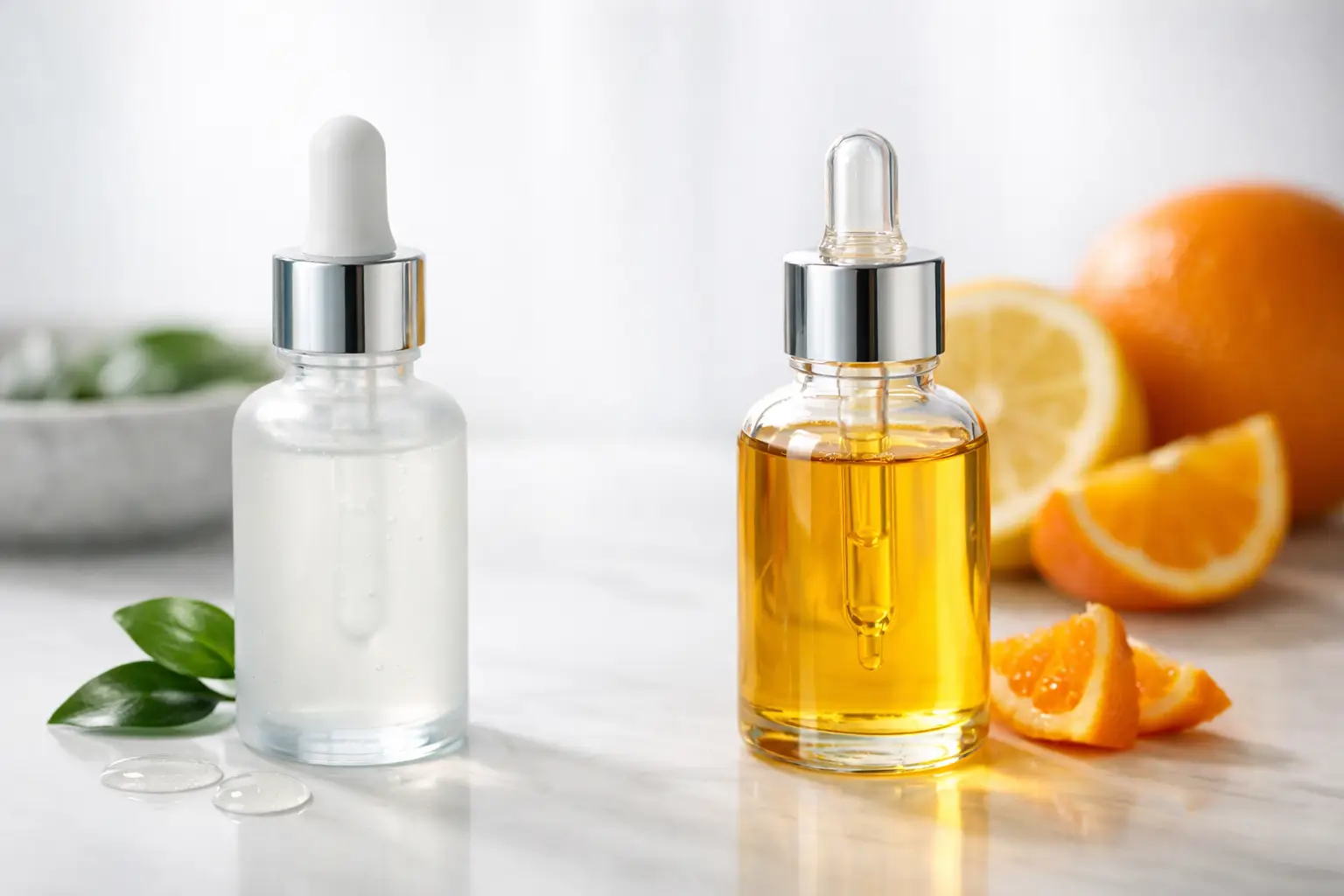
Dullness rarely has one cause. It can reflect dehydration after long days in air conditioning, uneven pigment after sun exposure, lingering post-acne marks, a disrupted barrier, or simply skin that is recovering more slowly than it once did. That is why brightening serum vs vitamin C is not a question of which product is universally better. It is a question of what your skin is signaling, what it can tolerate, and what kind of progress you want to support.
Vitamin C has earned its place in thoughtful skincare. Yet a well-formulated brightening serum can offer a broader, often gentler path when discoloration exists alongside sensitivity, dryness, or visible fatigue. The distinction is worth understanding before adding another active to an already demanding routine.
Brightening Serum vs Vitamin C: The Core Difference
Vitamin C is a specific antioxidant ingredient. In skincare, it is used primarily to help defend against oxidative stress, support collagen formation, and improve the appearance of uneven tone over time. Its effects are meaningful, particularly when sun exposure, pollution, and other environmental stressors contribute to dullness and discoloration.
A brightening serum is a product category rather than a single ingredient. It may contain vitamin C, but it can also rely on ingredients such as niacinamide, licorice root extract, tranexamic acid, alpha arbutin, gentle exfoliating acids, peptides, hydration-supporting humectants, or barrier-focused lipids. Its goal is usually broader: to improve luminosity and the look of uneven tone while considering the overall condition of the skin.
This means the comparison is not always an either-or decision. A brightening serum may be built around vitamin C, or it may use other pathways to address the same visible concerns. The formulation, concentration, delivery system, and supporting ingredients matter as much as the front-label active.
What Vitamin C Does Well
Vitamin C is most useful when oxidative stress is a central part of the picture. Ultraviolet exposure and pollution generate free radicals that can contribute to visible signs of aging and uneven pigmentation. As an antioxidant, vitamin C helps neutralize some of this stress before it becomes part of a larger cycle of inflammation and damage.
It also plays a role in collagen synthesis. No topical ingredient can erase structural aging or replace sun protection, but regular use of a suitable vitamin C formula may support firmer-looking, more even skin over time. For people with sun-related dullness or early changes in tone and texture, this can make it a valuable morning treatment.
The trade-off is that vitamin C can be demanding. L-ascorbic acid, the most extensively studied form, is effective at a low pH. That acidity may cause stinging, dryness, or irritation in skin with a compromised barrier, active breakouts, eczema tendencies, or recent use of exfoliants and retinoids. It is also unstable when poorly formulated or repeatedly exposed to light, air, and heat.
Gentler vitamin C derivatives can be a useful alternative, though they may act more gradually and have a different level of clinical evidence. Neither approach is inherently superior. The right choice depends on whether your skin benefits more from intensity or consistency.
When a Brightening Serum May Be the Better Fit
A brightening serum can be especially appropriate when dullness is accompanied by dehydration, tightness, sensitivity, or uneven texture. In these situations, treating pigment alone may overlook the conditions that make the skin appear tired in the first place.
For example, niacinamide can support barrier function while helping reduce the appearance of uneven tone. Hydrators such as hyaluronic acid and glycerin can improve surface smoothness and light reflection, which often makes skin look more luminous before pigment changes are visible. Ingredients that moderate inflammatory pathways may be helpful for post-acne marks, where irritation can prolong the appearance of discoloration.
This multi-pathway approach suits skin affected by lifestyle pressure. Insufficient sleep, frequent travel, climate-controlled offices, heat, humidity, and ongoing exposure to urban pollution do not create a single concern. They can alter hydration, increase sensitivity, and make recovery from inflammation less efficient. A serum that supports restoration alongside brightening may be easier to use consistently than a stronger, narrower corrective active.
That does not mean every product called “brightening” is automatically gentle or well considered. Some rely on multiple exfoliating agents, fragrance, or high concentrations of actives that may create a temporary glow at the expense of comfort. Read beyond the claim. A responsible formula should leave skin feeling supported, not persistently reactive.
Choose by Your Skin Pattern, Not a Trend
If your main concern is sun-related dullness and your skin is generally stable, a vitamin C serum may be an excellent foundation for your morning routine. Pair it with a broad-spectrum sunscreen every day. Without consistent UV protection, efforts to improve visible pigmentation are easily undermined.
If your concerns include post-acne marks, sensitivity, dehydration, or a weakened barrier, a comprehensive brightening serum may be more appropriate. Look for a formula that balances tone-supporting ingredients with hydration and soothing components. Steady use is more valuable than a product that feels impressive for a week but becomes too irritating to continue.
If you already tolerate vitamin C well, you may not need to replace it. Consider whether your current formula addresses the rest of your skin’s needs. A separate barrier-supporting serum, or a brightening formula used at another time of day, can complement vitamin C without turning the routine into an experiment in excess.
For melasma, persistent dark patches, or discoloration that changes quickly, professional guidance is sensible. These concerns can be influenced by hormones, inflammation, medication, and sun exposure, and they often require a more individualized approach than a single over-the-counter serum can provide.
How to Use Either Option Without Overloading Skin
Begin with one brightening active at a time. Apply it after cleansing and before moisturizer, then give your skin two to three weeks to respond. Mild, short-lived tingling can occur with some formulas, but ongoing burning, redness, itching, or peeling is not a sign that a product is working harder. It is a sign to pause.
Vitamin C is often best used in the morning, followed by moisturizer and sunscreen. Its antioxidant activity can complement daily UV protection, although it never substitutes for it. Brightening serums vary more widely. A hydrating, barrier-conscious formula may work morning and evening, while one containing exfoliating acids may be better limited to nighttime use.
Avoid introducing vitamin C, retinoids, exfoliating acids, and a new brightening serum all in the same week. The resulting irritation can make skin look more uneven and obscure which product caused the problem. A disciplined routine is not minimal for its own sake. It gives the skin a reliable environment in which to recover.
Results Should Look Like Recovery
Visible pigment changes take time because skin renewal is gradual. Hydration-related radiance may improve within days, while post-acne marks and more established uneven tone often require eight to twelve weeks of consistent care. Progress is usually quiet: makeup sits more evenly, skin looks less gray by late afternoon, and old marks become less visually dominant.
The most useful choice between a brightening serum and vitamin C is the one that supports this slower, more durable form of improvement. At SHINORA, that perspective begins with restoration: help the skin remain hydrated, defended, and comfortable, then allow brightness to emerge as a reflection of resilience rather than irritation.



Leave a Reply