

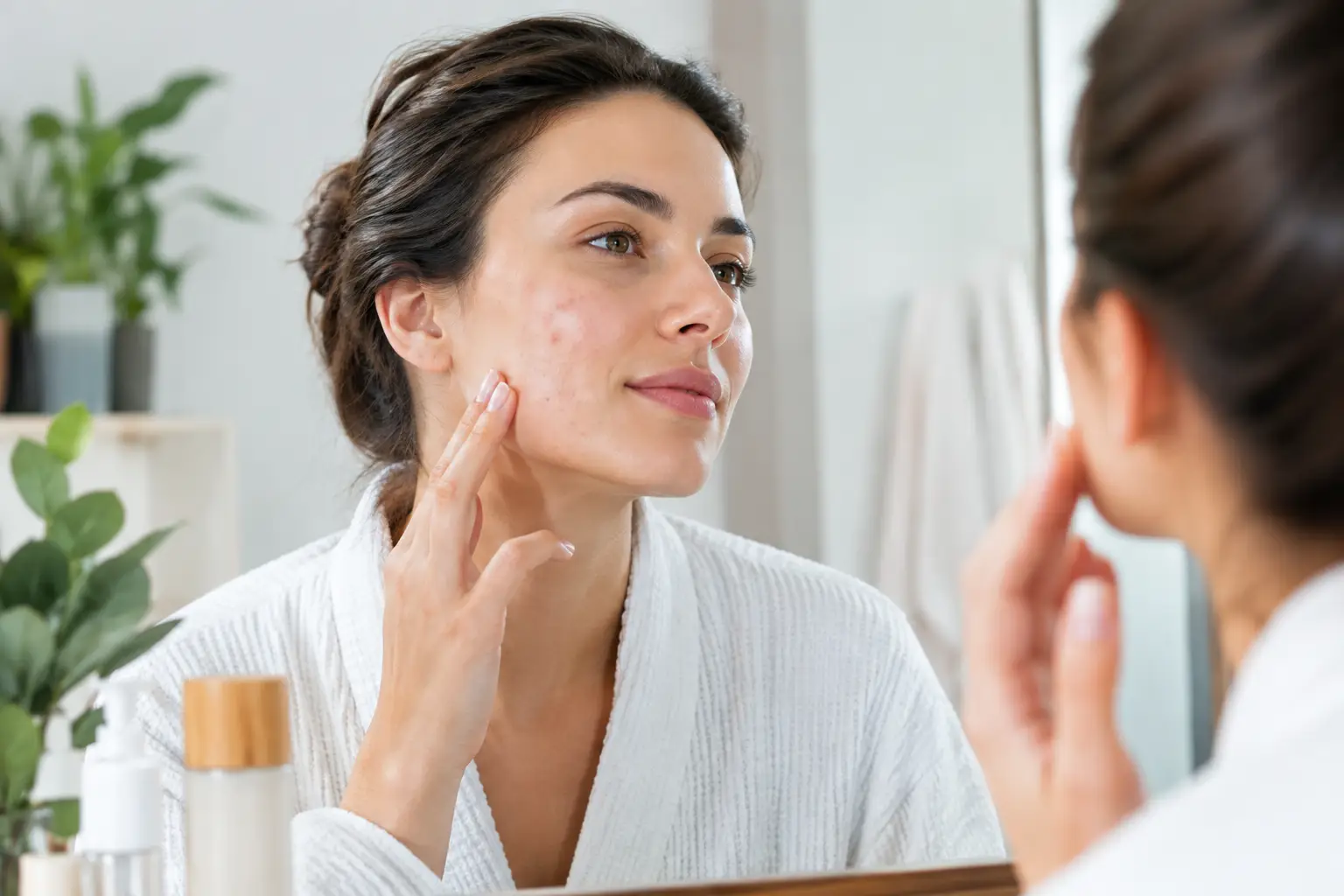
A breakout may settle within days, yet the mark it leaves behind can remain for months. That mismatch is often what drives interest in advanced repair technologies. Can exosomes help acne marks? Potentially, but the answer depends on what kind of mark is present, how the exosomes are used, and whether the surrounding skincare routine protects rather than repeatedly irritates the skin.
Exosomes are promising because they sit within a broader conversation about cellular communication and skin recovery. They are not, however, a universal eraser for every red, brown, or indented reminder of acne. A more useful approach is to understand where they may fit, what the evidence can currently support, and why consistency still matters more than cosmetic urgency.
First, identify the type of acne mark
“Acne marks” is a practical phrase, but it describes several different concerns that behave differently in the skin. Post-inflammatory hyperpigmentation appears as brown, gray-brown, or deeper-toned patches after inflammation. It is especially common in skin that tans or pigments readily, and sunlight or visible light can make it more persistent.
Post-inflammatory erythema is different. These are the red, pink, or purple marks that remain after a blemish, often because small superficial blood vessels and lingering inflammation are involved. Then there are true acne scars, including ice-pick, boxcar, and rolling scars. These are textural changes caused by collagen loss or altered collagen structure deeper within the skin.
Exosomes may have a role in supporting skin repair, inflammation regulation, and collagen-related processes. Yet those actions do not mean that one product or procedure will work equally well for pigment, redness, and established scarring. The more accurately the concern is identified, the more measured the treatment plan can be.
What exosomes are, and why they are generating interest
Exosomes are microscopic extracellular vesicles released by cells. They carry signaling materials such as proteins, lipids, and genetic material, helping cells communicate with one another. In research settings, exosomes are being studied for their potential role in wound healing, immune signaling, tissue repair, and collagen remodeling.
In aesthetic dermatology, they are most often discussed as an adjunct to procedures that create controlled injury, such as microneedling or certain laser treatments. The rationale is straightforward: after a procedure, the skin enters a repair phase. A carefully selected topical exosome preparation may help support a calmer recovery environment and may contribute to improvements in skin quality over time.
That possibility is meaningful, but it requires careful language. Exosomes are not the same as stem cells, and they are not automatically equivalent from one source, manufacturer, or treatment setting to another. Their source, purification, formulation, concentration, storage, and delivery method all affect what a product may do. “Exosome” on a label is not, by itself, a guarantee of clinical performance.
Can exosomes help acne marks in practice?
For post-acne discoloration, exosomes may be most useful as part of a broader skin-recovery strategy. By supporting a less inflammatory environment and healthier barrier function, they may help the skin recover more comfortably after professional procedures or periods of active irritation. Some early clinical and preclinical research also suggests potential benefits for pigmentation pathways and wound repair.
Still, exosomes should not replace the fundamentals of pigment care. Daily broad-spectrum sunscreen, reduced friction and picking, gentle cleansing, and well-tolerated brightening or pigment-regulating ingredients remain central. Without photoprotection, even sophisticated treatments can struggle against the repeated stimulus of UV exposure and heat.
For red post-acne marks, the evidence is even more indirect. Because redness relates to inflammation and vascular activity, exosome-based care may support recovery after treatment, but it is not necessarily the primary answer. In some cases, time, a simplified routine, and professionally guided vascular laser treatment may be more relevant.
For indented scars, the potential role is best viewed as supportive rather than corrective. Procedures such as subcision, microneedling, radiofrequency microneedling, chemical reconstruction techniques, or fractional laser treatments are selected based on scar shape and depth. Exosomes may be used after some procedures to support healing, but they do not substitute for the mechanical or collagen-remodeling work needed to improve established textural scars.
The evidence is promising, not settled
The excitement around exosomes has moved faster than the clinical evidence. Small studies and laboratory findings are encouraging, particularly in wound healing and skin rejuvenation, but larger, standardized human trials are still limited. Research is complicated by the fact that products vary substantially, and treatment protocols are not yet uniform.
There is also an important distinction between a professionally applied product used after a procedure and an at-home serum. The skin’s barrier is designed to keep substances out. A topical formula applied to intact skin may offer skin-conditioning benefits, but it may not behave like an exosome preparation introduced in a clinical context after microneedling or laser treatment.
This does not make home care irrelevant. It simply places it in the right role: daily skincare should maintain barrier integrity, hydration, and tolerance between professional interventions. For many people with acne marks, that disciplined baseline is what prevents a cycle of fresh inflammation and new discoloration.
Safety and quality deserve close attention
Advanced skincare should invite more discernment, not less. Exosome products and treatments exist within a developing regulatory landscape, and standards may differ by region. A reputable clinician should be able to explain the product’s origin, handling requirements, intended use, and why it is appropriate for your skin concern.
Avoid treating exosomes as a reason to push through active irritation. Skin that is burning, peeling, inflamed, or actively breaking out may need a simpler approach first. Applying potent or poorly understood products to compromised skin can increase the chance of irritation, breakouts, or an uneven recovery.
If you are prone to melasma, post-inflammatory hyperpigmentation, eczema, or recurrent acne, a cautious plan is particularly valuable. The goal is not to provoke the skin into dramatic change. It is to improve the conditions in which recovery can occur without creating another inflammatory event.
A steadier approach to post-acne recovery
Before considering exosome-based treatment, stabilize active acne. New breakouts create new marks, so treating the cause remains more productive than repeatedly treating the aftermath. Depending on your skin and medical history, that may involve acne-focused ingredients, prescription treatment, hormonal evaluation, or lifestyle adjustments that reduce friction, occlusion, and inconsistent sleep.
Once acne is controlled, build a routine that protects the recovery process. Use a gentle cleanser, a barrier-supportive moisturizer, and broad-spectrum sunscreen every morning. Introduce proven active ingredients gradually rather than layering multiple exfoliants, retinoids, and brighteners at once. Skin repair is often slowed not by a lack of products, but by too much cumulative stress.
If marks remain despite several months of steady care, consult a board-certified dermatologist or qualified medical professional. Ask whether your concern is primarily pigmentation, redness, scar texture, or a combination. Ask what improvement is realistic, how many sessions may be needed, and whether exosomes are being recommended as the main intervention or as an adjunct to a procedure with clearer evidence.
For topical care, choose formulations with transparent ingredient information and a sensible place in your routine. At SHINORA, the wider principle is restoration before enhancement: support hydration, resilience, and the skin barrier so that more targeted care has a stable foundation.
The most effective response to acne marks is rarely the most aggressive one. Give the skin fewer reasons to stay inflamed, protect it from the exposures that deepen discoloration, and choose advanced treatments only when they serve a clear purpose. Progress tends to look quiet at first: calmer tone, stronger comfort, and skin that is finally allowed to repair at its own intelligent pace.


Leave a Reply