
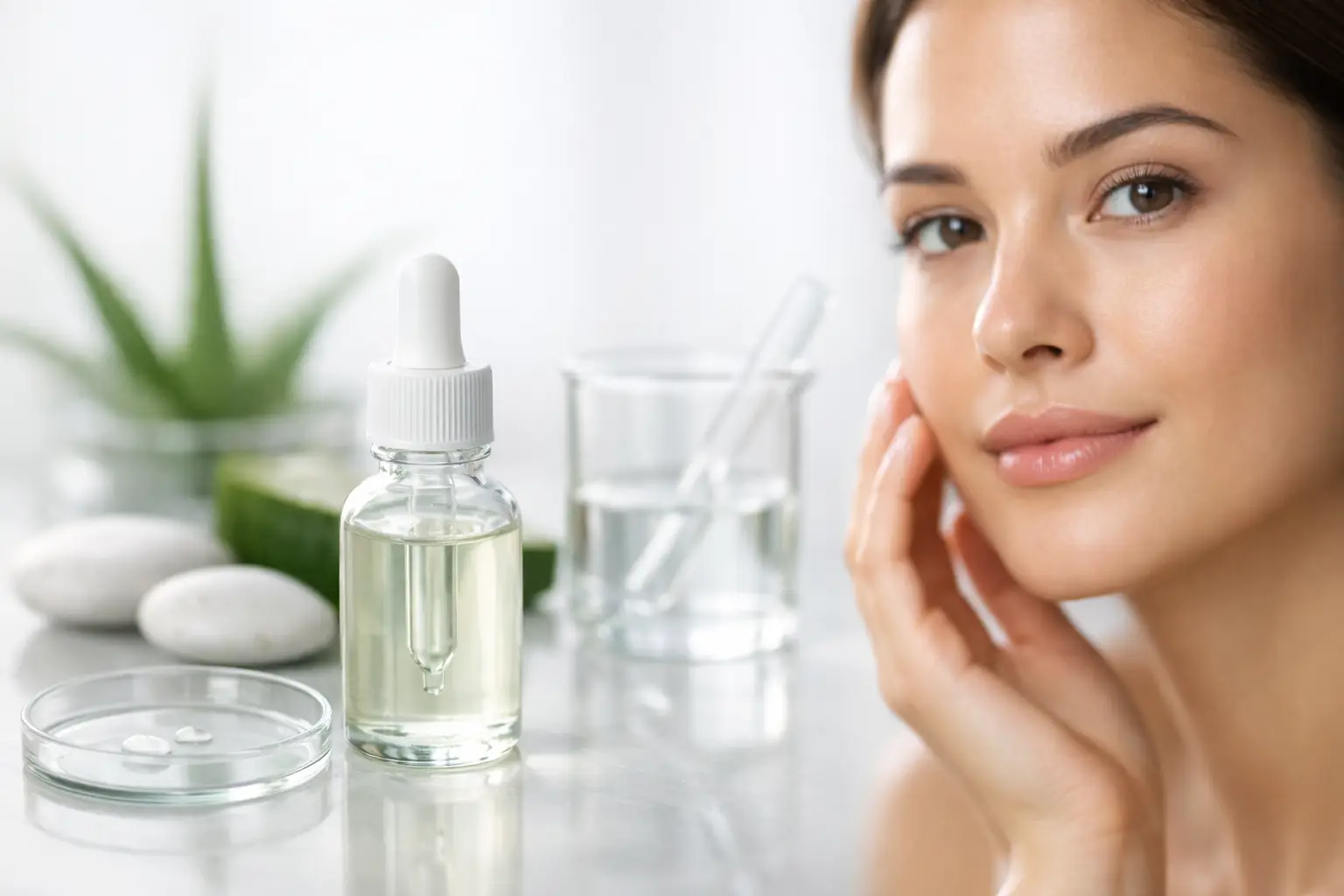
Uneven tone rarely has a single cause. A post-breakout mark, a patch of sun-related discoloration, and the diffuse dullness that follows a demanding week may look similar in the mirror, yet each reflects a different stress response within the skin. A well-formulated tranexamic serum is valued because it can support a more measured approach to visible discoloration without relying on aggressive exfoliation.
For skin exposed to heat, UV radiation, pollution, hormonal shifts, and the friction of everyday life, brightening should not mean pushing the complexion toward irritation. The more useful goal is restoration: helping skin look clearer and more even while preserving the barrier that gives it comfort, hydration, and resilience.
What tranexamic acid does for the skin
Tranexamic acid is a synthetic derivative of the amino acid lysine. It has a long history of medical use under clinical supervision, but topical skincare uses it differently and at much lower, formulation-specific concentrations. In a serum, it is studied primarily for its ability to support a more even-looking skin tone and reduce the appearance of certain forms of hyperpigmentation over time.
Pigmentation is not simply excess color sitting on the surface. Melanin production is influenced by ultraviolet exposure, inflammation, hormonal signaling, and communication between skin cells. When this process becomes overactive or uneven, discoloration can linger long after an acne blemish has healed or a period of sun exposure has passed.
Topical tranexamic acid appears to influence some of the inflammatory and signaling pathways involved in melanin production. This matters because post-inflammatory marks and melasma-prone discoloration are often aggravated by irritation. Rather than treating uneven tone as a problem to be scrubbed away, tranexamic acid offers a more restrained route that can fit a barrier-conscious routine.
That does not make it an instant correction. Skin turnover, pigment distribution, and the effects of cumulative exposure all move slowly. The strongest results tend to come from consistent use alongside daily sun protection and a routine that does not repeatedly provoke the skin.
Who may benefit from tranexamic serum
A tranexamic serum can be a thoughtful option for people concerned with the appearance of post-acne marks, sun-related spots, uneven tone, or persistent patches of discoloration. It is particularly appealing for those who have found stronger acids or high-frequency exfoliation difficult to tolerate.
It may also suit skin that appears dull or uneven after periods of stress, travel, poor sleep, or environmental exposure. In these situations, discoloration is often only one part of the picture. Dehydration and a compromised barrier can make the complexion look less luminous and cause marks to appear more noticeable. A serum should therefore be considered one part of a restorative system, not a standalone answer.
Results depend on the type and depth of pigmentation. Fresh, superficial post-inflammatory marks may respond differently from longstanding sun damage or melasma. Melasma, in particular, is complex and prone to recurrence. Professional guidance may be appropriate when discoloration is widespread, rapidly changing, or resistant to consistent home care.
How to use tranexamic serum with restraint
Most people can introduce a tranexamic serum once daily after cleansing and before moisturizer. Its texture and formula will determine the exact placement, but lightweight water-based serums generally sit well after a hydrating essence or directly on clean, dry skin.
Morning use is practical when followed by a broad-spectrum sunscreen. Evening use can be equally effective for those whose daytime routines are already full. What matters more than the time of day is regular application and adequate UV protection. Without sunscreen, ongoing exposure can continue to stimulate the very pigment pathways you are trying to calm.
Start with a small amount and give the routine time to settle. Although tranexamic acid is often well tolerated, any active formula can be irritating for some individuals, especially when the skin barrier is already stressed. A patch test is sensible, and introducing one new active at a time makes it easier to recognize what your skin accepts.
A simple routine might pair a tranexamic serum with humectants such as hyaluronic acid, barrier-supportive lipids, and a moisturizer that reduces water loss. This approach reflects an essential principle of long-term brightening: skin that is adequately hydrated and less reactive is often better positioned to maintain a more even appearance.
Pairing tranexamic acid with other actives
Tranexamic acid can work well alongside several familiar ingredients, but compatibility is not only about whether two ingredients can be layered. It is also about your skin’s current capacity.
Niacinamide is a common companion because it supports the skin barrier and can contribute to a more even-looking tone. Hydrating ingredients are similarly useful, particularly for dehydrated skin that becomes easily reactive. Antioxidants, including vitamin C, may complement a morning routine when the formula is comfortable and sunscreen is used faithfully.
Retinoids and exfoliating acids can also address texture, acne, and visible signs of photoaging, but they require more judgment. If your skin already uses a prescription retinoid or a strong acid, adding several pigment-focused products at once may create irritation rather than progress. Alternating nights or simplifying the routine is often more productive than pursuing maximum intensity.
For sensitive skin, begin with tranexamic acid and supportive hydration before introducing additional actives. If stinging, persistent redness, scaling, or tightness develops, pause and return to a gentle cleanser, moisturizer, and sunscreen until the skin feels stable again.
What realistic progress looks like
The first changes are often subtle. Skin may begin to look calmer, more hydrated, or less visibly uneven before individual marks noticeably fade. With consistent use, many people assess progress over eight to 12 weeks rather than a few days. Photographing the skin in the same natural light once a month can be more useful than relying on the close scrutiny of a daily mirror check.
A tranexamic serum cannot erase every mark, prevent every breakout, or override significant sun exposure. Its value lies in steady support. It can help make a routine more intelligent for those who want to address discoloration while respecting the skin’s need for recovery.
The foundation remains protection
Brightening care is often discussed as an ingredient question, but it is equally a behavioral one. Sunscreen, shade, hats, and reasonable heat exposure are not secondary details for hyperpigmentation-prone skin. They are part of the treatment environment.
This is especially relevant in sunny, humid climates and for anyone who spends time near windows, drives regularly, exercises outdoors, or experiences heat-triggered flushing. Broad-spectrum SPF 30 or higher should be applied generously each morning and reapplied when exposure makes it necessary. Tinted formulas containing iron oxides may offer an additional consideration for people managing visible-light-sensitive discoloration.
The aim is not perfection or a relentlessly controlled complexion. It is to reduce avoidable triggers while giving skin the consistency it needs to recover. A carefully chosen tranexamic serum, used patiently within a hydrating and protective routine, can be a quiet but meaningful part of that process.



Leave a Reply