
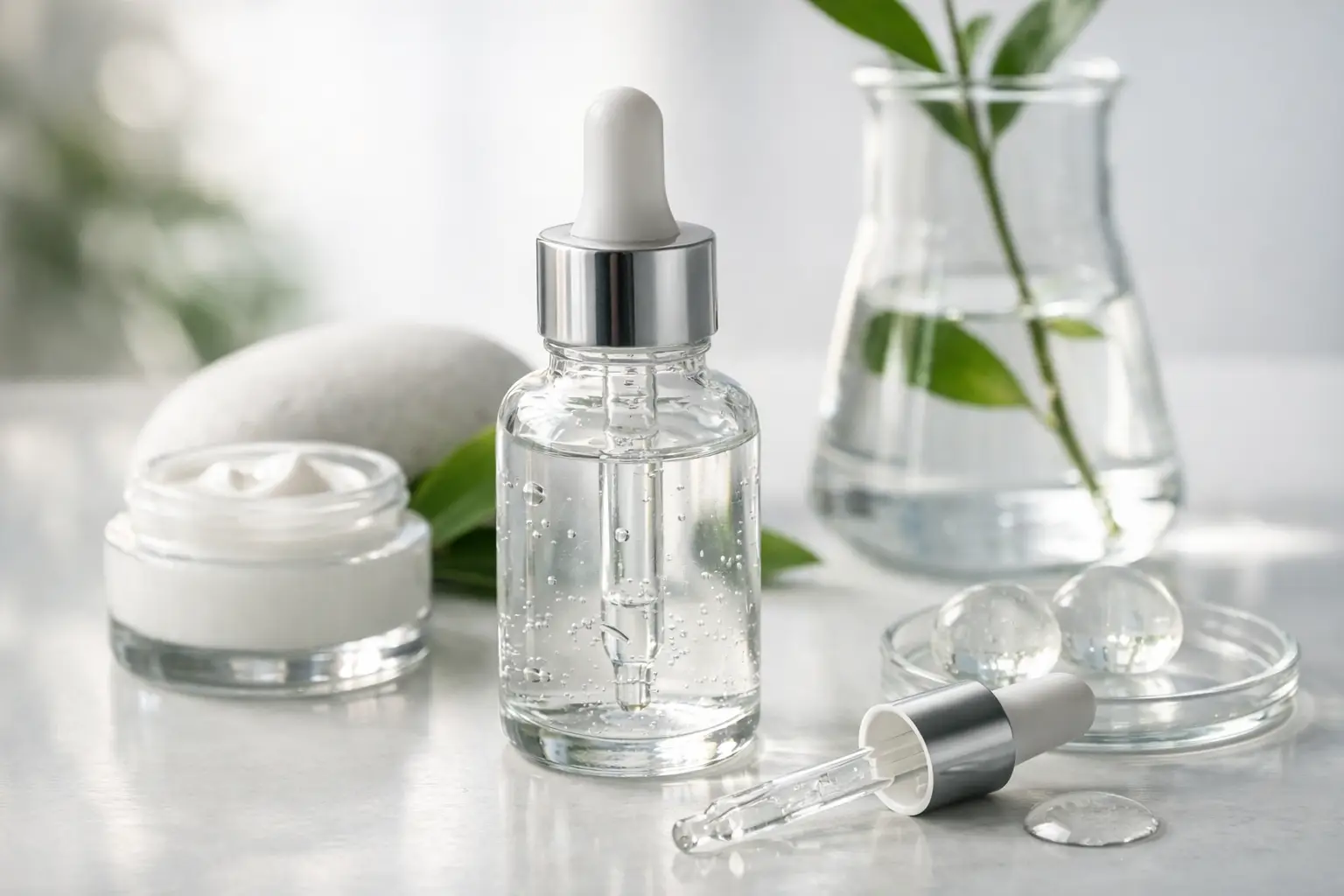
A bottle can make a convincing promise: dewy, replenished, visibly smoother skin by morning. Yet a thoughtful hyaluronic acid serum review begins after that first pleasant application. The real question is not whether a serum feels hydrating for ten minutes. It is whether its formula supports skin comfort, barrier function, and a consistent routine through air conditioning, sun exposure, long workdays, and changing skin needs.
Hyaluronic acid remains one of skincare’s most useful humectants, but it is also one of its most misunderstood. It does not replace moisturizer, repair every form of dehydration, or erase established lines. Used well, however, it can be a measured and effective part of restorative care.
What a hyaluronic acid serum actually does
Hyaluronic acid is a naturally occurring sugar molecule found in the skin and other tissues. Its defining quality is its ability to bind water. In a topical serum, it helps increase water content in the upper layers of the skin, often giving the complexion a temporarily fuller, more supple appearance.
That effect matters, especially when skin feels tight, looks fatigued, or shows fine dehydration lines more readily than usual. But hydration is not the same as moisturization. Hyaluronic acid draws and holds water; an emollient moisturizer helps soften the skin surface, while occlusive ingredients reduce water loss. A serum that provides water-binding support without a suitable cream on top may leave some people feeling comfortable at first, then unexpectedly dry later.
This is why the most useful formulas are rarely judged by hyaluronic acid alone. They should be considered within the wider architecture of the product and the routine around it.
A hyaluronic acid serum review should assess formulation, not hype
Ingredient lists do not always reveal concentrations, proprietary delivery systems, or the exact molecular profile used. Still, they can offer meaningful clues about whether a serum has been designed for more than a momentary cosmetic effect.
Molecular weight is relevant, but not a verdict
Hyaluronic acid comes in different molecular sizes. Larger molecules generally remain closer to the skin’s surface, where they contribute to a smooth, hydrated feel. Smaller forms, including hydrolyzed hyaluronic acid, are often included to support hydration across different levels of the outer skin barrier.
A multi-weight approach can be sensible, but it should not be treated as automatic proof of superiority. Smaller molecules are not universally better, and more molecular weights do not necessarily make a product more effective. Skin that is reactive or compromised may prefer a short, uncomplicated formula over a serum designed to sound technologically elaborate.
The more practical standard is comfort over time. Does the serum layer without pilling? Does it leave skin calm under sunscreen and makeup? Does it remain comfortable after several weeks of regular use? These are better measures than dramatic language around penetration or plumping.
The supporting ingredients shape the experience
A well-considered hydration serum may pair hyaluronic acid with glycerin, panthenol, beta-glucan, ectoin, amino acids, or soothing botanical components. These ingredients can complement humectant action and make a formula feel more resilient in a real-world routine.
Glycerin, in particular, deserves more credit than it receives. It is a dependable humectant with a strong history in skincare and can help a serum provide durable hydration without relying on hyaluronic acid as a single hero ingredient. Panthenol may be valuable when dryness is accompanied by sensitivity or a feeling of fragility.
Conversely, a serum may be less suitable for a sensitive routine if it is heavily fragranced or filled with unnecessary sensorial additives. Fragrance is not automatically harmful, and tolerance varies, but it adds little to the central task of hydration. When skin is stressed, restrained formulation often has the advantage.
Texture is functional, not superficial
A watery serum can suit humid climates and oily or congestion-prone skin. A more cushioned gel may feel preferable for normal, dry, or mature skin, especially in air-conditioned environments. Neither texture is inherently more effective.
The consideration is compatibility. If a serum feels sticky enough that you skip sunscreen, pills beneath foundation, or encourages you to apply less moisturizer than your skin needs, it is not serving the routine well. Good skincare should make consistency easier, not turn every morning into a negotiation with layers.
How to use a hydration serum for better results
Apply hyaluronic acid serum after cleansing, ideally while the skin is still slightly damp rather than dripping wet. This gives the humectants water to work with. Follow with a moisturizer that matches your skin type, then use broad-spectrum sunscreen in the morning.
At night, the same sequence works well after cleansing and any compatible treatment product. If you use a retinoid, exfoliating acid, or prescription acne treatment, a simple hydrating serum can be a helpful buffer in the routine. However, placement depends on the instructions for the treatment itself and on your skin’s tolerance. More layers are not always more supportive.
In very dry indoor conditions, a serum applied to dry skin without a moisturizer may sometimes feel tightening rather than comforting. This does not mean hyaluronic acid is unsuitable. It usually means the routine needs more water and a better seal over it. A cream with ceramides, squalane, fatty acids, or other barrier-supportive ingredients can make the difference.
Who may benefit most, and who should be selective
Most skin types can use hyaluronic acid, including oily and acne-prone skin. It is not an oil, and it is generally not considered a pore-clogging ingredient. For someone managing shine and dehydration at the same time, a lightweight serum under a non-greasy moisturizer can be especially practical.
Dry, mature, or environmentally stressed skin may appreciate a richer supporting routine. With age, changes in barrier lipids, cell turnover, and natural water retention can make the skin feel less flexible. Hyaluronic acid can improve the look and feel of surface hydration, but it will not replace the role of barrier lipids, sun protection, sufficient sleep, or a gentle cleansing approach.
Sensitive skin requires a little more discernment. The ingredient itself is often well tolerated, yet the complete formula may contain preservatives, fragrance, essential oils, or active ingredients that do not agree with an already irritated barrier. Patch testing is sensible when introducing any new product, particularly after procedures, during an eczema flare, or when using prescription treatments. Persistent burning, itching, swelling, or rash is a reason to stop using the product and seek clinical guidance if needed.
Expectations that keep skincare honest
The immediate plumping effect of a hydrating serum is real, but it is also temporary. It reflects increased water at the skin’s surface, not a permanent structural change. Fine lines caused by dehydration may look softened; deeper expression lines and laxity require a different conversation and, in some cases, professional care.
A good serum should leave skin feeling more comfortable, looking less dull, and better prepared for the rest of the routine. Those outcomes can be meaningful precisely because they are sustainable. The goal is not to force a dramatic transformation from one ingredient, but to help the skin function with greater ease day after day.
The clearest signs a serum is worth keeping
Give a new hydration serum two to four weeks of consistent use before forming a judgment, unless it causes irritation. Look for quieter evidence: less tightness after cleansing, smoother makeup application, fewer visibly dehydrated patches, and skin that feels balanced rather than coated.
Price can matter, but it should not dominate the decision. Hyaluronic acid is widely available, and an expensive formula is not automatically more effective. Value comes from a stable, comfortable formula you can use consistently, with packaging and texture that preserve the experience rather than complicate it.
The most considered choice is often the least dramatic one: a serum that gives thirsty skin dependable support, then makes room for the rest of a disciplined routine to do its work.


Leave a Reply