
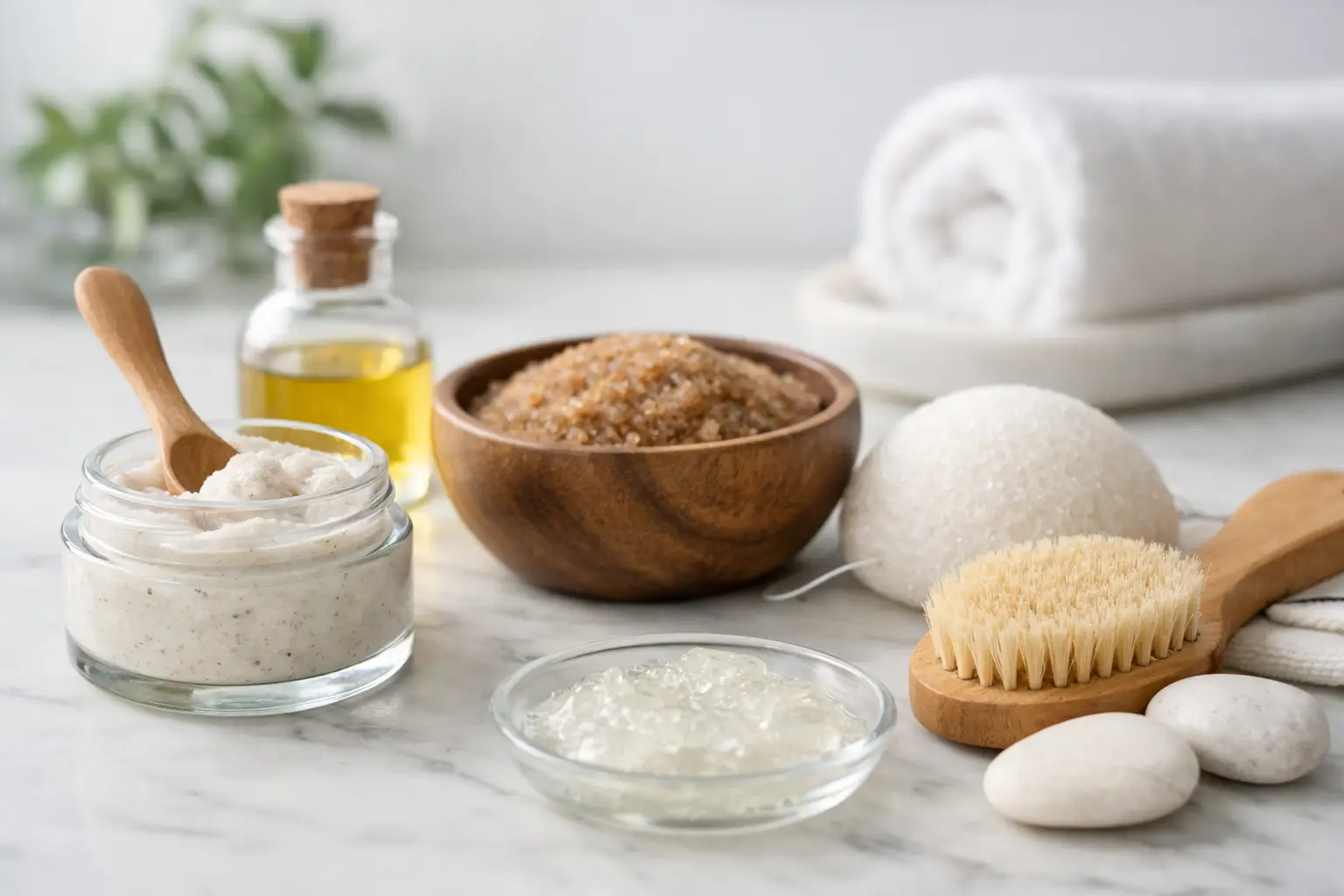
Skin that looks dull is not always skin that needs stronger treatment. Often, it is skin asking for a more considered rhythm: hydration, protection, recovery, and only then renewal. This guide to gentle exfoliation methods is designed around that distinction. Effective exfoliation should refine the surface without leaving the skin tight, reactive, or dependent on increasingly aggressive products.
Exfoliation has a useful place in a long-term skincare routine. It can help loosen accumulated dead skin cells, improve the appearance of uneven texture, and support a clearer, more luminous-looking complexion. Yet the benefits depend less on intensity than on compatibility. The right method is the one your skin can tolerate consistently while maintaining its barrier function.
Why gentle exfoliation requires restraint
The outermost layer of skin, the stratum corneum, is often described as a barrier. More accurately, it is an active protective structure. Its skin cells and lipids work together to limit moisture loss and reduce exposure to irritants, pollution, and microbes. When this structure is compromised, skin may feel dry, sting when products are applied, flush easily, or develop rough patches and breakouts.
Over-exfoliation can disrupt this balance. A strong acid used too frequently, a coarse scrub applied with pressure, or several active products layered into the same routine may create a temporary feeling of smoothness while weakening resilience over time. This is especially relevant for skin already managing air-conditioning, urban pollution, sun exposure, stress, irregular sleep, or prescription treatments.
Gentle exfoliation is therefore not about doing as little as possible. It is about creating enough cellular turnover support to address surface buildup, without treating normal skin function as a problem to be corrected.
A guide to gentle exfoliation methods
There are three primary approaches: chemical exfoliants, enzymes, and physical exfoliation. Each works differently, and none is universally best. Skin type, current sensitivity, climate, and the rest of your routine should determine the choice.
Chemical exfoliation: measured and targeted
Chemical exfoliants use acids to loosen the bonds between dead surface cells. At appropriate strengths and frequencies, they can be highly controlled and more even than manual scrubbing.
Alpha hydroxy acids, or AHAs, are water-soluble acids that work mainly at the skin’s surface. Lactic acid is often a thoughtful starting point for dry or mature skin because it tends to be more hydrating and less forceful than glycolic acid. Mandelic acid has a larger molecular structure and may be better tolerated by some people prone to congestion, uneven tone, or post-acne marks. Glycolic acid can be effective for texture and visible dullness, but it is more likely to irritate when introduced too quickly.
Beta hydroxy acid, most commonly salicylic acid, is oil-soluble. This allows it to move into pores, where it can help with congestion, blackheads, and blemishes. It can suit oilier skin, but it still requires restraint. A leave-on salicylic product used every day is not automatically better than one used two or three times a week.
For a gentle entry point, choose one exfoliating acid product and use it once weekly for two to three weeks. If the skin remains calm, increase to twice weekly if there is a clear reason to do so. Allow the results to develop gradually. Texture and clarity respond better to steady care than repeated cycles of irritation and recovery.
Enzyme exfoliation: a softer surface approach
Enzyme exfoliants commonly use proteolytic enzymes derived from fruits, such as papaya or pineapple, to help break down the proteins that hold dead cells at the surface. They are usually found in wash-off masks, powders, or cleansers.
This category can be a useful option for those who find conventional acids uncomfortable, particularly when skin is temporarily dehydrated or easily reactive. The trade-off is that enzyme formulas vary considerably in potency and stability, and their results may be subtler than a well-formulated acid. That is not necessarily a disadvantage. For skin that needs restoration, subtle and repeatable is often the more intelligent choice.
Follow the product’s stated contact time rather than leaving an enzyme mask on longer in pursuit of faster results. Rinse with lukewarm water, then apply a hydrating, fragrance-free moisturizer to support comfort afterward.
Physical exfoliation: choose low friction
Physical exfoliation removes surface cells through gentle friction. The category includes soft washcloths, finely milled powders, cleansing brushes, and facial scrubs. It is not inherently harmful, but it is the least forgiving method when technique is rushed.
Avoid products containing sharp, irregular particles, such as crushed shells or large salt crystals. They can create excessive friction on delicate facial skin. If you prefer a tactile method, use a soft, damp cloth with a mild cleanser once a week, applying almost no pressure. The goal is not to polish the skin until it feels squeaky. It is simply to lift loosened surface residue without causing redness.
Manual exfoliation is generally best avoided during active breakouts, eczema flares, rosacea flares, sunburn, or periods of visible irritation. In these moments, the skin does not need more stimulation. It needs calm, moisture, and time.
How to choose the right pace for your skin
A healthy exfoliation schedule is guided by response, not by a calendar alone. Normal skin may tolerate one or two sessions per week. Dry, sensitive, or barrier-impaired skin may do better with once every 10 to 14 days, or with no dedicated exfoliation for a period while hydration and recovery are prioritized. Oily or congestion-prone skin may benefit from more regular salicylic acid use, but even then, daily application should be earned through tolerance rather than assumed.
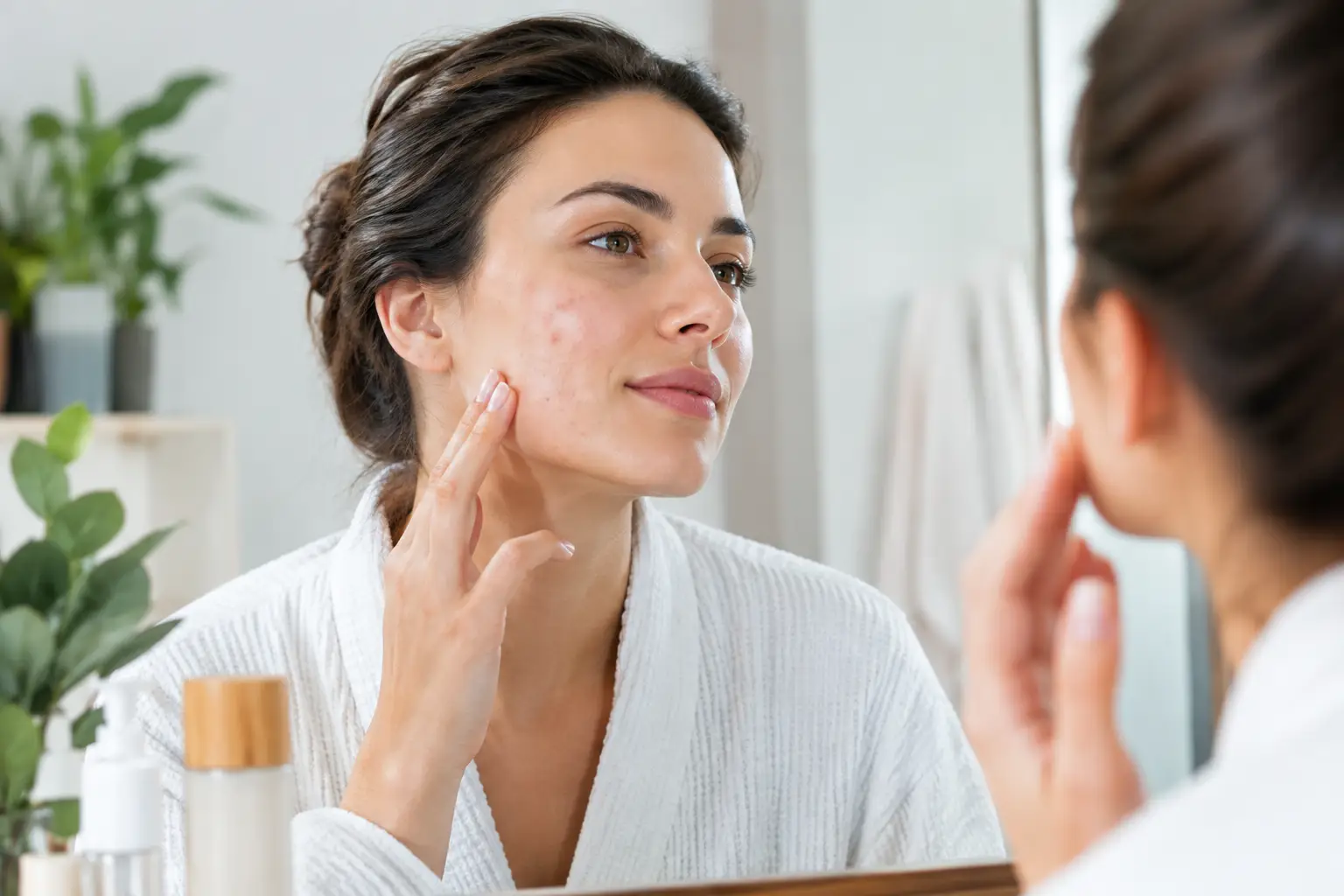
Pay attention to the signs that your routine is asking too much. Persistent stinging, tightness after cleansing, new flaking, unusual shine paired with dehydration, redness, or an increase in inflammatory breakouts can all indicate barrier strain. Pause exfoliation when these signs appear. Return to a simple routine of gentle cleansing, humectant hydration, moisturizer, and daily sunscreen until comfort is restored.
The rest of the routine matters as much as the exfoliant itself. On exfoliation nights, avoid combining an acid or enzyme treatment with retinoids, benzoyl peroxide, or another exfoliating product unless a clinician has specifically advised otherwise. Layering multiple high-activity ingredients may look sophisticated on a shelf, but skin biology responds to cumulative exposure, not product ambition.
The recovery step is part of the treatment
Exfoliation should always be followed by barrier-supportive care. Apply hydration to slightly damp skin, then use a moisturizer that helps reduce water loss and supports the skin’s lipid matrix. Ingredients such as hyaluronic acid can improve the feeling of hydration, while ceramides, glycerin, panthenol, and squalane can support comfort and barrier function.
Daytime sun protection is equally central. Newly revealed surface cells may be more vulnerable to ultraviolet exposure, and inconsistent sunscreen use can undermine efforts to improve the look of discoloration or post-acne marks. Use a broad-spectrum sunscreen every morning, including on days spent largely indoors near windows or commuting between shaded spaces.
For those using advanced repair-focused formulas, exfoliation can help create a smoother-looking surface, but it should not replace recovery care. SHINORA’s approach is grounded in this order: support the conditions in which skin can function well, then introduce refinement with restraint.
When professional guidance is worthwhile
If you have persistent acne, melasma, rosacea, eczema, a history of allergic reactions, or are using prescription retinoids, consult a dermatologist before adding exfoliating acids. Pregnancy and breastfeeding can also change what is appropriate, particularly with higher-strength salicylic acid treatments. Professional guidance is not an obstacle to progress. It is a way to avoid turning a manageable concern into prolonged irritation.
The same applies if your skin has recently undergone a procedure, including laser treatment, microneedling, waxing, or a chemical peel. Wait for the recommended recovery period before resuming exfoliation, even if the skin appears calm on the surface.
Healthy exfoliation is quiet. It does not demand a visible peel, burning sensation, or dramatic overnight transformation. When the method, frequency, and recovery care are well matched, the result is simply skin that feels more comfortable in its own rhythm: clearer in texture, better hydrated, and more prepared to meet the pressures of daily life.

Leave a Reply