
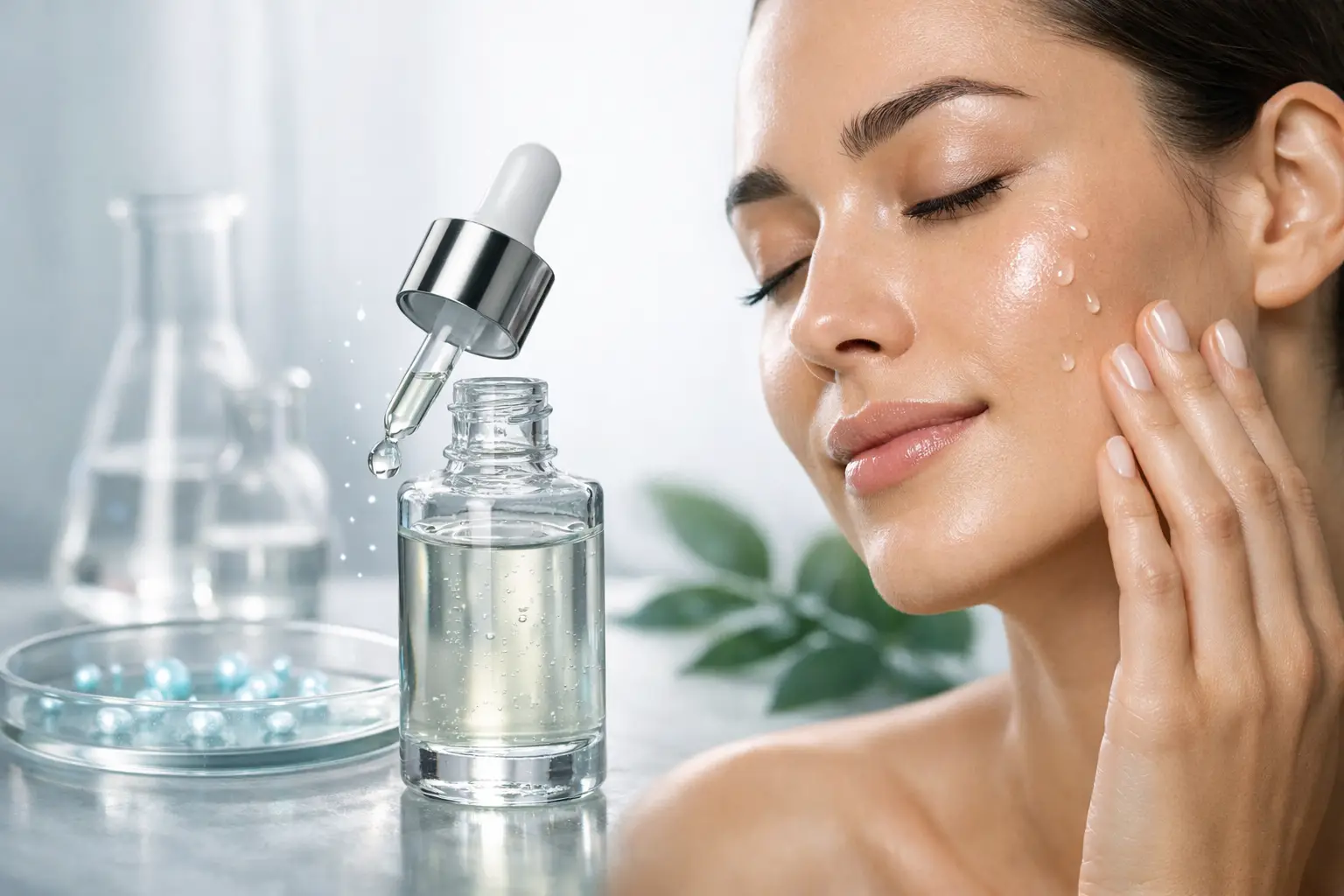
Some skincare ingredients become popular because they sound advanced. Exosome serum has drawn attention for a different reason: it speaks to a real concern many people recognize in the mirror – skin that looks tired, slower to recover, and less resilient than it once did.
That shift is rarely caused by one thing alone. Stress, UV exposure, inconsistent sleep, pollution, dehydration, and the natural slowing of skin renewal all leave their mark over time. The appeal of exosome serum is not that it promises dramatic correction overnight. It is that it sits within a more restorative model of care, one focused on supporting how skin communicates, repairs, and maintains balance.
What is exosome serum?
Exosome serum is a topical skincare product formulated with exosomes, which are tiny extracellular vesicles released by cells. In biological systems, these vesicles act as messengers, carrying signaling molecules such as proteins, lipids, and nucleic-acid-related material that help cells communicate with one another.
In skincare, that idea matters because healthy skin relies heavily on communication. Repair, inflammation control, barrier maintenance, and renewal are all coordinated processes. When skin is under pressure, whether from environmental exposure, irritation, or age-related slowing, those processes can become less efficient. The interest in exosomes comes from their potential to support the signaling environment around recovery.
That does not mean every exosome product works the same way. Source, purification, stability, concentration, and formulation context all matter. A serum is only as credible as the system behind it. Advanced terminology alone is not evidence of meaningful performance.
Why exosome serum is getting so much attention
Most consumers are no longer looking only for faster exfoliation or stronger resurfacing. There is growing fatigue around aggressive routines that leave skin reactive, over-processed, or dependent on constant correction. That is one reason exosome serum has entered the conversation. It aligns with a broader shift toward repair-first skincare.
For adults managing long workdays, urban exposure, travel, air conditioning, and irregular rest, the skin often shows low-grade strain before it shows dramatic damage. It may feel dehydrated yet oily, dull yet reactive, or sensitized after using active ingredients that once felt manageable. In these cases, the goal is not simply to push skin harder. It is to improve its ability to function well.
Exosome-based formulas are often discussed in relation to recovery, post-procedure support, hydration, and visible skin quality. The common thread is resilience. When an ingredient category earns attention from clinicians, formulators, and educated consumers at the same time, it usually reflects that deeper shift in priorities.
How exosome serum may support the skin
The most useful way to think about exosome serum is not as a replacement for proven skincare fundamentals, but as a potential support layer within a well-built routine.
Skin repair and recovery
Skin is constantly responding to small injuries, even when there is no visible wound. UV exposure, friction, breakouts, inflammation, and overuse of actives can all interrupt barrier function and trigger repair pathways. Exosome serum is often positioned as supportive in these contexts because exosomes are associated with cellular signaling involved in regeneration and repair.
Topically, the realistic expectation is support rather than transformation. A well-formulated product may help skin appear calmer, recover more efficiently, and maintain a healthier surface over time. That can translate into a smoother texture, less visible fatigue, and better tolerance overall.
Hydration and barrier resilience
Dehydrated skin often looks older, duller, and less even. It also tends to react more quickly to stress. While exosomes themselves are not a substitute for humectants, lipids, or barrier-building ingredients, exosome serum is often paired with hydrating and restorative components that strengthen the skin environment.
This is where formulation discipline matters. If exosomes are placed in a serum alongside ingredients such as hyaluronic acid, soothing agents, and barrier-supportive compounds, the product may do more than chase a trend. It may help create the conditions skin needs to hold moisture and recover from daily strain.
Visible tone and texture
When skin functions more efficiently, the improvements people notice are often subtle but meaningful: less roughness, more even-looking tone, and a rested appearance. Exosome serum is sometimes used with these goals in mind, especially for skin that looks worn down rather than acutely damaged.
That distinction matters. If hyperpigmentation is severe, or scarring is established, a serum alone may not be enough. But for lingering dullness, post-breakout stress, or uneven texture linked to inflammation and slow renewal, supportive care can make a visible difference over time.
What exosome serum does not do
A disciplined skincare routine starts with clarity about limits. Exosome serum is not a shortcut past sun protection, cleansing, hydration, and consistency. It is not a guaranteed substitute for retinoids, antioxidants, or pigment-targeting ingredients when those are indicated. It is also not a license to over-exfoliate and then expect skin to repair itself on command.
There is also a difference between promising science and settled science. Exosomes are a serious area of research, but the consumer skincare market often moves faster than long-term public understanding. That makes product quality especially important. Claims should be measured, not theatrical.
If a product presents exosome technology as a miracle solution for wrinkles, acne scars, discoloration, and sensitivity all at once, caution is reasonable. Skin biology is more complex than that.
Who may benefit most from exosome serum
Exosome serum may be most relevant for people whose skin shows signs of accumulated stress rather than one isolated issue. That includes those dealing with dehydration, post-inflammatory marks, visible dullness, mild textural irregularity, or a sense that their skin no longer recovers as quickly as it used to.
It may also suit individuals using active ingredients who want to balance performance with restoration. For example, someone using retinoids or acids may benefit from adding a repair-oriented serum to reduce the risk of an overly harsh routine.
Sensitive skin requires a more careful approach. While the concept of exosome support may sound gentle, tolerance depends on the entire formula, not the headline ingredient alone. Fragrance, preservatives, and additional actives all affect suitability.
How to use exosome serum in a routine
In most routines, exosome serum fits best after cleansing and before moisturizer. If used in the morning, it should be followed by sunscreen. If used at night, it can sit within a recovery-focused routine designed to minimize unnecessary irritation.
The simplest approach is often the most effective. Start with clean skin, apply the serum consistently, then seal it in with a moisturizer that supports barrier function. If your routine already includes strong actives, it may be wise to avoid introducing everything at once. Give the skin room to respond.
Pairing exosome serum with other actives
This depends on skin condition and formula design. Some people do well combining exosome serum with niacinamide, hyaluronic acid, peptides, or ceramides. These pairings tend to support hydration, calmness, and barrier integrity.
Pairing with stronger ingredients such as retinoids or exfoliating acids can also work, but context matters. If skin is already tight, flaky, or reactive, adding more intensity is rarely the answer. A restorative serum is most useful when the rest of the routine allows it to do that job.
What to look for in an exosome serum
Because this category is still emerging in consumer skincare, product selection should be thoughtful. Look beyond the name on the label. The questions that matter are practical: Is the brand clear about sourcing and formulation philosophy? Does the product sit within a balanced, skin-supportive system? Are the claims measured and specific?
Texture matters too. A serum that integrates easily into daily use is more likely to deliver results because it encourages consistency. Elegant formulation is not superficial. It is part of adherence, and adherence shapes outcomes.
For many consumers, the best exosome serum will not be the one making the loudest promises. It will be the one that respects the skin’s pace, supports resilience, and fits into a routine that can be maintained for months, not days.
The most compelling skincare often works quietly. When skin is better hydrated, less reactive, and more capable of recovering from daily stress, it tends to look healthier in a way that does not need exaggeration. Exosome serum belongs in that conversation – not as a miracle, but as part of a more intelligent standard of care.

Leave a Reply